

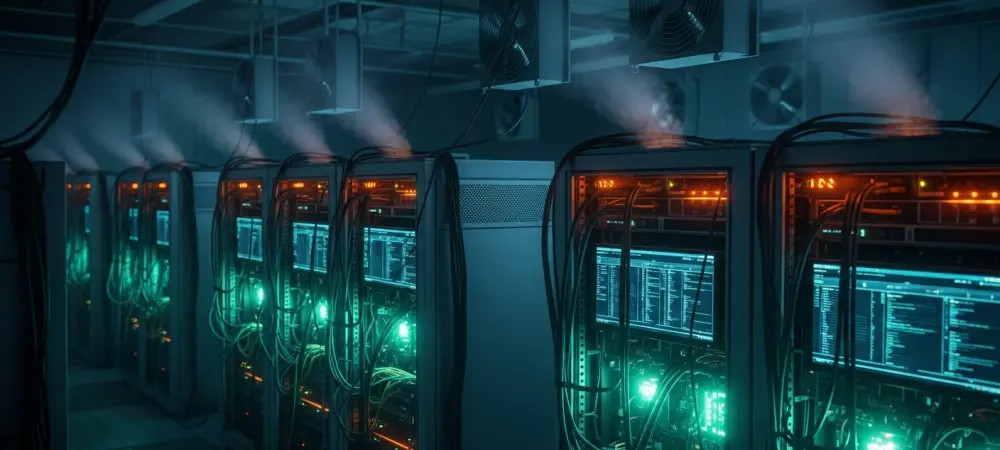
The global competition for Bitcoin has reached a pivotal juncture where the physical constraints of thermodynamics are now as influential as the fluctuating price of the digital asset itself. In the early years of the network, the primary objective was the acquisition of raw hashrate, an era where the brute force of a machine outweighed its operational cost. Today, however, the landscape has matured into a sophisticated industrial race where Joules per Terahash (J/TH) serves as the ultimate metric for survival. This shift reflects a broader professionalization of the sector, where energy precision is no longer an optional luxury but a mandatory defense against increasing network difficulty and the volatility of global energy markets.
Engineers and facility managers now prioritize the efficiency of their fleets to ensure that every kilowatt consumed translates into the highest possible probability of securing a block. As electricity costs remain the most significant variable expense in any mining operation, a miner that operates with high energetic precision can remain profitable even during market downturns. In contrast, older or less efficient models become liabilities as soon as the price of Bitcoin dips or the network difficulty climbs. Consequently, the industry has seen a massive migration toward hardware that can deliver maximum output with minimum thermal waste.
This evolution is being driven by a handful of top-tier manufacturers who are pushing the boundaries of what is possible with the SHA-256 algorithm. Brands like Bitdeer and Bitmain are not just competing on hashrate anymore; they are fundamentally redefining the limits of semiconductor technology. By focusing on ultra-low voltage operations and advanced thermal management, these companies are providing the tools necessary for large-scale miners to transition from speculative ventures into stable, enterprise-grade data centers that can weather any economic storm.
The Shift from Raw Power to Energetic Precision in the Mining Sector
The transition from the era of “hashrate at all costs” to the modern focus on Joules per Terahash represents a significant maturation of the Bitcoin network. In previous cycles, operators would often run any hardware capable of generating a hash, regardless of its energy consumption, provided the price of Bitcoin was high enough to cover the bill. However, the halving cycles and the entry of institutional capital have compressed profit margins, making it impossible to ignore the efficiency gap. Modern mining is now a game of margins, where a few Joules of difference per Terahash can determine whether a multi-million-dollar facility stays online or is forced into liquidation. Hardware efficiency serves as the only reliable hedge in an environment characterized by rising network difficulty. As more participants join the network and more powerful machines are deployed, the difficulty adjustment ensures that the time between blocks remains consistent. This means that an operator must constantly improve the efficiency of their hardware just to maintain the same share of the network’s rewards. Moreover, the instability of energy markets—influenced by geopolitical events and the transition to renewable sources—makes it imperative for miners to utilize equipment that offers the highest possible ROI per kilowatt-hour consumed. The current technological landscape is defined by the pursuit of the “zero-waste” miner, an ideal where almost all electrical input is converted into computational work with minimal heat loss. Manufacturers are responding by moving to smaller process nodes and exploring innovative cooling solutions. This competitive pressure is forcing a rapid turnover of legacy equipment, as the financial benefits of upgrading to high-efficiency models often outweigh the capital expenditure of the new machines. This preview of the efficiency race sets the stage for a deeper look into the specific benchmarks achieved by the newest generation of ASIC hardware.
Analyzing the Benchmarks of Current Industry Titans
The SEALMINER Revolution: The Fall of the 10 J/TH Barrier
The most significant technological breakthrough in recent years has been the successful breach of the 10 J/TH efficiency barrier, a feat that many industry observers once thought would take much longer to achieve. Bitdeer has positioned itself at the forefront of this revolution with the introduction of the SEALMINER A4 Ultra Hydro. Boasting a record-breaking efficiency of 9.45 J/TH, this machine represents a quantum leap in semiconductor design and power management. By optimizing the chip architecture for ultra-low power consumption without sacrificing hashrate, this model has set a new standard that other manufacturers are now scrambling to match.
The financial implications of this efficiency gap are staggering when analyzed at scale. For a mining operation running a fleet capable of generating 100 Petahash per second (PH/s), the difference between utilizing a sub-10 J/TH machine and a previous-generation flagship (operating at 12 or 13 J/TH) can result in hundreds of dollars in electricity savings every single day. Over the course of a year, these savings can amount to hundreds of thousands of dollars, effectively shortening the payback period for the hardware and providing a significant buffer against potential price drops in the underlying asset. This makes the A4 Ultra Hydro an incredibly attractive option for large-scale institutional miners.
However, the path to mass-producing such ultra-efficient chips is fraught with technical challenges. Achieving a 9.45 J/TH rating requires nearly perfect silicon quality and highly specialized manufacturing processes that few foundries can provide. The competitive pressure this places on traditional market leaders is immense, as it forces them to either innovate rapidly or lose market share to more agile competitors. This high-stakes environment ensures that only the most technologically advanced companies can claim the top spots on the efficiency leaderboard, fundamentally altering the competitive dynamics of the hardware market.
Legacy Powerhouses: The Battle for Operational Reliability
While newer players like Bitdeer are pushing the limits of efficiency, legacy manufacturers like Bitmain and MicroBT continue to command significant market share through their reputations for reliability. The Bitmain Antminer S21 XP Hyd remains a formidable alternative, offering high-level efficiency even if it does not currently hold the absolute top spot for J/TH. Bitmain’s strength lies in its vast production capacity and a mature ecosystem of repair centers and spare parts, which provides a sense of security for operators who prioritize uptime above the absolute cutting edge of efficiency. MicroBT’s WhatsMiner series has carved out a distinct niche by focusing on the durability of its hardware in harsh, industrial-scale environments. In many mining regions, the conditions are far from the controlled atmosphere of a modern data center, featuring dust, humidity, and extreme temperature fluctuations. The trade-off between raw efficiency and proven durability is a central consideration for many miners. A machine that is 5% more efficient is useless if it suffers from a 10% higher failure rate in the field. Consequently, MicroBT remains a preferred choice for operators who need hardware that can withstand the rigors of high-intensity, 24/7 operations in diverse climates.
Other manufacturers like Canaan cater to specialized niches, such as smaller air-cooled operations or sites that require extreme hardware resilience. The Canaan Avalon Miner series often focuses on providing a balanced approach between cost, efficiency, and ease of deployment. This diversity in the market ensures that there is no one-size-fits-all solution; rather, the “best” hardware is often determined by the specific constraints of the mining site, including its cooling infrastructure, its power price, and its expected operational lifespan. This competition between peak efficiency and operational ruggedness drives innovation across all segments of the industry.
The Hydro-Cooling Pivot: The Rise of High-Density Data Centers
The industry has reached a consensus that liquid cooling is no longer a niche technology but a mandatory standard for any manufacturer competing for the efficiency crown. This transition has led to the rise of high-density data centers where thousands of Terahashes can be packed into a fraction of the space previously required. The stability provided by a consistent liquid temperature also extends the lifespan of the ASIC chips, further improving the long-term ROI of the operation.
Beyond heat management, the shift to hydro-cooling has allowed for the adoption of the 2U form factor, a standard commonly used in enterprise-grade server racks. Brands like Auradine are leading this charge, bridging the gap between specialized mining rigs and traditional data center infrastructure. This standardization makes it easier for institutional investors to integrate Bitcoin mining into their existing technological portfolios, using the same logistics and rack configurations as their standard servers. The use of a standardized form factor also simplifies the process of building and scaling new facilities, as it allows for more predictable layout and cooling designs.
The idea that air-cooling remains a viable option for large-scale growth is increasingly being challenged. While air-cooled systems are cheaper to install initially, they lack the stability and heat recovery benefits of hydro-loops. Many modern facilities are now designed to capture the thermal energy removed by the liquid cooling system, repurposing it to heat nearby buildings or for industrial processes. This added utility not only improves the environmental profile of the mining operation but also provides an additional revenue stream that can offset energy costs, making hydro-cooled systems the clear choice for the future of the network.
Critical Infrastructure Benchmarks: Beyond ASIC Efficiency
A common mistake among new operators is focusing solely on the efficiency of the ASIC chips while neglecting the secondary components of the mining rig, such as the Power Supply Unit (PSU). High-efficiency PSUs, reaching up to 97% efficiency, are critical because they minimize energy waste before the power even reaches the silicon. A miner with efficient chips but a poor-quality PSU will still consume excess power, leading to higher costs and more heat production. Consequently, the total cost of ownership is increasingly being determined by the holistic efficiency of the entire unit rather than just the hashboard. Miners capable of handling inlet water temperatures of up to 60°C offer a massive advantage in warmer climates, as they do not require expensive and energy-intensive refrigeration systems to keep the coolant cold. This allows for simpler, more cost-effective cooling towers that rely on ambient air to reject heat. In contrast, hardware that requires lower inlet temperatures can be significantly more expensive to operate in regions like the Middle East or the Southern United States, where maintaining low water temperatures is a constant battle.
By analyzing these overlooked metrics, it becomes clear that hardware selection is as much about engineering the facility as it is about picking the right miner. High-efficiency PSUs and high-temperature tolerance allow for a leaner, more resilient operation. As the industry moves toward more standardized deployment models, these secondary benchmarks will likely become just as prominent as the J/TH rating in marketing materials and procurement discussions. The ability to operate reliably at higher temperatures without sacrificing efficiency is the next major frontier in the quest for the perfect mining rig.
Strategic Recommendations for Modern Mining Fleet Procurement
For operators looking to navigate the current market, the most impactful insight is that hardware selection must be dictated by specific site constraints rather than just a single performance metric. If a facility has access to extremely low-cost energy, the initial capital expenditure of the hardware becomes more important than having the absolute lowest J/TH. Conversely, in regions where power prices are high or volatile, investing in the most efficient hardware available, such as the SEALMINER A4 series, is the only way to ensure long-term viability. A careful analysis of energy price points and projected network difficulty is essential before committing to a major purchase.
Transitioning from legacy air-cooled systems to high-density, hydro-cooled infrastructure requires a clear roadmap. It is often more practical to phase in these upgrades rather than attempting to overhaul an entire facility at once. Starting with a pilot program of hydro-cooled units allows the staff to become familiar with the plumbing, coolant chemistry, and heat management requirements of liquid loops. As the operational expertise grows, the facility can gradually replace older air-cooled racks with high-density hydro-racks, maximizing the Petahash per square foot and significantly improving the overall efficiency of the farm.
Balancing initial capital expenditure with long-term operational savings is especially critical in a post-halving environment. While the newest, most efficient machines carry a premium price tag, their lower operating costs provide a margin of safety that cheaper, older models cannot match. Operators should prioritize hardware that offers a balance of cutting-edge efficiency, high hashrate density, and proven PSU reliability. By focusing on these core pillars, mining firms can build a fleet that is not only profitable today but also resilient enough to withstand the competitive pressures of the next several years.
The Final Verdict on the Efficiency Leadership Contest
The data and industry performance benchmarks suggested that Bitdeer currently held the technical edge in the efficiency race, primarily due to the groundbreaking performance of the SEALMINER A4 Ultra Hydro. While Bitmain and MicroBT remained powerful forces with significant market influence and ecosystem maturity, the achievement of sub-10 J/TH represented a significant shift in the competitive hierarchy. The market observed that technical leadership was no longer solely the domain of the oldest players, as newer innovators proved capable of delivering superior silicon efficiency and more advanced thermal management solutions.
The industry moved toward a phase where hardware standardization and liquid cooling became the undisputed norms for professional data center operations. This shift allowed for greater integration into traditional energy markets and provided a clear path for the reuse of waste heat. Experts noted that the pursuit of the “zero-waste miner” was no longer just a conceptual goal but a practical reality that was shaping the procurement strategies of the world’s largest mining firms. The emphasis on high-density 2U form factors and ultra-efficient power supplies signaled a departure from the makeshift mining rigs of the past.
Strategic outlooks for the next decade indicated that the pursuit of efficiency would continue to drive the evolution of the Bitcoin network. The primary conclusion was that the winners of this race would be those who combined the most efficient silicon with the most resilient and adaptable infrastructure. As the network continued to scale, the ability to minimize energy waste became the most powerful tool for ensuring the security and decentralization of the global ledger. The industry successfully transitioned into a new era of industrial sophistication, where energetic precision was the ultimate arbiter of success.