

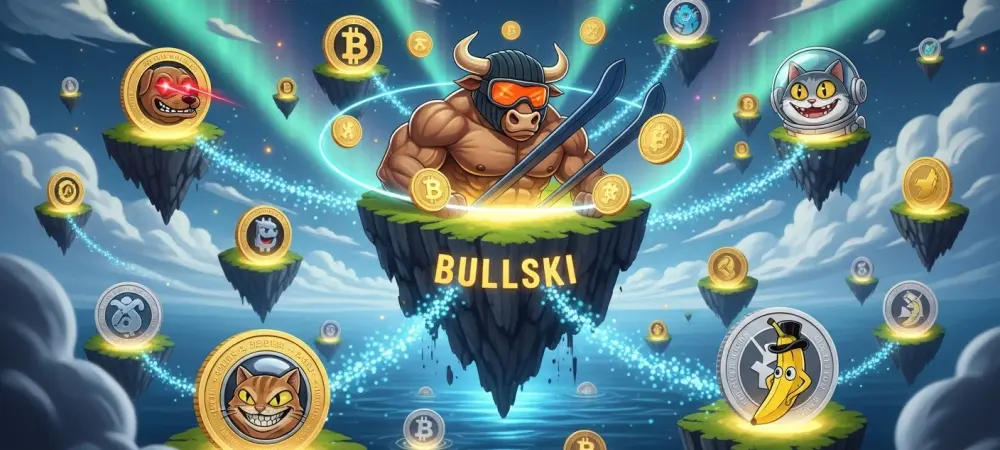
The traditional barrier that once separated global cultural movements from liquid financial markets has completely vanished into the instantaneous speed of modern smartphone interfaces. In the current landscape, the rise of a new asset like $BULLSKI is not merely a financial occurrence but a profound demonstration of how digital communities now command the narrative of value. Collective attention has evolved into the most liquid currency available to the public, transforming the way participants view wealth and social engagement. While traditional finance remains tethered to slow-moving balance sheets and quarterly reports, the digital ecosystem has proven that the window between a viral moment and a live market event has practically disappeared.
This shift is significant because it represents a fundamental change in market participation. The rise of $BULLSKI serves as a prominent reminder that the strength of a community and the speed of its momentum often outweigh the complex whitepapers of the past. Today, a token lives or dies by the vibrancy of its supporters and the transparency of its launch. This transition toward decentralized interest marks a turning point where the crowd, rather than a centralized institution, dictates which ideas deserve financial backing. For many, this is the first time that the “attention economy” has been fully accessible through a verifiable blockchain framework.
Beyond the Viral Joke: The Evolution of Internet Assets
The evolution of digital assets has reached a point where the distinction between a joke and a serious financial instrument is increasingly blurred. In the current market, assets are no longer judged solely by their technical utility but by their ability to maintain a persistent presence in the social consciousness. The digital landscape has matured to accommodate assets that derive their worth from shared experiences and internet culture. This phenomenon is not an accident; it is the result of a global shift toward platforms that reward speed, humor, and collective participation over traditional, gate-kept financial models.
The success of a project in this space is no longer a matter of luck but a reflection of structural efficiency. Modern tokens must move as fast as the trends that spawn them, providing immediate accessibility to those who recognize a cultural shift in real time. Because the speed of information is now instantaneous, the infrastructure supporting these assets must be equally robust. By removing the delays associated with legacy banking, the current digital economy allows for a direct connection between a creator’s vision and the participant’s wallet, creating a streamlined flow of value that was impossible a decade ago.
The Cultural Engine: Powering Today’s Digital Economy
Meme coins represent a unique intersection of social media culture and decentralized finance, where the sense of belonging to a group is just as important as the asset itself. In a world where institutional assets can feel slow and disconnected from everyday reality, tokens provide an entry point for those who want to participate in a more dynamic economy. This shift matters because it democratizes how value is created, moving it away from corporate boardrooms and into the hands of the individuals who drive the trends. The social component acts as a powerful multiplier, turning individual interest into a cohesive market force.
The primary driver of this economy is the shift from passive consumption to active participation. When an individual holds a token, they are not just an investor; they are a stakeholder in a cultural movement. This creates a feedback loop where the community’s engagement directly influences the asset’s visibility and, by extension, its perceived value. Moreover, this decentralized model allows for a more inclusive financial environment where anyone with an internet connection can join a global trend. The cultural engine is fueled by this inclusivity, ensuring that the momentum of an asset is sustained by a broad and diverse base of participants rather than a few large entities.
Understanding the $BULLSKI Architecture: The Meme Coin Market
A meme coin is fundamentally a cryptocurrency whose value is derived from shared culture rather than a specific service or product. While legacy networks like Bitcoin and Ethereum are often valued based on their utility as a store of value or a platform for smart contracts, assets like $BULLSKI are valued on visibility and community engagement. This project distinguishes itself through a fixed supply of 120 billion ERC-20 tokens on the Ethereum blockchain, ensuring that the mechanics are transparent and verifiable. By utilizing the Ethereum network, the project benefits from one of the most secure and widely used infrastructures in the world.
Unlike the inflationary models seen in the past, this structured approach aims to balance the “hype” of a meme with the technical reliability of a modern digital asset. The choice of a fixed supply is a strategic move to prevent the devaluation that often plagues less disciplined projects. By providing a clear and immutable supply count on Etherscan, the project offers a level of technical honesty that participants now expect in a crowded market. This architecture provides the necessary foundation for a project to move from a temporary trend to a lasting presence in the digital ecosystem, combining cultural relevance with structural integrity.
Verifiable Trust: Navigating a Volatile Ecosystem
The credibility of any new token depends heavily on its transparency, and the launch of $BULLSKI has emphasized structural integrity from the start. By initiating a formal audit process and locking liquidity at launch, the project addresses the most common concerns regarding team allocations and market stability. Expert analysis of the meme coin sector often highlights the potential for rapid upside, but $BULLSKI adds a necessary layer of predictability by using a 16-stage pricing ladder. This system ensures that participants have a clear reference point throughout the presale, moving toward a specific listing target of $0.0025.
In an ecosystem known for its volatility, these guardrails provide a sense of direction that is often missing from newer projects. The pricing ladder allows the market to grow organically, rewarding those who recognize the project’s potential in its earliest phases. Furthermore, the commitment to third-party audits serves as a signal to the broader market that the project is built for longevity. By prioritizing these security measures, the developers have created a framework where the excitement of the “meme” does not come at the expense of technical safety. This balance is what defines the most successful assets in the current market.
A Practical Framework: Navigating the Bullski Presale
Engaging with a live presale requires a specific strategy to manage both the opportunity and the inherent risks of the market. To participate in the current stage of the $BULLSKI sale, users must utilize an Ethereum-compatible wallet, such as MetaMask, funded with ETH or USDT. Once the wallet is connected to the official platform, participants can secure tokens at the stage one price, which represents the lowest entry point of the entire 16-stage process. This method of distribution ensures a fair and transparent entry for all participants, regardless of their location or previous experience with digital assets. Beyond simple ownership, the ecosystem encourages active participation through live staking and referral programs. These features allow holders to generate additional value and expand the project’s reach before the token ever reaches an open exchange. The referral program, in particular, leverages the social nature of the project, rewarding those who help grow the community. By combining a clear entry strategy with immediate utility through staking, the project provides a comprehensive experience that goes beyond the typical “buy and hold” mentality. This practical framework is designed to build a robust foundation of holders who are invested in the project’s long-term success. The landscape of 2026 shifted decisively toward community-led assets, where the success of $BULLSKI highlighted the growing power of decentralized interest. Investors and participants moved away from the rigid structures of the past, preferring the transparency and speed of the Ethereum blockchain. This era proved that while volatility remained a constant, the tools for verifying trust became more accessible than ever before. Those who engaged with the 16-stage ladder recognized that the future of digital finance relied as much on cultural connection as it did on technical architecture. Ultimately, the market favored projects that prioritized verifiable supply and active community participation over empty promises.