

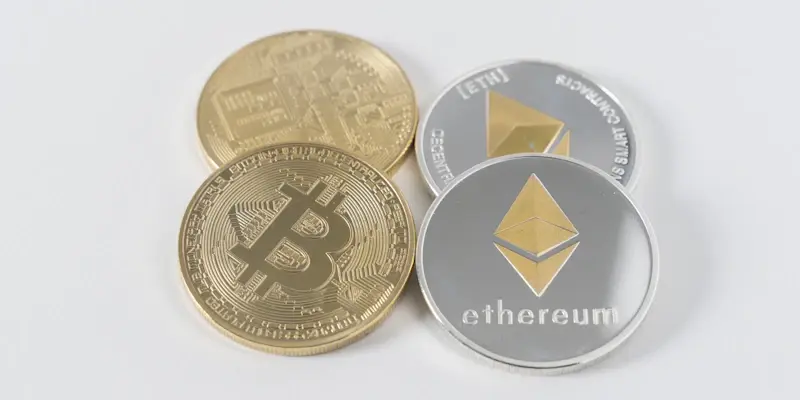
The cryptocurrency market at the close of 2024 exemplifies a period marked by notable volatility and diverse performance among major digital assets. As the year concluded, investors and analysts alike observed how the leading cryptocurrencies braved the often-turbulent waters, yielding a mixed array of results. Bitcoin, while enduring a mild setback, remains pivotal in anchoring the market, while Ethereum showcased resilience in the face of broader bearish sentiment. Altcoins, on the other hand, have seen varied fortunes, signifying cautious participation and strategic moves by market players.
Bitcoin’s Performance and Market Impact
Bitcoin’s Price Movements and Critical Levels
Bitcoin experienced a slight downturn, trading at $93,177.5 after a 2.01% decrease over the last 24 hours. Despite this, its trading volume steadfastly remained high, standing at $33.99 billion. Market analysts have underscored the importance of Bitcoin’s critical support level at $93,000 and its resistance near $95,000. These thresholds are crucial as they dictate Bitcoin’s ability to stabilize and potentially rebound in the weeks to come. Bitcoin’s integral role in the market cannot be overstated, supported by its formidable market capitalization of $1.85 trillion.
The allure of Bitcoin continues to draw significant trading activities, reflecting its robustness and investor confidence even amidst slight declines. The overarching sentiment around Bitcoin tends to shape broader market movements, as its performance often serves as a bellwether for the cryptocurrency sector. The substantial trading volume and high market capitalization are indicative of sustained interest and trust in Bitcoin, anchoring it as the premier digital asset whose movements influence a multitude of investor strategies and market dynamics.
Market Sentiment and Investor Behavior
Investor behavior within the Bitcoin market underscores a strategic approach, balancing caution with ongoing engagement. Despite slight dips, participants remain active, highlighted by persistent high trading volumes. This activity suggests that market players are not deterred by minor fluctuations but are instead leveraging these movements as opportunities to optimize their portfolios. Bitcoin, often referred to as digital gold, is leveraging its established reputation and extensive network to maintain its dominant position in the market.
Bitcoin’s market performance is reflective of broader economic factors and industry trends. The resilience shown, even with minor setbacks, underscores the asset’s substantial market influence. Investors continue to monitor Bitcoin closely, aligning their strategies with its movements, thereby ensuring that it remains a cornerstone of their digital investment portfolios. As the year closes, hopes for a positive start to the new year remain high, with market participants anticipating stability and potential bullish momentum.
Ethereum’s Steady Resilience
Ethereum’s Market Position and Fundamentals
Ethereum exhibited remarkable resilience, trading at $3,385.33 with only a slight decline of 0.11%. This minor slip comes amidst broader market bearishness, which testifies to Ethereum’s robust fundamentals and investor confidence. Ethereum’s strong foothold in the decentralized applications (dApps) and NFT sectors solidifies its market position, attracting continuous investments. Its trading volume of $16.37 billion and a market capitalization of $407.87 billion further reflect the asset’s comprehensive market strength and appeal.
The omnipresent development within the decentralized finance (DeFi) and NFT ecosystems contributes significantly to Ethereum’s appeal. Investors recognize the potential for long-term growth in these sectors, bolstered by Ethereum’s innovative advancements and vital role in facilitating smart contracts. As developers and businesses alike continue to build on the Ethereum blockchain, the asset’s attractiveness and potential for scalability ensure its steady market performance, even amid wider market challenges.
Investor Confidence and Future Prospects
Investor confidence in Ethereum remains unabated, buoyed by the asset’s indispensable applications in emerging sectors. The enduring support for Ethereum is evident in its stable market metrics and ongoing developments within its ecosystem. Market participants are optimistic about Ethereum’s capability to adapt and thrive, seeing it as a cornerstone for future advancements in blockchain technology and digital finance.
Ethereum’s resilience in the cryptocurrency market illustrates not only its current strength but also its promising future. As further innovations and upgrades are anticipated in the coming months, investor sentiment leans positively towards Ethereum’s potential to break new ground. The unwavering appeal of Ethereum, supported by substantial development activities and strong market fundamentals, paints a promising picture for its sustained relevance and growth in the rapidly evolving digital asset landscape.
Mixed Performance of Major Altcoins
XRP’s Substantial Decline
XRP faced one of the most significant drops among major cryptocurrencies, plummeting by 5.27% to trade at $2.06. This notable downturn positions XRP as the worst-performing asset in this period, despite its considerable market influence. The trading volume for XRP sat at $3.76 billion, with a market capitalization of $118.01 billion. Factors contributing to its decline include regulatory challenges and market sentiment shifts, impacting its price trajectory markedly.
The market’s cautious outlook on XRP has been influenced by ongoing legal battles and regulatory scrutiny, which have cast a shadow over its otherwise historical performance. This has led to jittery investor sentiment and re-evaluations of XRP’s immediate prospects. Despite its significant trading activity and market cap, the lingering uncertainties have undoubtedly played a role in its sharper decline relative to its peers.
Binance Coin and Solana’s Market Dynamics
Binance Coin (BNB) witnessed a decrease of 2.59%, trading at $695. This decline reflects the broader market caution affecting altcoins. BNB’s trading volume reached $1.67 billion, with a market capitalization of $100.99 billion. Solana (SOL), another major altcoin, saw a correction of 2.67%, trading at $189.66 with a trading volume of $2.31 billion. Solana’s market cap stood at $90.99 billion. These movements indicate a reevaluation of positions among altcoin investors, driven by the prevailing market unease.
For Binance Coin, despite the recent downturn, its integration within the Binance ecosystem continues to support its long-term appeal. Solana, on the other hand, has witnessed rapid development and adoption, particularly in the DeFi space, which underpins its market position. Both assets reflect the market’s broader sentiment; although cautious, they continue to command significant interest thanks to their unique ecosystem contributions and future potential.
Broader Market Sentiment and Future Outlook
Emerging Trends and Market Participation
The overarching cryptocurrency market throughout this period demonstrates a blend of caution and strategic participation. High trading volumes across major assets underscore active engagement, despite uncertainty. Bitcoin and Ethereum have played pivotal roles in maintaining market stability while providing a strong foundation amidst varying sentiment. Altcoins like Solana and Dogecoin have responded to broader trends, showing fluctuating performances aligned with general investor sentiment.
Market participants’ strategic approaches reflect a blend of short-term caution and long-term optimism. The high trading volumes suggest that investors remain engaged, navigating the volatility with calculated maneuvers. This dynamic participation highlights the ongoing attractiveness of digital assets, even amidst broader economic uncertainties. The resilience and adaptability of major cryptocurrencies demonstrate the sector’s robustness, with an eye towards future growth and innovation.
Anticipations for 2025
As 2024 drew to a close, the cryptocurrency market was marred by significant volatility and a wide range of performance outcomes among premier digital assets. Investors and analysts observed the leading cryptocurrencies navigate through often-turbulent conditions, resulting in a spectrum of mixed results. Bitcoin, though experiencing a slight downturn, continued to play a crucial role as the market’s cornerstone. Ethereum demonstrated impressive resilience, managing to withstand the broader bearish climate. Meanwhile, altcoins presented varied fortunes, reflecting the cautious engagement and strategic choices of market participants. The diversity in performance among these digital assets highlights the complexity and unpredictability of the cryptocurrency landscape, suggesting that 2025 may bring further surprises and challenges for investors. Thus, as stakeholders analyze past trends and strategize for the future, the cryptocurrency market remains a dynamic and evolving realm that demands continual vigilance and adaptation.