

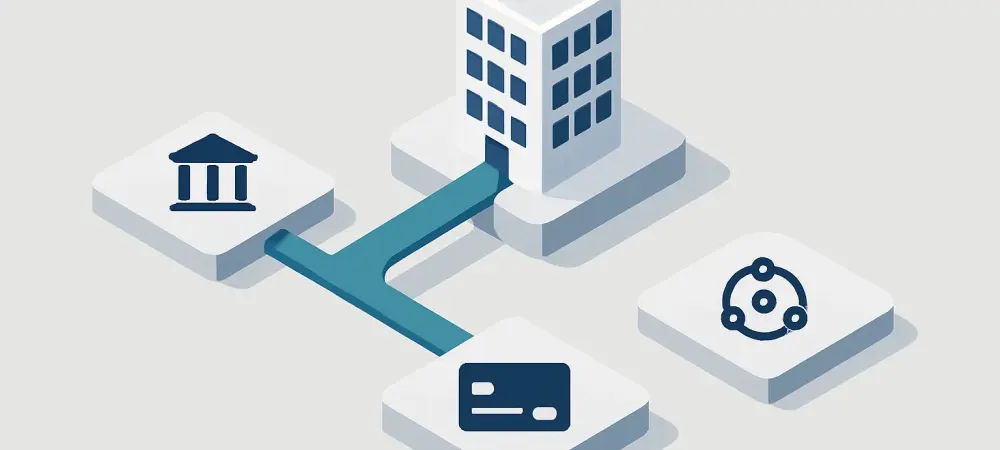
The launch of a new unified payment infrastructure suite by UK-based fintech company PayDo represents a significant advancement in a digital finance sector still struggling with operational complexity and a lack of true integration. This review explores the evolution of this consolidated solution, its core features, the strategic thinking behind its creation, and its potential impact on digital businesses that are often slowed down by financial fragmentation. The goal is to provide a clear understanding of this unified approach, its current capabilities, and its capacity to reshape the payments landscape by offering a single point of control.
The Problem of Financial Fragmentation
For many digital businesses, the financial backend is a patchwork of separate services for payment acquiring, banking, and payouts, each with its own contract, integration, and compliance requirements. This operational disarray creates what PayDo’s CEO, Serhii Zakharov, terms the “hidden tax of fragmentation.” This tax manifests as high intermediary fees, slow settlement times, and a significant administrative burden that diverts resources away from core business activities.
In a global market where speed and efficiency are paramount, this fragmented model is no longer sustainable. Businesses require a streamlined way to manage their financial operations without juggling multiple provider relationships. The relevance of a unified solution grows as companies expand across borders, where the complexity of local payment methods and regulations can quickly become overwhelming. A single, integrated infrastructure promises to dismantle these barriers, offering clarity and control.
Core Pillars of PayDo’s Unified Solution
Direct SEPA and SEPA Instant Membership
A key component of PayDo’s infrastructure is its status as a direct SEPA and SEPA Instant member. This allows the company to offer native Euro processing, completely removing the intermediaries that typically slow down and add cost to transactions within the European Union. By connecting directly to the SEPA network, the platform facilitates faster payments and immediate settlement for businesses operating in the EU market.
This direct access translates into tangible performance benefits. Merchants can send and receive Euro payments at a lower cost and with greater speed, improving cash flow and operational efficiency. The ability to leverage SEPA Instant, in particular, empowers businesses to offer real-time payment experiences, a critical advantage in today’s on-demand economy.
Dedicated USD SWIFT Accounts
To address the challenges of global commerce, PayDo provides dedicated USD SWIFT accounts, a feature designed to streamline cross-border transactions for international merchants. Historically, U.S. dollar payments have been fraught with delays, high correspondent banking fees, and a lack of transparency, creating significant friction for businesses operating outside the United States.
By offering dedicated USD accounts, the infrastructure simplifies the process of receiving and sending dollar payments. This feature minimizes the typical complexities associated with international wire transfers, reducing both the cost and the time it takes for funds to settle. For companies with a global customer base, this is a crucial element that enhances their ability to compete effectively on the world stage.
C2B Open Banking Collections
PayDo’s unified suite also includes a dedicated C2B Open Banking collections service, positioning it as a modern and efficient alternative to traditional card networks. This service enables instant bank-to-business transfers, leveraging Open Banking technology to create a direct and secure connection between a customer’s bank account and the merchant’s platform.
The primary advantages of this solution are its speed and cost-effectiveness. Transactions settle in real-time, which dramatically improves a business’s liquidity. Furthermore, by bypassing the conventional card processing rails, Open Banking payments often come with significantly lower transaction costs, offering a compelling economic incentive for merchants to adopt this forward-thinking payment method.
Principal Acquiring Membership with Visa and Mastercard
Securing principal acquiring membership with both Visa and Mastercard is a strategic move that underpins the entire infrastructure. This status allows PayDo to process card payments directly without relying on third-party acquirers or payment processors. This direct relationship with the major card schemes is a significant differentiator.
For merchants, the benefits of direct acquiring are multifaceted. It leads to lower processing fees by eliminating intermediary markups, higher authorization rates due to a more streamlined communication path, and greater transparency into the entire transaction lifecycle. This level of control and efficiency is essential for businesses looking to optimize their payment acceptance and reduce operational costs.
Recent Developments and Strategic Shifts
The development of unified infrastructures like PayDo’s is a direct response to a broader industry trend where businesses are actively seeking single-platform solutions. Companies are no longer content with being passive consumers of fragmented financial services; instead, they demand direct control over their payment flows, banking, and payout operations to gain a competitive edge.
This strategic shift signals a move away from the disjointed, multi-provider ecosystems that have long defined corporate finance. PayDo’s launch reflects this market evolution, catering to a growing need for consolidation. By offering a comprehensive suite of services through a single contract and one technical integration, the platform empowers businesses to manage their financial stack as a cohesive, strategic asset rather than a collection of disparate parts.
Applications and Industry Impact
The real-world applications of this unified infrastructure are already visible across the more than 1,000 digital businesses using PayDo’s services. For these companies, consolidating payments, banking, and payouts through a single platform has transformed a resource-draining necessity into a source of competitive advantage.
This impact is particularly pronounced for businesses engaged in cross-border commerce. An online retailer, for example, can now accept card payments in Europe, receive USD from U.S. customers into a dedicated account, and manage Euro-based expenses through SEPA, all within one ecosystem. This centralization simplifies treasury management, reduces operational risk, and allows the business to focus on growth and customer experience.
Addressing Challenges and Ensuring Resilience
Building a truly unified financial infrastructure is not without its challenges. The technical complexity of integrating disparate services like acquiring, international banking, and Open Banking into a single, seamless platform is immense. Moreover, market adoption can be hindered by the inertia of legacy systems and established relationships with traditional financial institutions.
PayDo’s approach appears forged through adversity. The company’s foundation and rapid growth, processing over €5 billion annually, were built under the leadership of a CEO navigating the profound challenges of the war in Ukraine. This background has instilled a focus on creating robust, adaptable, and resilient infrastructure designed to withstand market volatility and technical hurdles, turning potential weaknesses into strengths.
The Future of Integrated Financial Operations
The emergence of unified payment technology points toward a future where platform-based financial management becomes the standard for B2B operations. As these systems mature, they will likely incorporate more advanced capabilities, such as automated treasury functions, predictive analytics for cash flow, and deeper integrations with enterprise resource planning (ERP) systems.
The long-term impact of this consolidation could be transformative for global commerce. By lowering the barriers to international trade and providing businesses with powerful, integrated financial tools, these platforms have the potential to democratize access to the global economy. This shift promises to foster greater efficiency, transparency, and innovation across the entire fintech industry.
Summary and Overall Assessment
This review found that PayDo’s unified payment infrastructure effectively addressed the pervasive issue of financial fragmentation. The platform’s strategic integration of direct SEPA and SWIFT capabilities, Open Banking, and principal card acquiring provided a compelling, all-in-one solution for digital businesses. Its design directly tackled the “hidden tax” of managing multiple financial providers, which has long burdened companies with inefficiencies and high costs.
Ultimately, the technology demonstrated a clear potential to reshape how businesses manage their financial operations. The assessment concluded that by consolidating critical payment and banking functions into a single, resilient ecosystem, the infrastructure successfully empowered digital businesses. It moved financial management from a complex operational burden to a streamlined, strategic advantage, marking a significant step forward in the evolution of B2B fintech.