

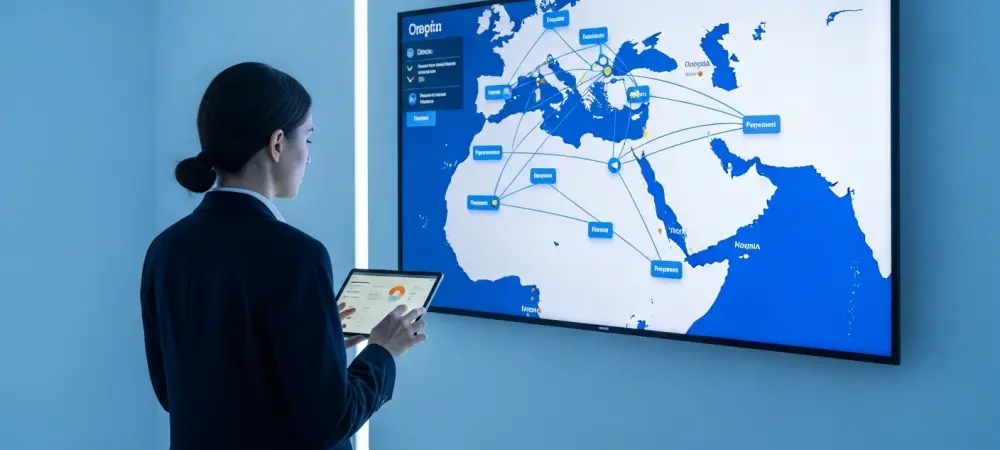
The promise of unprecedented growth in the Middle East and North Africa’s digital economy is tempered by the immense operational complexity businesses face when trying to cater to a diverse array of local payment preferences. As e-commerce surges across the region, navigating this fragmented payment ecosystem has become a primary hurdle for any digital business aiming to scale. In response, payment orchestration is rapidly emerging as a critical strategic tool, moving beyond a simple technical fix to become a cornerstone of regional expansion. This analysis will explore the trend through the lens of a key partnership between MoneyHash and Tap Payments, examining how such collaborations are creating a new blueprint for unifying disparate payment methods and simplifying the future of cross-border commerce.
The Rise of Unified Commerce in a Fragmented Market
The shift toward a unified commerce model represents a direct response to the inherent fragmentation of the MENA market. For businesses, the goal is no longer just about offering products online but about creating a seamless and localized experience from checkout to delivery. This requires a sophisticated payment infrastructure that can adapt to local consumer habits without creating an unmanageable web of integrations and operational overhead for the merchant.
Navigating the Complexities of MENA’s Payment Landscape
The MENA region’s e-commerce market continues its rapid expansion, with forecasts pointing to sustained double-digit growth through 2028. This boom, however, is built on a patchwork of local payment preferences. The proliferation of national debit card schemes like Knet in Kuwait, Mada in Saudi Arabia, and digital wallets such as Fawry in Egypt exemplifies a powerful trend toward local payment methods. While essential for gaining consumer trust and market share, this fragmentation creates significant operational challenges for merchants.
According to industry reports, managing multiple payment gateways to support these local options drastically increases operational costs and complicates reconciliation processes. This complexity acts as a direct barrier to scalability, forcing businesses to invest heavily in development resources just to maintain their payment stack, diverting focus from core product innovation and customer acquisition.
A Case Study in Collaboration MoneyHash and Tap Payments
The recent partnership between MoneyHash and Tap Payments provides a tangible example of the trend toward unified payment management in action. By integrating Tap Payments’ extensive regional gateway into its orchestration platform, MoneyHash offers merchants a streamlined solution to a complex problem. Tap Payments already serves over 120,000 businesses across nine key MENA markets, providing deep access to the region’s preferred payment options.
This collaboration delivers immediate, concrete benefits. Merchants can now utilize a single control layer to manage a diverse portfolio of payment methods, intelligently route transactions to optimize for cost and success rates, and access consolidated performance analytics. The integration effectively transforms a complex, multi-provider setup into a single, cohesive system, empowering businesses to expand their payment acceptance capabilities without the associated operational burden.
Expert Insights a Shared Vision for Modern Payment Operations
The consensus emerging from leaders at both MoneyHash and Tap Payments points toward a shared vision for building resilient, modern payment infrastructures. This perspective emphasizes that the future of digital commerce in the region depends on solutions that can abstract away the underlying complexity of the payment ecosystem, allowing businesses to focus on growth rather than on technical integration challenges.
Their joint approach underscores the trend’s core philosophy: to successfully balance the specific needs of local markets with the broader requirements of regional expansion. By offering a unified system that is both powerful and flexible, such partnerships enable businesses to cater to local preferences while maintaining a scalable and efficient operational framework. This strategic alignment is key to unlocking the full potential of the MENA digital economy.
The Future Trajectory of Payment Orchestration in MENA
Using this partnership as a model, the future of regional payment orchestration in MENA appears set for significant evolution. The next phase will likely involve deeper platform integrations, where payment data informs other business functions like marketing and inventory management. Furthermore, as orchestration platforms mature, they will expand into new markets and introduce more sophisticated tools for predictive analytics and dynamic transaction routing.
The broader implications of this trend are profound. It promises to accelerate cross-border trade by making it easier for international businesses to enter the MENA market and for regional businesses to expand. Consequently, this lowers the barrier to entry for digital startups and enhances the checkout experience for consumers, who will enjoy more choice and reliability. However, this interconnectedness also presents challenges, primarily in navigating evolving regulatory landscapes and ensuring robust security protocols across multiple integrated systems.
Conclusion a Blueprint for Regional Expansion
The analysis demonstrated that MENA’s payment fragmentation stood as a significant barrier to growth, a challenge that strategic partnerships have begun to effectively dismantle. Collaborations like the one between MoneyHash and Tap Payments provided a powerful solution by creating a unified layer that simplified complexity for merchants.
Ultimately, the trend reaffirmed that regional payment orchestration became an essential business strategy, not merely a technical tool. It was the key that unlocked scalable, efficient, and customer-centric operations. This collaborative model set a new standard, offering a clear and adaptable blueprint for building resilient payment infrastructures in emerging markets around the world.