

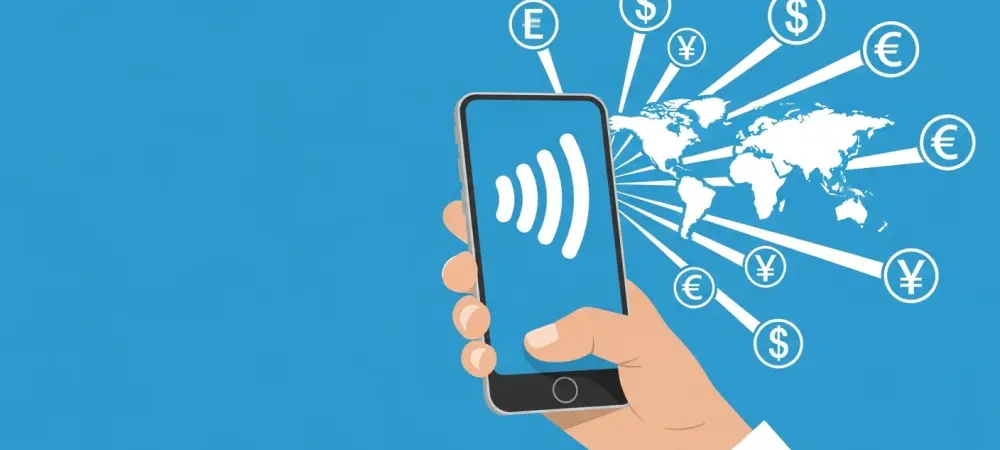
The global digital economy moves at the speed of light, yet the financial systems underpinning it often crawl at a pace dictated by borders and incompatible technologies. In an increasingly connected world, this fragmentation presents a significant hurdle, creating friction for consumers and businesses alike. The critical need for seamless, secure, and universally accepted payment methods has ignited a powerful trend toward global payment interoperability. This analysis explores the key drivers behind this shift, examines real-world applications like the groundbreaking Mastercard-TerraPay partnership, incorporates expert insights, and assesses the future outlook for a truly connected global economy.
The Accelerating Shift to Interoperable Digital Payments
Market Growth and Adoption Statistics
The secular shift in payment behavior is largely propelled by the dominance of digital wallets. Especially in emerging markets, these wallets are not just a convenience but a vital instrument for financial inclusion, providing millions with their first formal access to the digital economy. They represent a fundamental change in how individuals store, manage, and transact value, moving away from physical cash and traditional banking infrastructure toward more agile, mobile-first solutions.
This transition is vividly illustrated by the surge in contactless payments. According to Mastercard’s 2024 annual report, contactless transactions now constitute a commanding 70% of all in-person Mastercard payments worldwide. This statistic is more than just a number; it is a clear signal of massive consumer demand for speed and convenience at the point of sale, a demand that legacy payment methods struggle to meet.
The commercial value of this technology further accelerates its adoption. The same report highlights that contactless payments are up to ten times faster than other face-to-face methods, significantly reducing friction for both merchants and shoppers. Moreover, accounts enabled with contactless technology tend to exhibit higher average spending, demonstrating that a smoother payment experience can translate directly into increased revenue for businesses, providing a powerful incentive to upgrade their infrastructure.
Real-World Application The Mastercard and TerraPay Alliance
To capitalize on this momentum, Mastercard and TerraPay have forged a strategic collaboration aimed at integrating mobile wallets directly into the mainstream contactless payment ecosystem. This partnership is designed to empower a new wave of financial players, including mobile money wallets, innovative fintechs, and forward-thinking banks, by giving their customers the ability to pay wherever Mastercard is accepted.
The initiative’s technical foundation is built on Near Field Communication (NFC) technology, which allows users to simply tap their mobile device to pay at over 150 million Mastercard acceptance locations globally. This integration effectively turns a region-specific digital wallet into a universally accepted payment instrument, breaking down the barriers that have traditionally confined mobile money to closed-loop systems.
A key enabler of this expansion is TerraPay’s new global payment interoperability platform, Xend. This platform is engineered to provide wallet partners with a streamlined and rapid pathway to launch services with global contactless payment functionality. By simplifying the complex technical and regulatory hurdles, Xend accelerates market entry, allowing more providers to offer their users the freedom to transact on a global scale.
Expert Perspectives on a Connected Financial Future
Ambar Sur, the founder and CEO of TerraPay, emphasizes that this collaboration represents a major leap toward fulfilling the company’s mission to “make every wallet roam.” He explains that the partnership moves beyond simple money transfers to achieve true payment interoperability, empowering people to move and spend their money safely and instantly across borders, just as they would with a physical card.
From a network perspective, Prakriti Singh, Executive Vice President at Mastercard, affirms that the alliance is integral to Mastercard’s long-standing commitment to enabling innovation and fostering financial inclusion. She notes that collaborating with key ecosystem players like TerraPay is vital for scaling the positive impact of digital wallets, simplifying the implementation process for partners and ultimately extending the benefits of the digital economy to more people around the world.
A joint statement from the partners reinforces a broader industry consensus: digital wallets are no longer confined to online use. Their growing adoption for in-person payments is driven by the enhanced speed and security they offer. For merchants, this means faster checkouts and reduced risk, while for shoppers, it provides a secure and convenient way to pay, solidifying the role of digital wallets as an essential tool for modern commerce.
The Future of Global Payment Networks
Looking ahead, the trend toward interoperability is set to deepen with the further integration of diverse financial platforms, culminating in a truly unified global payment network. Future advancements are likely to include the incorporation of sophisticated biometric security for authentication, AI-driven fraud prevention systems that learn in real time, and even decentralized technologies that can enhance both security and efficiency.
The benefits of such a connected system carry profound implications. For consumers, this trend promises unprecedented convenience and financial freedom, allowing them to travel and transact without worrying about currency or compatibility. For businesses, it unlocks access to previously unreachable global markets, leveling the playing field. Most importantly, it serves as a powerful catalyst for financial inclusion, connecting unbanked and underbanked populations in emerging economies to the global marketplace.
However, the path forward is not without its obstacles. The primary challenge lies in navigating the complex and varied regulatory landscapes across different nations. Harmonizing these legal frameworks is essential for seamless cross-border transactions. Furthermore, ensuring robust data privacy and security standards will be paramount to building and maintaining the consumer trust necessary for a globally interconnected payment ecosystem to thrive.
Conclusion Paving the Way for a Borderless Economy
The powerful trend toward global payment interoperability was driven by undeniable consumer demand for seamless digital experiences and powerfully exemplified by strategic partnerships like the one forged between Mastercard and TerraPay. This movement successfully leveraged technological innovation to begin dismantling long-standing financial barriers. This evolution was more than a simple technological shift; it was a fundamental building block for a more inclusive and efficient global economy. By connecting disparate systems and empowering users with greater freedom, this trend laid the groundwork for a marketplace where opportunities were defined by innovation rather than geography. As collaboration and innovation continue to dissolve the borders between payment systems, the vision of a world where money can move as freely and securely as information is rapidly becoming a reality. The foundation has been set, and the momentum is now firmly directed toward creating a truly borderless economic landscape for all.