

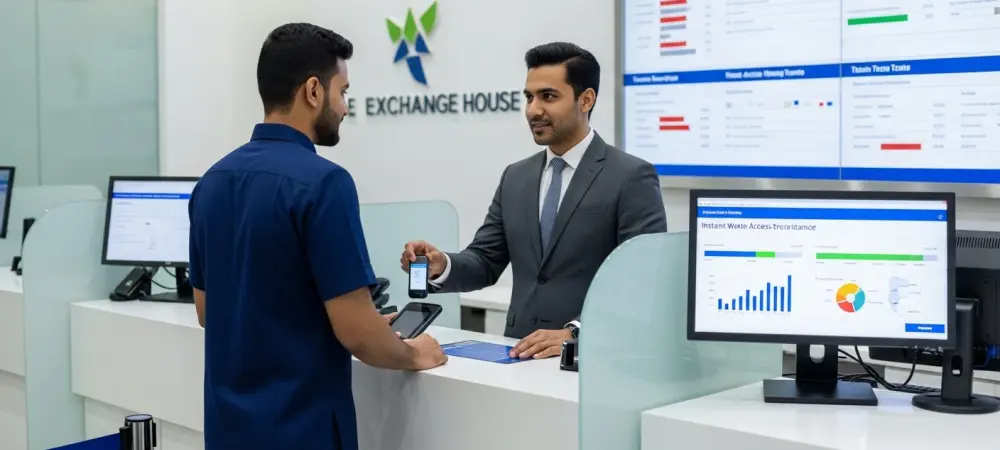
Hook: Embedding finance inside trusted exchange houses is turning paycheck-to-remittance journeys into a single, instant motion that compresses wait times, cuts fees, and preserves the human support millions in MENAP still value at the counter.
Context and significance: The UAE remains a top remittance hub, yet blue-collar workers and SMEs face fragmented flows and liquidity gaps even as digital banking expands. Embedding earned wage access, payroll, and credit within licensed exchange networks meets users where they already transact.
What this article covers: Market momentum and adoption; the ABHI–Federal Exchange case; expert lenses; forward scenarios, risk, and KPIs; and next steps for operators, employers, and policymakers.
1. Market Momentum and Adoption in MENAP Remittances
1.1 Data Signals: Scale, Velocity, and Readiness
UAE outflows rank among the world’s largest, with corridor costs still above SDG 10.c targets in several lanes. World Bank/KNOMAD, CBUAE, and IMF signals point to strong volumes and price pressure.
Expatriates dominate the workforce, and cash-in/cash-out at exchange houses remains sticky despite app growth. Reliability at branches and WPS-linked compliance keep foot traffic high.
Instant payments and Buna expand reach, while ISO 20022 improves screening and reconciliation. CBUAE mandates on FX transparency, AML/CFT, and WPS uphold consumer safety.
Embedded finance is gaining ground: EWA reduces overdraft reliance and boosts retention; SMEs seek short-cycle credit. GSMA, IDC, and Gartner track rising adoption across payroll-linked use cases.
1.2 Real-World Applications and Comparables
ABHI–Federal Exchange ties EWA, SME lending, and digital payroll into physical and digital rails. The result is an earn-access-remit continuum with fewer hops and faster settlement.
Comparable plays include TerraPay with MTOs, Mastercard Send corridors, and Network International tie-ups. Payroll-linked remittance journeys compress friction and lower return rates.
Proof points span settlement times, blue-collar activation, and SME working-capital utilization. Fewer failed transactions and higher first-pass authorization signal product-market fit. Sustained gains require corridor-level optimization and transparent fees. Branch staff training and SLA-backed routing anchor trust.
2. Voices That Matter: What Stakeholders Say
2.1 Policy and Regulatory View
CBUAE priorities center on safety, AML/CFT rigor, consumer protection, and interoperability. WPS-linked innovation and exchange house modernization get cautious support. Cross-border alignment hinges on data localization and KYC portability, especially in Saudi Arabia and Oman. Corridor-specific licensing shapes rollout pacing.
2.2 Industry Operators and Employers
Exchange houses hold a trust premium through compliance culture and last-mile service. Their distribution shortens the path to adoption for embedded products. Employer CFOs and HR leaders want payroll accuracy, cash-flow predictability, and lower turnover. Embedded payroll and EWA reduce admin friction and disputes.
2.3 Worker and SME Lenses
Workers ask for instant wage access, predictable settlement, and clear, all-in pricing. Human support at branches remains a safety net during exceptions. SMEs need invoice-based liquidity synced to payroll cycles and simpler outbound payments. Experts stress orchestration, strong risk controls, and intuitive last-mile UX.
3. Where It’s Headed: Scenarios, Opportunities, and Risks
3.1 Product Evolution and User Experience
The continuum is unifying: Earn → Access → Borrow → Remit → Settle, with payroll-linked credit and dynamic FX. Savings pockets, bill pay, and micro-insurance round out utility.
For SMEs, receivables financing aligns disbursements with inflows. Embedded experiences minimize context switching and error rates.
3.2 Real-Time Rails and Interoperability
Routing will flex between instant and near-real-time by corridor economics and risk. ISO 20022 data depth sharpens sanctions screening and reconciliation.
Branch biometrics and eKYC seed durable digital identities. Repeat use then moves to mobile without losing compliance fidelity.
3.3 Risk, Compliance, and Repeatability
Scaling into Saudi Arabia and Oman introduces licensing, data-sharing, and monitoring variance. Harmonized playbooks and shared utilities reduce duplication. Operational resilience rests on uptime SLAs, rapid dispute handling, fraud analytics, and settlement risk buffers. Clear fallbacks keep trust intact.
3.4 Competitive Dynamics and Ecosystem Plays
Exchange houses can serve as embedded front ends while apps compete on UX. Bank–fintech partnerships and card network push-to-account rails intensify.
Incumbent banks may bundle payroll and remittance; super-apps chase corridor stickiness. Network effects raise switching costs over time.
3.5 Metrics That Will Decide Success
Time-to-cash and finality define user value in urgent-use corridors. Authorization and pass rates reveal routing quality. Active users, payroll penetration, credit utilization, and repayment indicate depth. Cost-to-serve and exception rates measure scalable compliance.
4. Conclusion and Next Steps
4.1 Key Takeaways
Embedding finance in trusted exchange networks accelerated inclusion, speed, and access to credit without sidelining branches. The ABHI–Federal Exchange model showed practical gains.
Its durability hinged on cross-market compliance, consistent operations, and real-time performance at scale.
4.2 Actionable Recommendations
Operators prioritized interoperability, unified KYC, SLA-backed settlement, and guided branch-to-digital migration. Employers aligned payroll timing with EWA and tracked retention and productivity.
Policymakers enabled data portability, advanced instant rails, and clarified EWA and SME-lending rules to safeguard users.
4.3 Forward-Looking Statement
Momentum pointed toward corridor-optimized, payroll-linked remittances delivered through regulated front ends. With disciplined execution and regulatory harmony, everyday users gained tangible, near-term value.