

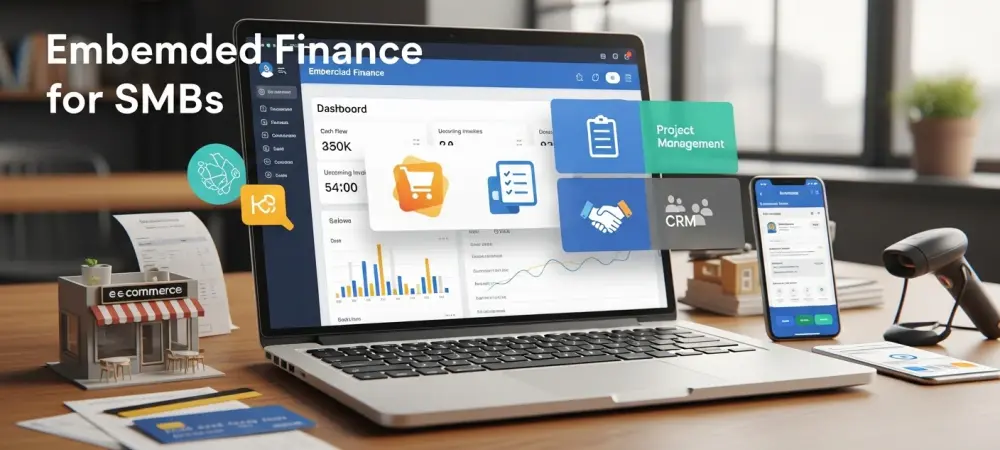
The era of small business owners walking into local bank branches to plead for working capital is rapidly fading as financial services merge into the very software that runs their operations. This shift represents a fundamental restructuring of how credit flows. By integrating capital into digital workflows, companies bypass traditional gatekeepers. Current trends show surging confidence in embedded capital, with players like Fundbox redefining liquidity through institutional partnerships.
The Rapid Expansion of Embedded Capital Infrastructure
Market Growth: The Institutional Shift in SMB Lending
Investors are moving away from traditional bank debt toward data-driven credit solutions. Projections suggest transaction values will reach hundreds of billions by the end of the decade. Recent funding rounds, like Fundbox’s facility with ATLAS SP Partners and Blue Owl Capital, signal that asset managers now view digital lending as a mature, stable asset class.
Real-World Integration: From Software to Solvency
Success relies on the marriage of financial tools and daily tasks in platforms like Stripe and Intuit. Fundbox has deployed over $6.5 billion to 170,000 businesses, proving the scale of automated delivery. Real-time underwriting uses alternative data to remove friction, making solvency a built-in software feature rather than an administrative hurdle.
Expert Perspectives: The Reliability of Embedded Finance
Asset managers at ATLAS SP Partners note that digital underwriting rigor often exceeds legacy standards due to deep data access. Leadership at Fundbox emphasizes that diversified institutional partnerships create a resilient foundation. Analysts agree these models handle volatility better than brick-and-mortar banks by adjusting risk parameters dynamically based on live transaction flow.
The Future Outlook: Toward a Seamless Financial Ecosystem
Finance-as-a-Service is becoming the standard for B2B software. As the industry moves from 2026 toward a more automated future, AI will drive hyper-personalized products. However, this growth will invite more regulatory scrutiny, requiring sophisticated risk management. Instant liquidity access will continue fostering innovation and operational stability globally.
The New Standard: SMB Growth Strategies
The transition toward integrated tools became a necessity for staying competitive in a digital economy. Small enterprises that leveraged these systems positioned themselves to weather shifts without traditional delays. Institutional backing provided the credibility that allowed these platforms to replace aging structures. Moving forward, providers focused on refining automated risk models to ensure long-term sustainability.