

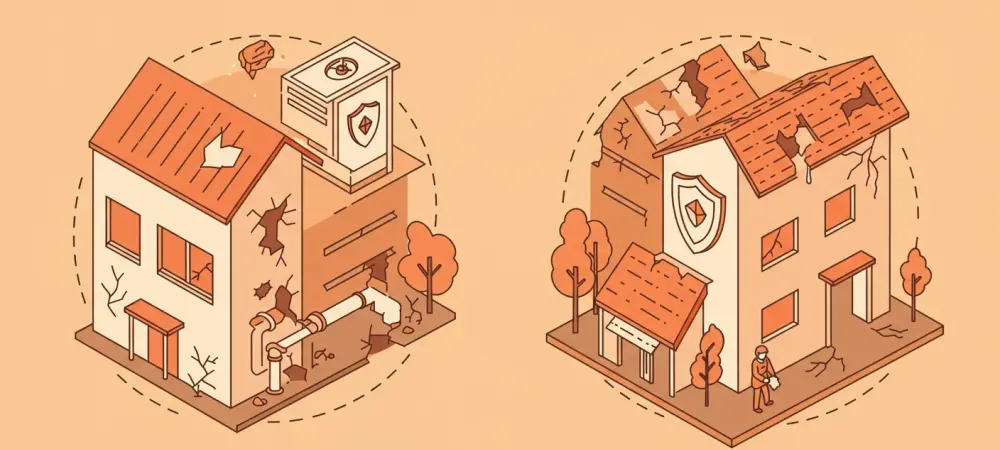
A staggering $317 billion in potential claim exposure looms over the U.S. property insurance industry, driven by widespread deferred maintenance across nearly 59 million homes, highlighting a pressing challenge. This alarming figure underscores a critical issue as homeowner behavior, escalating natural disaster losses, and insurer risks intersect in an increasingly volatile landscape. Severe weather events, coupled with neglected property upkeep, have created a perfect storm for catastrophic claims, pushing the industry to rethink traditional approaches. This analysis delves into data-driven insights, examines homeowner trends, explores industry challenges, and highlights future strategies for mitigating risk in a changing environment.
The Scale and Impact of Deferred Maintenance
Alarming Statistics and Financial Exposure
Deferred maintenance poses a monumental threat to the property insurance sector, with research revealing a $317 billion claim exposure tied to nearly 59 million U.S. homes. This figure reflects the cumulative risk of properties left vulnerable due to delayed repairs, amplifying potential losses during natural disasters. The financial burden is not merely hypothetical; it represents a tangible challenge for insurers already grappling with rising catastrophe costs.
Compounding this issue, 62% of homeowners admit to postponing critical repairs due to financial constraints, leaving their properties exposed to greater damage. This widespread behavior heightens vulnerabilities, especially as Severe Convective Storms (SCS)—including hail, tornadoes, and wind—have inflicted significant insured losses, reaching $58 billion in a single recent year. According to the Insurance Institute for Business & Home Safety (IBHS), roof damage accounts for up to 90% of residential claims during such events, spotlighting a key area of concern.
The intersection of deferred maintenance and severe weather creates a ripple effect, with long-term implications for claim severity. Data indicates that SCS now drive over 60% of catastrophe claims in the U.S., making them a dominant force in loss trends. As these storms grow in frequency and intensity, the financial exposure tied to neglected upkeep becomes an urgent priority for stakeholders across the industry.
Homeowner Behavior and Risk Blind Spots
A deeper look into homeowner trends reveals troubling patterns that exacerbate property risks. Approximately 40% of homeowners plan to rely on insurance claims to fund major repairs, such as roof replacements, treating coverage as a safety net rather than a last resort. This mindset directly contributes to the massive claim exposure facing insurers, as it delays proactive maintenance.
Equally concerning, 63% of homeowners who did not reside in their property during its last roof replacement remain unaware of the roof’s age. This lack of knowledge creates a dangerous blind spot, as aging roofs are particularly susceptible to failure during storms. Without awareness of such critical details, many properties remain at heightened risk of catastrophic damage.
Further data shows that 12% of homeowners indefinitely postpone necessary repairs, a decision that significantly increases vulnerability during extreme weather events. Combined with findings that 12.6 million properties are at high risk for hail-related roof damage—with potential replacement costs of $189.5 billion—this behavior underscores a systemic issue. Addressing these blind spots is essential to reducing the cascading effects of deferred maintenance on the insurance landscape.
Industry Perspectives on Rising Claim Severity
The insurance industry faces mounting challenges as claim severity escalates alongside the frequency of severe storms. Traditional tools, such as hazard maps, fall short in capturing the nuanced risks tied to individual properties and deferred maintenance. Kumar Dhuvur, Co-Founder and Chief Product Officer of a leading analytics firm, has emphasized that outdated models no longer suffice in this dynamic risk environment, calling for a shift in approach.
There is a growing consensus among industry leaders that the stakes for insurers have never been higher. With storm-related losses surging, carriers face pressure to refine their strategies and better anticipate claim trends. The focus is shifting toward preventive measures, as reactive responses to disasters prove increasingly costly and unsustainable in storm-prone regions. A key development in this space is the adoption of data-driven underwriting, powered by advanced AI analytics. These tools enable insurers to identify property-specific vulnerabilities, offering a more granular understanding of risk. By leveraging such technology, the industry aims to collaborate with homeowners on maintenance solutions, ultimately reducing loss exposure and improving financial outcomes in high-risk areas.
Future Directions: Mitigating Risk Through Innovation
Emerging technologies, particularly AI-driven property insights, hold transformative potential for insurance underwriting. By providing detailed assessments of individual properties, these tools allow insurers to move beyond broad risk categories and focus on specific vulnerabilities. This shift toward proactive risk management could fundamentally alter how the industry addresses deferred maintenance.
Collaboration between insurers and homeowners offers another promising avenue for reducing claim exposure. By identifying maintenance issues before disasters strike, carriers can encourage timely repairs, potentially averting significant losses. Such partnerships not only benefit policyholders by preserving property value but also help insurers stabilize combined ratios in regions frequently hit by storms.
However, challenges remain in implementing these innovative strategies. The cost of adopting new systems and integrating advanced analytics can be substantial, posing barriers for some carriers. Additionally, homeowner resistance to maintenance recommendations or premium adjustments tied to risk assessments may slow progress. Despite these hurdles, the long-term benefits of loss prevention and industry resilience make technology adoption a critical step forward.
Conclusion: A Call for Preventive Action
Looking back, the analysis painted a stark picture of a $317 billion claim exposure fueled by deferred maintenance across millions of U.S. homes, compounded by intensifying natural disasters. It revealed critical gaps in homeowner awareness, from ignorance of roof conditions to over-reliance on insurance for major repairs, while highlighting the outsized role of roof damage in catastrophe losses. The discussion underscored an urgent need for evolution in insurance practices to address these systemic risks.
Moving forward, actionable steps must prioritize innovation, with AI and property-specific data emerging as indispensable tools for risk mitigation. Insurers should focus on fostering partnerships with homeowners to tackle maintenance issues preemptively, while investing in technology to enhance underwriting precision. By embracing these strategies, the industry can build greater resilience against the growing unpredictability of climate-driven challenges, paving the way for a more sustainable future.