

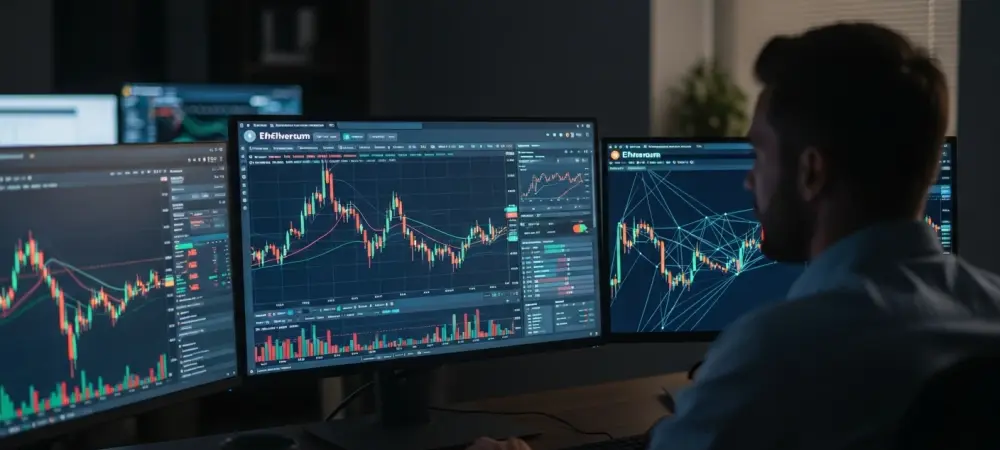
The relentless volatility of the cryptocurrency market is providing a brutal, real-time stress test for a bold and emerging corporate finance trend: the strategic allocation of significant treasury reserves to digital assets. This movement represents a fundamental departure from viewing cryptocurrency as a peripheral, speculative investment. Instead, companies like the treasury firm Bitmine are integrating digital assets into their core financial strategy, treating them as a primary treasury asset. This article dissects the growth of this trend, analyzes the high-stakes strategy of Bitmine, examines the expert justifications offered amidst severe market downturns, and explores the future risks and rewards inherent in corporate crypto treasuries.
The Growth and Strategy of Digital Asset Treasuries
Charting the Rise of Crypto on Corporate Balance Sheets
In recent years, a growing cohort of public and private companies has begun adding major cryptocurrencies like Bitcoin and Ethereum to their balance sheets. This strategic shift has moved beyond early adopters in the tech sector, with firms in various industries seeking an alternative hedge against inflation and a potential source of high returns. Market analysis reports from 2026 indicate a notable uptick in this practice, with the total value of crypto held in corporate treasuries globally showing a consistent growth trend.
The data reveals that this is not merely a fringe activity. Statistics show a significant increase in the number of corporations disclosing digital asset holdings, signaling a broader acceptance of this treasury management philosophy. This momentum suggests that what began as a novel experiment is now gaining traction as a considered, albeit aggressive, financial strategy for companies looking to diversify their liquid assets and capitalize on the long-term potential of the digital economy.
A Case Study in Conviction Bitmine’s High Stakes Ethereum Bet
Bitmine stands as a powerful case study in this high-conviction approach, with a treasury position dominated by a staggering 3.7 million ETH, originally acquired for approximately $15 billion. The real-world consequences of tying a corporate treasury so closely to a volatile asset became starkly clear during the recent market correction. As Ethereum’s price plunged to a low of $2,274, the value of Bitmine’s holdings fell to roughly $8.41 billion, saddling the company with a massive $6.6 billion unrealized loss and causing its stock, BMNR, to tremble.
Despite this enormous paper loss, Bitmine has doubled down on its strategy, showcasing a firm belief in Ethereum’s long-term value proposition. The company’s actions speak louder than market sentiment; it recently accumulated an additional 41,788 ETH during the downturn. Moreover, Bitmine is actively leveraging its assets through staking, having committed another 209,504 ETH to its staked portfolio to generate yield. This aggressive accumulation and utilization of assets during a period of market fear underscores a deeply held conviction in its chosen strategy.
Expert Rationale and Broader Market Sentiment
In the face of investor anxiety, Bitmine Chairman Tom Lee has staunchly defended the company’s treasury strategy. He attributes the recent decline in the firm’s stock price not to a flawed execution but to the weakness impacting the broader market. Lee has emphasized that Bitmine’s approach is deliberately designed to mirror and ultimately outperform the price of ETH over a full market cycle. From this perspective, significant drawdowns are not an unforeseen catastrophe but an anticipated, and accepted, part of the long-term journey.
This sentiment of buying into weakness is not isolated to Bitmine. The broader market has shown similar patterns, with large-scale investors, often referred to as “whales,” actively accumulating cryptocurrencies at lower price points. This activity suggests a shared belief among some of the market’s most significant players that the current downturn represents a strategic buying opportunity. Lee’s own unwavering outlook, predicting a substantial comeback for Ethereum, aligns with this wider trend of institutional conviction.
Future Outlook Navigating Risk and Reward
The long-term implications of a corporate treasury strategy so intimately linked to a volatile asset like Ethereum are profound and multifaceted. On one hand, the potential rewards are immense. During bull markets, such a strategy could yield outsized returns that dwarf traditional treasury investments, and leveraging assets through mechanisms like staking can provide a consistent stream of income. This approach offers a powerful tool for growth for companies willing to embrace the risk.
On the other hand, the challenges are equally significant. The strategy exposes a company to massive paper losses, which can fuel investor anxiety and directly impact its stock price, as seen with Bitmine. This introduces a level of volatility to corporate finance that traditional treasury managers have historically sought to avoid. The central question for the future is whether this trend represents a sustainable evolution in treasury management or a high-risk gamble confined to a few bold players. The path forward will likely be shaped by regulatory developments and the overall maturation of the digital asset market.
Conclusion: A Paradigm Shift in Corporate Finance?
The analysis of the growing trend of corporate crypto treasuries, exemplified by Bitmine’s unwavering but perilous strategy, revealed a new frontier in corporate finance defined by high risk and high reward. The conviction demonstrated by executives like Tom Lee, who weathered severe market storms by framing them as part of a long-term cycle, highlighted the mindset required to pursue such an unconventional path. This evolving landscape demanded close attention from investors, executives, and financial analysts alike, as its implications for corporate stability and growth were significant. Ultimately, the question of whether holding substantial crypto reserves would become a new standard for forward-thinking companies or remain a niche strategy for the boldest players was left for the market to decide.