

The Coiled Spring: Market Equilibrium and the Path Ahead
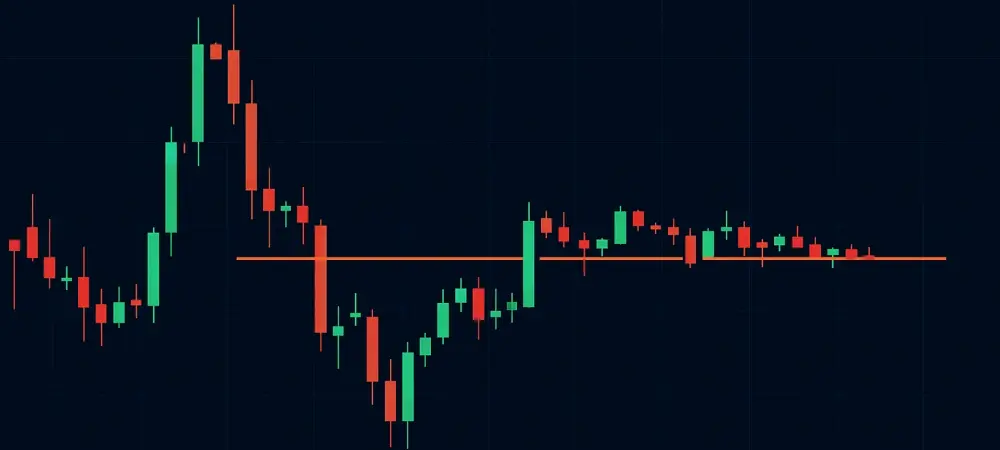
The global financial ecosystem currently observes Bitcoin sitting in a state of high-tension equilibrium, pinned beneath a critical threshold as market participants wait for a definitive breakout. This stagnation is not merely a pause in action but a concentrated period of price compression where the forces of supply and demand have reached a temporary, yet fragile, stalemate. As volatility drops to multi-year lows, the market feels less like a stagnant pool and more like a coiled spring, gathering energy for a move that could redefine the asset’s trajectory for the remainder of the decade.
Understanding this consolidation is essential for navigating a landscape defined by low liquidity and shifting institutional sentiment. In the current year, the 2024-era patterns of explosive growth have been replaced by a more calculated, data-driven environment where every basis point matters. Market participants are no longer just looking at price; they are dissecting the underlying architecture of the market to identify where the next surge or correction will originate.
This analysis explores the critical on-chain data trends and technical support levels that currently anchor the market. By examining expert perspectives on whale activity and institutional demand, a clearer picture of the internal market liquidity emerges. Furthermore, evaluating potential macroeconomic triggers offers a roadmap for the next major price move, whether it leads to a bullish reclaim of previous highs or a descent toward deeper support zones.
Market DatThe Technical Framework of Consolidation
Statistical Trends: Spot Volume and Volatility Compression
Current data from Glassnode and Wu Blockchain reveals that spot exchange volumes have plummeted to levels not seen since the cyclical lows of 2019. This decline in trading activity suggests a widespread “wait-and-see” approach among both retail and institutional investors, leading to a significant drying up of liquid supply on major platforms. Consequently, the market has entered a phase of volatility compression that mirrors the quiet periods of late 2023, which historically served as a launching pad for aggressive price action.
The significance of this compression cannot be overstated, as it indicates a narrowing “wedge” between the entry points of short-term holders and the median realized price of the entire market. When these two metrics converge, the room for price fluctuation diminishes, forcing a decisive move. Historically, such periods of low volatility in the crypto space do not last indefinitely; they represent a transition phase where the market recalibrates its expectations before a new trend establishes itself.
Real-World Application: Support and Resistance Corridors
Investors are currently utilizing the $63,000 Median Realized Price as a primary psychological floor to gauge the overall health of the market. This level is critical because it represents the average cost at which all existing Bitcoin was moved, serving as a boundary between a market in profit and one in distress. As long as the price maintains this level, the broader sentiment remains cautiously optimistic, as most holders are not yet under pressure to liquidate their positions out of necessity. In contrast, the $68,700 Short-Term Holder Cost Basis has emerged as a formidable resistance zone. This corridor is where many recent buyers found their entry points, and it now acts as a ceiling where these participants often seek to exit at a break-even point. Recent case studies of whale activity, such as the systematic sell-offs orchestrated by major entities like Paxos and Wintermute, have further reinforced this ceiling. These large-scale liquidations introduce consistent selling pressure that effectively caps any burgeoning bullish momentum.
Expert Perspectives: Institutional Demand and Supply Dynamics
Industry analysts have noted a cooling trend in institutional demand, highlighted by recent outflows from major spot Bitcoin ETFs totaling over $61 million in a single day. This shift suggests that the initial wave of institutional adoption has reached a saturation point, or at the very least, a period of consolidation. Professional observers suggest that the transition to a more cautious approach by these large players is a direct response to the lack of clear directional signals from the market.
Furthermore, there is a growing consensus regarding the impact of persistent selling pressure from long-term holders. While institutional buyers provided the floor during the earlier parts of the year, the current environment sees large-scale holders counteracting that momentum by offloading portions of their portfolios. This internal tug-of-war has led to a decoupling of Bitcoin from traditional equities, implying that the asset is currently moving based on its own internal liquidity dynamics rather than broader market trends.
The Future Landscape: Macroeconomic Risks and Market Scenarios
The potential for a bullish reclaim of the $68,700 level remains a distinct possibility if global liquidity conditions improve. Such a move would require a significant resurgence in ETF inflows and a stabilization of the global macroeconomic environment. If buyers can successfully push the price above this resistance, it would likely trigger a wave of short-covering and a return to aggressive price discovery, as short-term holders move back into a profitable state.
However, significant challenges persist in the form of global interest rate shocks and the potential unwind of various carry trades. These macroeconomic factors threaten the $63,000 support level, as a sudden contraction in global liquidity could lead to a rapid exit from risk assets. Given the current thinness of order books, even a moderate shift in sentiment could result in heightened volatility, potentially driving the market toward the June lows of $58,500. Investors must therefore weigh the potential for a rally against the structural risks posed by a fragile global economy.
Strategic Outlook: Final Summary and Market Directions
The Bitcoin market remained locked in a state of significant stagnation, driven primarily by record-low spot volumes and tightly constricted technical boundaries. Analysts observed that the convergence of the $63,000 support and the $68,700 resistance created a market environment where neither bulls nor bears could establish a dominant trend. The lack of institutional follow-through and the steady liquidation by large-scale whales further dampened the prospects for an immediate breakout.
The importance of monitoring these specific price levels became the primary focus for strategic market participants. It was determined that the current levels of volatility were unsustainable and that a sharp resolution was inevitable. As the market moved toward the end of this consolidation phase, the necessity for investors to prepare for a decisive shift in trend became clear. The period of quiet served as the final warning before the market re-engaged with its characteristic volatility, signaling the start of a new chapter in price discovery.