

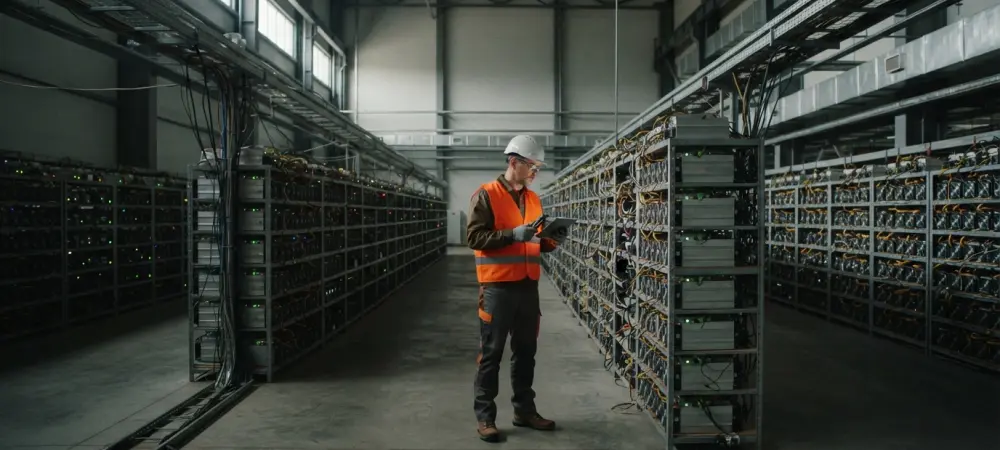
The global cryptocurrency market is currently navigating a high-stakes intersection where operational necessity meets waning investor appetite, forcing massive quantities of digital assets onto exchanges and testing the limits of supply-demand equilibrium. As the industry moves through the final quarter of 2026, the behavior of large-scale mining operations has become the primary focal point for those attempting to predict the asset’s short-term price stability. This shift represents more than a routine sell-off; it is a fundamental realignment of how liquidity is managed within the network during periods of tightening margins.
Analyzing Market Shifts and Miner Inflows
Evaluating Surge Data and Adoption Trends
Recent on-chain data highlights a dramatic shift in how producers handle their reserves, characterized by a sudden 1,600% spike in daily Bitcoin transfers to centralized trading platforms. On November 10, 2026, over 2,000 units of the asset moved from miner-controlled wallets, marking the most significant single-day liquidation threat observed since the beginning of the current market cycle. This trend suggests a strategic pivot from long-term accumulation toward immediate liquidity, likely driven by the persistent need to fund expensive hardware maintenance and rising electricity costs that have defined the 2026 fiscal year.
The scale of this movement indicates that the previous strategy of holding assets through volatility has reached a breaking point for several major players. Moreover, the timing of these transfers coincided with a period of broader macroeconomic uncertainty, suggesting that miners are increasingly reactive to global liquidity conditions rather than just internal network dynamics. As these coins enter exchange order books, the psychological pressure on the market intensifies, creating a self-reinforcing cycle of caution among retail participants.
Real-World Impact of Mining Pool Activities
Prominent industrial groups like Antpool are at the forefront of this liquidation trend, accounting for nearly 97% of recent exchange-bound volume according to recent audit reports. This concentrated movement serves as a practical example of how large-scale miners act as either market stabilizers or significant disruptors depending on their capital requirements. When these entities move thousands of units to exchanges, it signals a definitive transition from cold storage to liquid supply, directly inflating the inventory available for immediate sale and pressuring the $69,000 psychological price floor.
In contrast to smaller, decentralized operations, these massive pools operate with the precision of traditional financial institutions, often liquidating assets in response to specific power-purchase agreement triggers. Consequently, the presence of such high volume on trading platforms has dampened the bullish momentum that characterized the middle of 2026. This influx of supply has forced the market to confront the reality that industrial-scale mining is no longer just a background security function but a primary driver of price discovery.
Industry Perspectives on Miner Liquidations
Experts from leading analytical firms view these liquidations as a necessary, albeit painful, response to tightening operational margins rather than a total loss of confidence in the underlying technology. Analysts suggest that while the movement of assets to exchanges is typically a bearish signal for spot prices, it also represents a healthy “cleansing” of the market where inefficient operations are forced to de-risk their positions. This consolidation phase is common when the cost of production begins to overlap with the current market value, forcing a survival-of-the-fittest scenario among global hashing facilities.
Thought leaders emphasize that the correlation between these outflows and the emerging “demand crack” in spot markets—which currently shows a significant deficit of 362,000 units—indicates a period of extreme hesitation for institutional buyers. This gap between mining supply and buyer absorption suggests that the “buy-the-dip” sentiment seen earlier in the 2026-2027 cycle has temporarily stalled. Professional traders are now closely monitoring the delta between exchange inflows and wallet outflows to determine if this selling pressure is a temporary anomaly or the start of a multi-month distribution phase.
Future Projections for Network Stability
Looking ahead, the evolution of Bitcoin’s price will likely be shaped by the internal rebalancing mechanisms inherent in the protocol’s code. An upcoming 8.4% reduction in mining difficulty, scheduled for mid-November, is expected to provide significant relief by making it more cost-effective for the remaining miners to secure the network. This structural shift could effectively stem the tide of further liquidations by increasing the profitability of every unit of energy consumed, thereby reducing the desperation that currently drives exchange transfers.
However, the broader implications of this adjustment depend heavily on whether spot demand can reclaim previous resistance levels before the difficulty drop occurs. The network is essentially in a race against time to find a price floor that satisfies both the operational needs of the miners and the risk appetite of speculators. If the difficulty adjustment fails to provide enough of a margin cushion, the market may see a second wave of liquidations as secondary pools are forced to shut down their least efficient machines to remain solvent.
Conclusion and Strategic Market Outlook
The analysis of the 2026 miner liquidation event demonstrated that the relationship between network security and market liquidity remained incredibly sensitive to external cost pressures. It was found that the massive influx of supply from pools like Antpool created a localized price depression that the existing demand structure could not fully absorb. This period of volatility highlighted the necessity for miners to adopt more sophisticated financial hedging instruments to manage their operational risks without impacting the spot market so severely.
Strategic market observers concluded that the $69,000 support zone acted as the ultimate arbiter of sentiment during this transition. The successful navigation of the mid-November difficulty adjustment proved to be a turning point, as it allowed the network to recalibrate its energy efficiency metrics. Investors who successfully identified these automated rebalancing signals were better positioned to anticipate the eventual stabilization of the hash rate and the subsequent reduction in selling pressure. Ultimately, the industry learned that the sustainability of the current price cycle depended as much on the programmatic adjustments of the protocol as it did on the speculative fervor of global traders.