

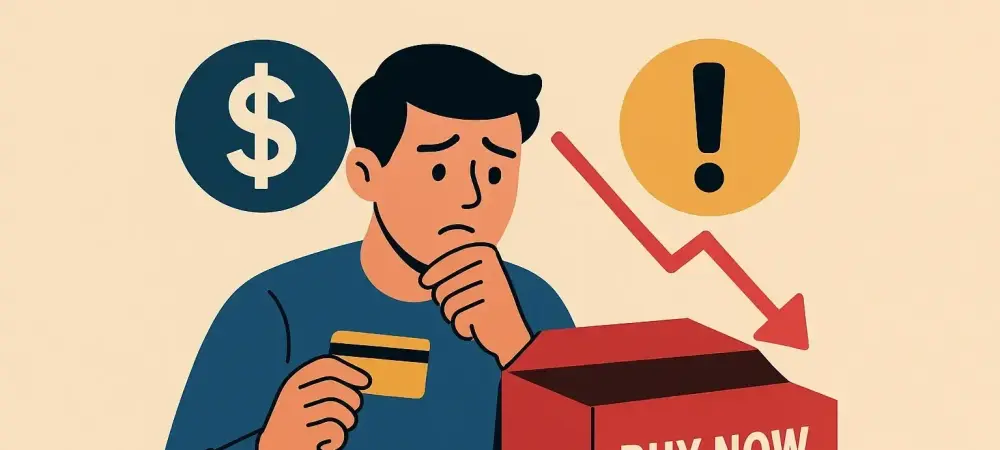
Data from LendingTree suggests that 68% of users admit installment services led them to overspend, highlighting the disconnect between perceived affordability and actual cost. This phenomenon has evolved rapidly as Buy Now, Pay Later (BNPL) services have transitioned from niche financing options for high-ticket items into a ubiquitous payment method for everyday essentials. What began as a convenient way to purchase a designer sofa or a high-end laptop has morphed into a tool for acquiring groceries, fast food, and basic apparel. This normalization of micro-debt creates a subtle yet profound shift in consumer psychology, where the total cost of ownership is obscured by the small, manageable appearance of bi-weekly payments. Retailers have capitalized on this by integrating these options directly into the digital checkout experience, effectively lowering the psychological barrier to purchase. When a fifty-dollar grocery bill is presented as four payments of twelve dollars and fifty cents, the friction of the transaction nearly vanishes, encouraging consumers to add items to their carts that they might otherwise have deemed unnecessary or outside their immediate budget. This convenience often masks the underlying reality that the consumer is entering into a legal debt obligation for goods that are consumed almost immediately, leaving the debt to persist long after the product is gone. The demographic profile of those most affected by this shift reveals a concerning trend toward “survival spending” among younger shoppers and households with modest incomes. For many, these services are no longer a luxury but a necessary strategy for managing cash flow in an environment where the cost of living continues to fluctuate. The ease of access to these plans, which often require only a soft credit check or no check at all, makes them particularly attractive to those who may not qualify for traditional credit cards or who are wary of high-interest revolving debt. However, this accessibility is a double-edged sword; it provides immediate liquidity while simultaneously committing future income to past consumption. As these micro-loans accumulate across various platforms, the aggregate burden can quickly become overwhelming, especially when unexpected expenses arise. The retail industry’s push toward these payment models has successfully turned borrowing into a routine part of the shopping experience, yet the financial literacy required to navigate these products safely has not kept pace with their adoption. This gap between the ease of borrowing and the complexity of managing multiple, overlapping debt obligations represents a significant challenge for modern household financial stability.
The Mechanisms of the Debt Cycle
Loan Stacking: The Fragmentation of Personal Liability
The fragmented nature of the installment lending market introduces a significant visibility problem that complicates traditional personal accounting methods. Unlike a single monthly credit card statement that aggregates all transactions into one clear balance, BNPL obligations are frequently dispersed across multiple providers such as Affirm, Klarna, and Afterpay. This lack of a centralized dashboard makes it exceptionally difficult for users to track their total outstanding debt at any given moment. The resulting “loan stacking” often leads to a situation where multiple automatic withdrawals hit a borrower’s bank account within the same window, potentially depleting their balance before other critical bills, such as rent or utilities, are settled. This chaos is compounded by the fact that many consumers use these services specifically because they are already experiencing tight cash flow, leaving very little margin for error when several small payments converge.
Beyond the logistical difficulty of tracking payments, the automated nature of these withdrawals can trigger a cascade of secondary financial penalties. When a bank account lacks sufficient funds to cover an automated installment payment, the consumer is often hit with an overdraft fee from their bank in addition to potential late fees from the BNPL provider. These combined costs can quickly exceed the original value of the installment itself, transforming a low-cost purchase into a significant financial burden. Furthermore, because these services are often marketed as “budgeting tools” rather than traditional loans, many consumers do not treat them with the same level of caution as a bank loan or a credit card balance. This psychological distancing allows the debt to feel less “real,” which in turn encourages further spending. The cumulative effect of these small, fragmented obligations is a form of financial erosion where a household’s disposable income is gradually consumed by a multitude of recurring micro-payments, leaving them vulnerable to even minor economic disruptions.
Conditional Interest: The Reality of Marketing Promises
The marketing of installment services heavily emphasizes the “interest-free” nature of the product, yet this status is frequently conditional upon perfect repayment behavior and specific plan types. While the standard “Pay in 4” model often carries no interest, longer-term financing options for more expensive items can feature annual percentage rates that are comparable to, or even higher than, traditional credit cards. Consumers are often lured in by the promise of zero interest, only to find themselves steered toward longer-term plans that carry significant financing costs as the purchase price increases. This bait-and-switch dynamic is particularly effective in high-pressure retail environments where the focus is on the monthly or bi-weekly payment amount rather than the total interest paid over the life of the loan. For those who miss a single payment, the consequences can be severe; some providers may revoke the interest-free status or apply retroactive interest, significantly increasing the total cost of the initial purchase.
The hidden penalties associated with these services often fall hardest on the most vulnerable users. While the absence of traditional late fees is a common selling point for some providers, others have implemented structured penalty systems that can add ten or twenty dollars to each missed installment. For a consumer who is already struggling to make a twenty-five-dollar payment, an additional fifteen-dollar late fee represents a massive percentage increase in their obligation. This creates a feedback loop where the cost of the debt rises exactly when the borrower is least able to pay it. Additionally, the lack of transparency regarding how these fees are calculated and applied means that many users are caught off guard by the final cost of their “interest-free” purchase. The complexity of the terms and conditions, often buried in lengthy digital agreements, ensures that the true cost of borrowing remains opaque to the average consumer until they encounter financial difficulty, at which point the options for recourse are often limited.
Systemic Vulnerabilities and Economic Impact
The Invisible Debt Bubble: Hidden Credit Risks
A primary systemic concern within the financial sector is the lack of consistent credit reporting for BNPL transactions, which creates an “invisible debt” bubble. Because many of these installment loans are not reported to major credit bureaus in real-time or in a standardized format, a consumer’s credit profile may appear much healthier than it actually is. This informational gap prevents traditional lenders, such as mortgage providers or auto lenders, from accurately assessing a borrower’s total debt-to-income ratio. A borrower might successfully manage several BNPL plans while simultaneously applying for a large loan, leading the lender to extend credit based on incomplete data. This lack of transparency introduces significant risk into the broader financial system, as it allows for the accumulation of household debt that is effectively shielded from regulatory and institutional oversight. If a large-scale economic downturn were to occur, this hidden leverage could lead to a wave of defaults that catch both lenders and regulators by surprise.
The lopsided risk profile of these services also means that while positive payment history is rarely reported to boost a consumer’s credit score, defaults and collections are frequently shared with bureaus. This creates a scenario where the borrower enjoys none of the benefits of traditional credit building but faces all of the potential downsides. For younger consumers or those trying to establish credit, this dynamic is particularly damaging. They may believe they are managing their finances responsibly by using installment plans instead of credit cards, only to find that their diligent payments do nothing to improve their creditworthiness, while a single missed payment due to a technical error or a temporary cash shortage can significantly damage their financial future. This asymmetry underscores the need for a more integrated approach to credit reporting, where all forms of consumer debt are visible and accounted for, ensuring that both borrowers and lenders are operating with a full understanding of the financial landscape.
Rising Provider Losses: The Stability of the Sector
The risks inherent in the BNPL model are not limited to consumers; the providers themselves are facing increasing pressure as credit losses rise. Many of these companies prioritized rapid user acquisition and market share over rigorous credit underwriting, leading to a portfolio of borrowers who may be more susceptible to default during periods of inflation or economic instability. As interest rates have remained a factor in the cost of capital for these providers, the margin for error has narrowed significantly. When a provider experiences a high rate of non-payment, they must either increase fees for other users, tighten their lending standards, or seek additional capital, all of which can impact the availability and cost of the service. This volatility suggests that the business model, while highly successful at driving retail sales, may face sustainability challenges if it cannot accurately vet the risk of its diverse and often overextended user base. From a broader macroeconomic perspective, the shift toward using future income to pay for non-durable, immediately consumed goods like food and fuel could weaken overall economic resilience. When a significant portion of the population has already committed their upcoming paychecks to pay for past consumption, they have less flexibility to respond to sudden shocks, such as a medical emergency or a job loss. This “pre-spent” income reduces the effectiveness of discretionary spending as a driver of economic growth and makes the household more dependent on continued access to credit. If the BNPL sector were to contract suddenly due to regulatory changes or provider instability, millions of consumers who have integrated these services into their daily survival strategies could find themselves in an immediate liquidity crisis. This creates a fragile economic environment where the stability of household finances is increasingly tied to the continued operation of a loosely regulated and relatively new form of digital lending.
Strategic Responses and Long-Term Recovery
Global Oversight: The Regulatory Shift Toward Credit Parity
Governments around the world recognized the need for enhanced oversight as installment services became a dominant force in the retail economy. In markets like the United Kingdom and Australia, regulators moved to reclassify these services to ensure they were subject to the same rigorous affordability checks and consumer protection laws as traditional credit products. This shift was intended to prevent providers from exploiting loopholes that allowed them to bypass standard lending requirements. In the United States, the regulatory landscape saw a gradual move toward transparency, with authorities focusing on ensuring that dispute resolutions and refund processes for BNPL purchases matched the protections afforded to credit card users. These interventions were designed to create a more level playing field, where the convenience of the technology did not come at the expense of basic financial safeguards for the consumer. The implementation of mandatory affordability checks represented a significant milestone in the evolution of the industry. By requiring providers to verify a borrower’s ability to repay before approving a new plan, regulators sought to curb the trend of loan stacking and prevent consumers from falling into deep debt cycles. Furthermore, new rules regarding the disclosure of interest rates and fees were enacted to ensure that “interest-free” claims were not misleading. These measures provided a necessary framework for an industry that had previously operated with minimal supervision, helping to stabilize the market and protect the most vulnerable participants. As these regulations took hold, the focus shifted from pure growth to sustainable lending practices, encouraging providers to develop more sophisticated risk assessment tools that benefited both their own balance sheets and the financial health of their customers.
Financial Stewardship: Strategic Approaches to Debt Management
Consumers who successfully navigated the complexities of installment debt often did so by adopting a more disciplined approach to their personal finances. They began to treat every installment plan as a formal debt obligation rather than a simple checkout feature, which was a critical step in regaining control over their spending. Effective management strategies included the use of centralized tracking tools or simple spreadsheets to monitor all active plans, their total balances, and their respective due dates. By creating a comprehensive view of their obligations, users were able to avoid the “payment shock” that occurred when multiple withdrawals hit their accounts simultaneously. They also prioritized the payment of essential costs, such as housing and utilities, ensuring that their use of BNPL did not compromise their basic financial security. Those who found themselves overwhelmed by accumulated installments took proactive steps to halt the cycle by immediately ceasing the use of new credit and seeking assistance. Many providers offered hardship programs that allowed for modified payment schedules or temporary pauses for those experiencing genuine financial distress. Consumers sought guidance from nonprofit credit counseling services, which provided the tools necessary to reorganize household budgets and develop long-term repayment plans. These actions emphasized the importance of financial education and the need for consumers to remain vigilant in a digital economy that is increasingly designed to facilitate friction-less borrowing. By learning to recognize the psychological triggers used by retailers and providers, individuals were able to make more informed decisions, ultimately fostering a more resilient and sustainable relationship with modern credit products.