

The digital pulse of the global economy now beats at a rhythm of roughly 700 million daily UPI transactions in India, serving as a definitive benchmark for the sheer velocity of modern digital acceleration. This astronomical figure is no longer just a regional success story; it represents a fundamental shift in how human beings exchange value across the globe. As the world moves deeper into this high-speed era, the traditional checkout process is rapidly becoming an artifact of the past, replaced by an ecosystem built on instant gratification and invisible friction. For the modern retailer, sophisticated payment infrastructure has transitioned from being a clever competitive advantage to a non-negotiable requirement for basic survival. The days of clunky, multi-step forms that demand manual entry of sixteen-digit card numbers are ending as consumers increasingly expect the “last mile” of commerce to be as instantaneous as a thumbprint scan. This shift is not merely about convenience; it is about bridging the psychological gap between the desire to own and the act of purchasing, ensuring that the digital experience finally mirrors the immediacy of picking an item off a physical shelf.
The Plumbing of the Internet Dictates Retail Success
In a high-volume digital economy, the efficiency of payment plumbing is the most accurate predictor of a business’s long-term viability. When transaction failures or high-latency checkouts occur, they do not just represent a lost sale; they signify a breakdown in customer trust that can take years to rebuild. Modern FinTech has stepped into this breach, providing the invisible scaffolding that allows businesses to handle thousands of concurrent transactions without the operational overhead that once plagued legacy systems.
Addressing critical pain points like fraud mitigation and settlement delays is now a automated process rather than a manual burden. By implementing intelligent systems that identify risk in milliseconds, retailers can offer zero-latency transactions that satisfy the modern consumer’s demand for speed. This evolution ensures that the backend of a retail operation remains as agile as its marketing front, allowing for a seamless flow of capital that keeps the digital storefront perpetually open and reliable.
The Dominance of Account-to-Account (A2A) Rails
One of the most transformative pillars of this new frontier is the rise of Account-to-Account (A2A) payment rails, which allow for the direct transfer of funds between bank accounts. By bypassing traditional credit card networks, merchants are successfully achieving up to an 80% reduction in transaction costs. This “Pay by Bank” model effectively solves the chronic liquidity crises that many small to medium-sized enterprises faced when waiting days for card processors to settle funds.
Furthermore, these real-time settlement systems are inherently more secure than their predecessors. Because A2A transactions are “pushed” by the consumer using biometric authentication—such as facial recognition or fingerprint scanning—the threat of fraudulent chargebacks is virtually eliminated. This shift toward consumer-authorized payments provides a level of finality and security that legacy card systems, with their “pull” mechanics and easily stolen data, simply cannot match in the current technological climate.
The Strategic Sophistication of Buy Now, Pay Later (BNPL)
Buy Now, Pay Later (BNPL) has matured far beyond simple installment plans into a suite of AI-driven, hyper-personalized credit tools. These systems now conduct instantaneous credit assessments that are far more nuanced than traditional credit scores, allowing retailers to offer flexible financing at the exact moment of decision. This integration has proven to be a primary driver for increasing Average Order Value (AOV), as it empowers shoppers to invest in higher-quality goods without the immediate sting of a full-price payment.
This financial flexibility is particularly resonant with debt-averse demographics who favor transparent, fixed-term arrangements over the open-ended interest cycles of traditional credit cards. By embedding these solutions directly into the checkout flow, brands are seeing a significant reduction in cart abandonment. The result is a credit ecosystem that feels like a service rather than a burden, fostering a sense of partnership between the brand and the buyer that extends well beyond a single transaction.
Security and Retention via Network Tokenization
To combat the rising sophistication of cyber threats, the industry has turned to network tokenization as the gold standard for data protection. By replacing sensitive payment information with merchant-specific digital tokens, businesses can safeguard their customers’ data while simultaneously enhancing the user experience. Unlike standard encryption, these tokens are dynamic and issued by the card networks themselves, meaning that even if a data breach occurs, the stolen information is useless to bad actors.
This technology also plays a vital role in reducing “passive churn,” which occurs when a subscription or recurring payment fails because a customer’s card has expired or been replaced. Network tokens remain valid even when the physical card details change, allowing for automated, uninterrupted renewals. This consistency boosts bank authorization rates and reduces the heavy lifting required for PCI compliance, allowing businesses to focus on growth rather than the administrative hurdles of data security.
The Store of One: AI-Driven Hyper-Personalization
The most advanced e-commerce platforms are now utilizing AI to create a “Store of One,” where the checkout interface is dynamically tailored to the individual user. By analyzing device type, geographic location, and past behavior, the system predicts which payment method the customer is most likely to use and displays it prominently. This reduction in cognitive load—the mental effort required to navigate a list of options—is a subtle but powerful psychological tool that makes the brand feel premium and intuitively aligned with the user’s needs.
Moreover, location-aware checkout interfaces can automatically adjust for local currencies and regional payment preferences, such as digital wallets popular in specific countries. This level of personalization removes the friction of cross-border commerce and builds a deeper level of consumer loyalty. When the payment process feels like it was designed specifically for the individual, the transaction stops feeling like a chore and starts feeling like a seamless extension of the shopping experience itself.
Blurring Boundaries with SoftPOS Technology
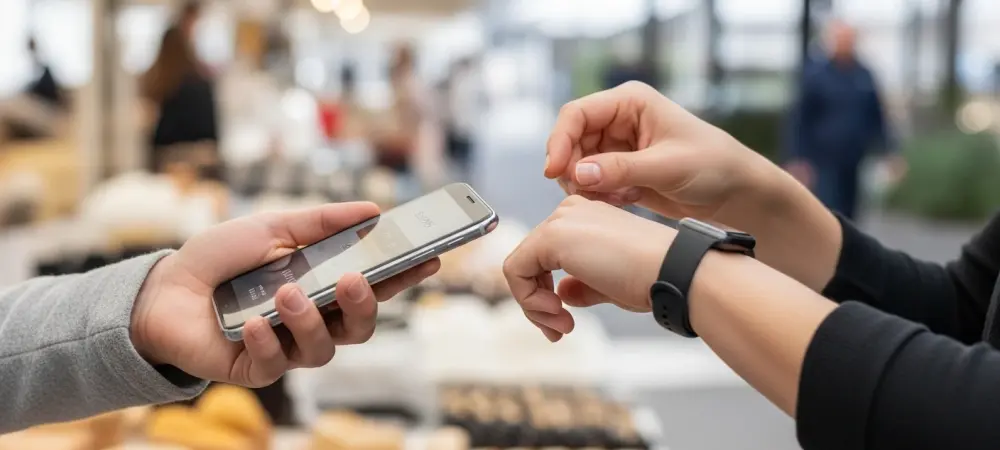
The final piece of the modern payment puzzle is the emergence of SoftPOS technology, which transforms any NFC-enabled smartphone into a secure payment terminal. This innovation eliminates the need for expensive, proprietary hardware, allowing mobile delivery fleets and pop-up boutiques to accept secure payments on the go. It effectively bridges the gap between digital storefronts and physical touchpoints, creating a unified commerce experience where the line between “online” and “offline” is practically non-existent.
SoftPOS technology also empowers the “Buy Online, Pick Up In-Store” (BOPIS) model by allowing staff to handle additional transactions anywhere on the sales floor. This synchronization ensures that offline transaction data is instantly integrated with online customer profiles, providing a 360-degree view of the customer journey. By unifying these data streams, retailers gained the ability to offer a consistent, high-quality experience regardless of where or how the customer chose to finalize their purchase.
Expert Insights into the Future of Digital Value Exchange
In the landscape of 2026, the industry consensus identified “frictionless” as the ultimate metric for measuring customer loyalty and long-term success. Research demonstrated that every millisecond shaved off the checkout process directly correlated to higher conversion rates, with optimized systems seeing a 10% to 15% increase in successful transactions compared to legacy frameworks. The shift toward automated, AI-enhanced financial ecosystems proved that the most successful businesses were those that treated payment as a core part of their brand identity rather than a back-office utility.
Strategic implementation of these modern architectures required a methodical approach. Forward-thinking organizations began by auditing their existing stacks to prune high-fee intermediaries and then prioritized the integration of real-time A2A rails to stabilize cash flow. By deploying network tokenization and AI-driven personalization, they protected their revenue streams and deepened their connection with consumers. The adoption of SoftPOS solutions finally harmonized the digital and physical worlds, ensuring that every touchpoint was an opportunity for secure, effortless value exchange. These actions laid the groundwork for a more resilient and responsive retail environment.