

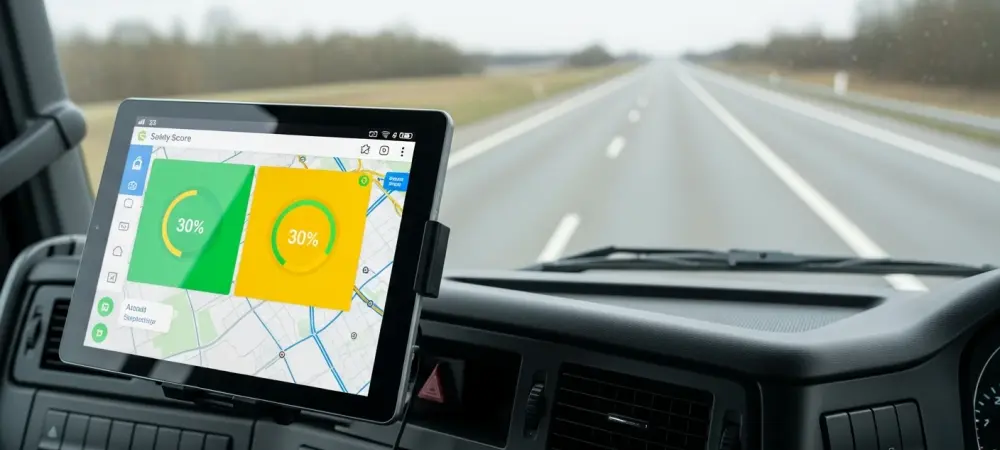
The traditional insurance industry has long relied on lagging indicators and historical averages, but the modern era demands a more precise method for quantifying the volatile risks of the open road. As fleet operations face rising costs and complex safety challenges, a shift toward real-time monitoring has moved from a luxury to a functional necessity. This review explores the emergence of telematics-driven insurance, where data is no longer just a diagnostic tool but the very foundation of the policy itself.
The Evolution of Data-Driven Underwriting
Telematics technology has undergone a radical transformation, moving away from passive GPS tracking toward sophisticated behavioral analysis. Historically, insurers calculated risk based on broad categories like vehicle type or geographic location, which often unfairly penalized safe drivers. By shifting to real-time monitoring, the industry can now observe how a vehicle is actually operated, capturing nuances in braking, acceleration, and cornering.
This evolution is significant because it replaces speculation with certainty. In the broader technological landscape, this represents a move toward “active” risk management. Instead of waiting for a claim to occur to adjust a profile, underwriters use streaming data to identify high-risk patterns before they result in accidents. This proactive stance marks a fundamental change in the relationship between the insurer and the insured.
Critical Components of Modern Telematics Platforms
Mandatory Integration: Real-Time Data Streaming
The most striking feature of the latest industry offerings, such as the initiative launched by LEEO, is the transition of telematics from an optional add-on to a core policy requirement. By making data integration mandatory, insurers can provide more granular pricing that reflects current performance. This live stream of information allows for a level of underwriting precision that was previously impossible, as it directly connects the premium paid to the actual danger present on the road.
AI-Powered Predictive Modeling: The Feedback Loop
Artificial intelligence now sits at the center of the policy lifecycle, processing vast amounts of raw data to find hidden risk correlations. These AI models do not just look at past mistakes; they predict future liabilities by analyzing continuous feedback loops. From the moment a quote is generated to the final settlement of a claim, the integration of machine learning ensures that risk assessments are always current, allowing for a more dynamic and responsive insurance product.
Hardware-Agnostic Connectivity: Fleet Dashboards
One of the primary barriers to telematics adoption has been the technical friction of hardware installation. Modern platforms solve this by being hardware-agnostic, meaning fleet operators can connect their existing devices to a centralized hub. Through intuitive web and mobile dashboards, managers gain instant visibility into fleet health and driver safety. This transparency allows for immediate intervention, turning raw data into actionable insights for the business owner.
Emerging Trends in Performance-Based Insurance
A significant trend currently reshaping the market is the rise of incentive-driven models. Rather than static annual premiums, these structures allow for adjustments based on safety metrics. This approach fosters a culture of accountability, as drivers and managers are directly rewarded for maintaining high safety standards. It effectively turns insurance from a fixed overhead cost into a manageable operational variable.
Moreover, the increased transparency between brokers and the insured is changing industry behavior. When both parties have access to the same safety data, the relationship becomes more collaborative. This shared understanding leads to more sustainable policy structures, where the goal is not just to transfer risk but to actively reduce it through technological oversight and behavioral modification.
Real-World Applications for Fleet Management
In the logistics and delivery sectors, the deployment of real-time safety data is already yielding tangible results. For instance, companies utilizing integrated telematics have seen a measurable reduction in minor collisions and fuel waste. By monitoring idling time and aggressive driving, fleet managers can optimize routes and coaching, leading to immediate operational cost savings that extend beyond the insurance premium itself. Unique use cases are also emerging where real-time performance data triggers immediate premium adjustments. In a high-turnover industry, this allows a company to onboard new drivers with a clear understanding of their risk profile from day one. This level of oversight ensures that fleet safety is not left to chance but is managed with the same rigor as supply chain logistics or financial accounting.
Technical and Operational Challenges
Despite the clear benefits, the technology faces hurdles regarding data accuracy across diverse fleet types. Integrating a 2026 model-year semi-truck with an older delivery van requires robust software that can normalize data from different sensors. Technical friction during initial setup can still occur, particularly when legacy hardware is involved, potentially leading to gaps in visibility if the integration is not handled seamlessly.
Furthermore, there are ongoing concerns regarding data privacy and regulatory compliance. As pricing becomes more tied to individual behavior, the industry must navigate the fine line between helpful monitoring and intrusive surveillance. Developers are currently working to refine anonymization techniques and ensure that performance-based pricing remains fair and compliant with evolving regional labor laws and privacy standards.
The Future Trajectory of Commercial Risk Assessment
The industry is moving toward a fully automated, data-centric ecosystem where the human element of underwriting is supported by near-instantaneous algorithmic decisions. Future developments in predictive analytics will likely incorporate external data points, such as real-time weather patterns and infrastructure health, to further refine risk models. This holistic view will make insurance an invisible but omnipresent safety net.
Long-term, the impact of these sustainable, performance-based models will be felt across global logistics. As fleets become safer and more efficient, the overall cost of moving goods will decrease, benefiting the entire economy. The goal is a world where “accidents” are viewed as preventable data anomalies rather than inevitable costs of doing business, fundamentally altering the safety standards of modern transportation.
Conclusion: Assessing the Data-Centric Shift
The transition toward embedded telematics successfully moved the commercial insurance sector away from outdated, static models. By prioritizing real-world behavior over historical demographics, the industry established a more equitable and transparent pricing structure. This shift, exemplified by the strategies deployed by MGAs like LEEO, demonstrated that technology could serve as both a safety tool and a financial stabilizer for growing fleets. The move toward hardware-agnostic platforms and AI-driven insights ultimately simplified the adoption process for operators. As these systems matured, they fostered a professional environment where safety performance became a measurable asset. The collective adoption of these data-centric practices set a new standard for risk management, ensuring that the commercial driving environment became significantly safer and more efficient.