

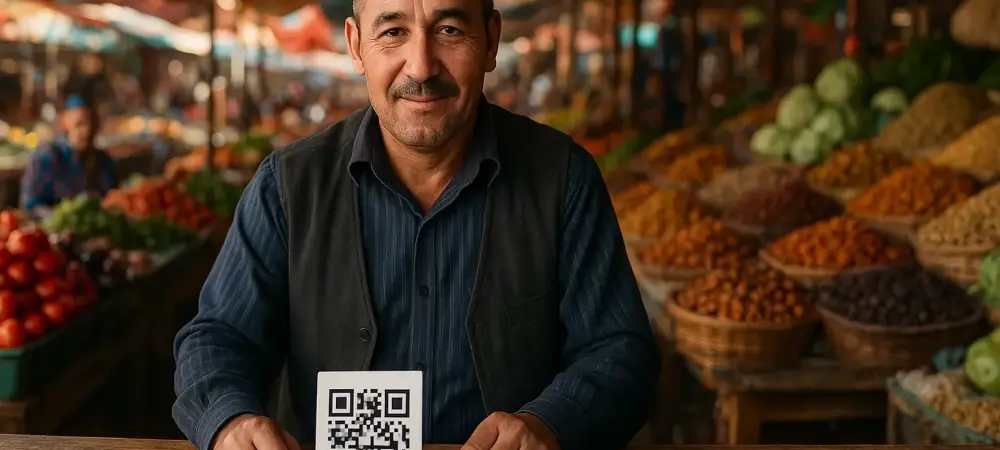
The digital landscape of Central Asia is undergoing a rapid metamorphosis as traditional cash-based systems give way to sophisticated mobile alternatives. A single, centralized QR code now allows merchants to accept payments from any domestic banking application, streamlining the entire checkout process for buyers. This transition is not merely a convenience but a response to a significant surge in consumer demand for digital solutions. By the middle of 2026, cashless transactions in Tajikistan have already reached 41 percent of all retail payments, reflecting a fundamental shift in how citizens interact with the formal economy. The primary driver of this change is the extreme accessibility of QR-based infrastructure compared to conventional hardware. Currently, QR codes outnumber traditional point-of-sale terminals by a ratio of more than three to one, demonstrating that the future of Tajik commerce lies in the ubiquitous smartphone rather than in the expensive and bulky card readers of the previous decade.
The Digital Transformation: Central Asian Commerce
Addressing Market Fragmentation: The End of Sticker Fatigue
Before the implementation of a centralized system, the retail environment suffered from a phenomenon known as sticker fatigue, where cash registers were cluttered with dozens of unique QR codes for different banks. This fragmentation created significant confusion for customers, who were often forced to spend time identifying which specific banking application corresponded to a particular merchant’s display. This friction not only slowed down checkout lines but also discouraged the adoption of digital payments among less tech-savvy populations. The Development Bank of Tajikistan addressed this bottleneck by creating a unified infrastructure that acts as a universal bridge between diverse financial applications. Now, a consumer can use any domestic mobile wallet to scan a single merchant sticker, ensuring that the payment process is as fast and intuitive as handing over a physical banknote. By consolidating these disparate channels into one cohesive interface, the banking sector has successfully removed one of the greatest logistical barriers to a fully cashless society.
Empowering Local Merchants: Strategic Oversight and Growth
The advantages of the Unified QR initiative extend far beyond the customer experience, offering transformative benefits for the daily operations of local business owners. Traditionally, managing digital sales required reconciling reports from multiple banking platforms, often leaving merchants to rely on inconsistent SMS notifications to verify that a transaction had been completed. The new centralized system integrates directly with corporate internet banking platforms, providing entrepreneurs with a consolidated, real-time dashboard of all incoming funds regardless of the customer’s bank. This integration allows for immediate financial oversight and simplifies the direct transfer of revenue into business accounts, which is vital for maintaining healthy cash flow. Furthermore, the bank has eliminated the financial barrier to entry by offering free installation and specialized staff training. This approach ensures that even small vendors in busy markets can modernize their payment systems without incurring the high maintenance costs and hardware investments associated with legacy POS terminals.
Scaling Financial Inclusion: Insights and Next Steps
Looking ahead, the standardization of payment infrastructure is expected to catalyze broader economic growth across the country from 2026 to 2028. As the Unified QR system expanded from Dushanbe into more remote regions, it provided rural populations with their first consistent access to formal financial services. This expansion drove greater fiscal transparency, as more transactions were brought into the digital ledger, helping the government better understand and support local market dynamics. To maximize this potential, financial institutions and policymakers prioritized the security of the underlying network and worked to harmonize digital standards with regional neighbors to facilitate easier cross-border trade. By mid-2026, stakeholders successfully established the groundwork for a more sophisticated retail environment that balanced technological innovation with practical usability. This comprehensive strategy ultimately turned a fragmented market into a resilient and unified digital ecosystem, offering a scalable model for neighboring economies to follow in the coming years.