

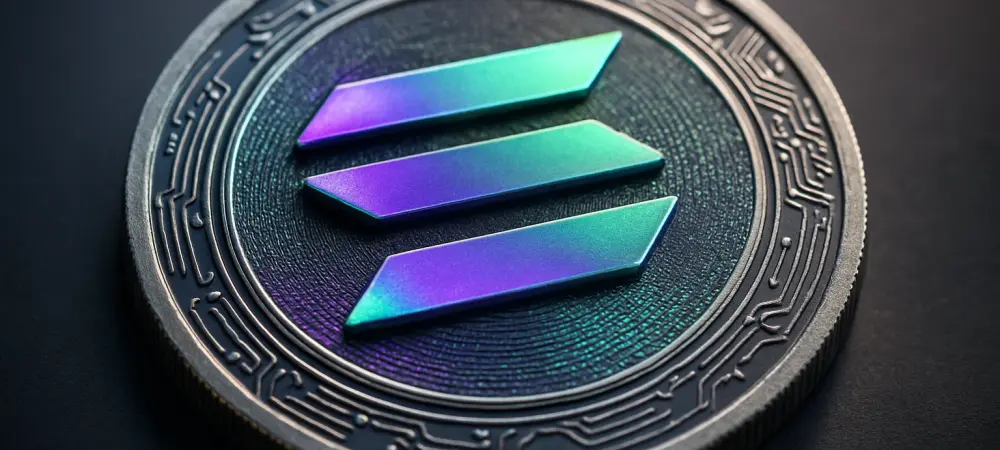
The digital currency landscape continues to evolve, exposing investors to a myriad of opportunities and risks. Solana (SOL), having made significant strides recently, stands at the forefront of this transformation with a current value of approximately $167.43. This promising price point underscores Solana’s bullish momentum, showcased by its considerable market capitalization of $89.78 billion and an impressive daily trading volume surge of 8.58%. While these figures make Solana a prime candidate for institutional investments, the crypto community remains cautious due to potential roadblocks such as network outages, scalability issues, and centralization concerns. Despite these challenges, the potential for Solana to reach the $400 mark remains alive, contingent on various influential factors that could propel this cryptocurrency to new heights.
Institutional Investments: The Catalyst for Growth
In the realm of cryptocurrency investments, institutional backing plays a pivotal role in determining a digital asset’s trajectory. For Solana, tapping into substantial institutional capital inflows is essential for its journey beyond $200, with the lofty goal of hitting $400 looming large. The bulk of institutional interest has been skewed towards established platforms like Ethereum, leaving Solana with limited avenues for growth without introducing major advancements or captivating narratives. These developments are crucial, particularly when other Layer 1 ecosystems continue to dominate investor portfolios. Nevertheless, the potential for Solana remains within reach should it manage to capture the imagination of large-scale investors. This requires strategic maneuvers to address existing challenges while simultaneously highlighting its promise for exceptional returns in the dynamic crypto market.
Solana’s ongoing quest is further complicated by the robust competition it faces from other cryptocurrencies vying for institutional attention. As Ethereum continues to be the premier choice due to its established infrastructure and widespread adoption, Solana must craft compelling stories and groundbreaking advancements that showcase its unique advantages. These narratives, alongside its technological prowess, will be central to convincing investors of its long-term viability and potential for outsized gains. Should Solana successfully navigate these complexities, it could pave the way for transforming crypto investments, heralding a new era where digital assets offer formidable growth opportunities. Emphasizing these possibilities, Solana’s journey is contingent upon strategic partnerships and enhancements, ultimately proving its capability as a worthy contender in the crypto race.
Emerging Competitor: Remittix’s Real-World Impact
While Solana grapples with addressing bubbling concerns around scalability and centralization, Remittix (RTX) rises as a promising competitor with remarkable offerings. Positioned as a low-cost gas fee cryptocurrency, Remittix presents itself as especially appealing among top crypto presales for the year, having raised over $16 million, complemented by a 50% presale bonus. It plans to launch a crypto-to-bank wallet by Q3 in over 30 countries, directly addressing global remittance challenges and significantly enhancing its attractiveness. This approach taps into the soaring significance of real-world utility within crypto adoption, promising manifold applications and ease of use for millions of users.
Remittix distinguishes itself from peers through comprehensive features, including live FX conversion, substantial giveaways, and robust CertiK-audited security measures. Given its strategic alignment with evolving trends, Remittix holds the potential to disrupt conventional approaches, thus highlighting its capability to become a standout player in the burgeoning crypto space. As Solana strives to attract institutional investments to bolster its trajectory, Remittix introduces itself with palpable advantages, potentially positioning itself as the next revolutionary cryptocurrency worthy of exploration. Engaging investors with innovative models tailored for specific utility scenarios, this altcoin aims to redefine the landscape, promising substantial returns and showcasing the capability to shape future narratives.
Paving the Path Forward
In cryptocurrency investments, institutional backing is crucial in shaping a digital asset’s path. For Solana, attracting significant institutional capital is vital for its ambition to surpass $200, especially with the target of reaching $400. However, most institutional interest is directed towards well-established platforms like Ethereum, putting Solana in a challenging position to grow without introducing extraordinary advancements or persuasive narratives. These steps are particularly essential as other Layer 1 ecosystems continue to dominate investor portfolios. Despite these challenges, Solana has potential if it can captivate large-scale investors. Successfully capturing their imagination means strategic maneuvers to address current hurdles while highlighting its promise for substantial returns. In the competitive arena, Solana must offer compelling stories and technological breakthroughs to display its distinct benefits. Securing strategic partnerships and enhancements could position Solana as a formidable contender, ushering in a new era of growth opportunities in the crypto market.