

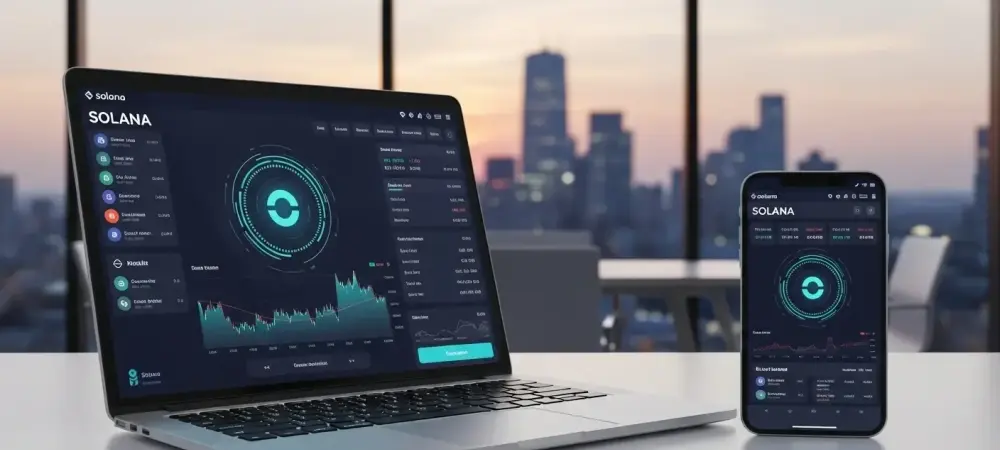
The global decentralized finance sector is currently navigating a significant phase of maturity where investors are increasingly prioritizing functional ecosystems over the speculative frenzy of previous cycles. As the market reaches this critical inflection point, Solana Unchained is transitioning toward its broad public launch, signaling the conclusion of its multi-stage presale efforts. This movement represents a broader shift in the blockchain industry, moving away from purely experimental assets toward integrated platforms that offer tangible consumer services and enterprise-grade security. By leveraging the high-throughput capabilities of the Solana network, the project aims to bridge the gap between complex cryptographic protocols and the everyday needs of a global user base. The final hours of the Phase 10 presale represent a strategic closing of the door on early-stage funding, pivoting the focus toward immediate liquidity and decentralization. Investors and observers are watching closely as capital accumulation gives way to open-market dynamics.
Advanced Technological Architecture: Economic Incentives
Integrating Utility: The Unchained Wallet
The technological backbone of the ecosystem revolves around the Unchained Wallet, a sophisticated browser extension engineered to redefine how users interact with their digital assets. Unlike traditional wallets that often rely on centralized servers for certain processes, this tool executes data processing locally to eliminate common security vulnerabilities and enhance privacy. The wallet acts as a multi-asset hub, providing seamless support for major tokens such as Solana and Bitcoin, while integrating artificial intelligence to optimize trading efficiency. This AI layer is particularly effective at calculating optimal routing across various liquidity pools and managing slippage, which ensures that users receive the most favorable execution prices possible. Beyond the technical complexities of trading, the interface includes practical features that bridge the gap between digital wealth and daily life. Users can utilize their holdings to purchase travel eSIMs and gift cards without identity verification.
Economic Strategy: High-Yield Rewards
The financial architecture governing the final presale phase provides a calculated entry point for participants before the native $UCHN tokens are introduced to decentralized exchanges. With the current valuation set at $0.45 and a confirmed listing price of $0.50, the project offers a clear trajectory for initial valuation growth. To reward early commitment, a structured bonus system has been implemented, where the percentage of additional tokens granted scales directly with the size of the initial contribution. However, the economic strategy extends beyond simple token distribution to include long-term sustainability through high-yield staking accounts. These yield-bearing instruments offer significant annual percentage rates, allowing participants to accumulate rewards through a structured distribution cycle that remains active even before the official market debut. This approach encourages a culture of holding rather than immediate liquidation, fostering a more stable environment for the token.
Building Market Trust: Sustainable Ecosystem Logic
Security Standards: Audit and Vesting
Establishing a foundation of trust is a primary objective for the development team, leading to the implementation of rigorous security protocols and third-party validation. Comprehensive audits conducted by reputable firms like Solidproof and Cyberscope have thoroughly vetted the smart contracts to ensure that the logic is sound and free from exploitable flaws. To mitigate the risk of price volatility that often plagues new token launches, a three-month linear vesting schedule has been applied to early contributors. This mechanism ensures that tokens are released gradually into the circulating supply, preventing large-scale sell-offs that could destabilize the market. Furthermore, the development team has pursued voluntary KYC certification, providing a layer of professional accountability that is often missing in the anonymous landscape of decentralized finance. These measures collectively signal a move toward professional standards that protect participants and the ecosystem.
Token Utility: Tiered Access Models
A sophisticated tiered access model drives the internal demand for the $UCHN token, linking platform functionality directly to the amount of currency a user maintains in their balance. This token-gated approach serves as an alternative to traditional subscription-based paywalls, creating a dynamic environment where power users gain access to professional-grade tools by simply holding the asset. At the entry level, participants can access basic AI-driven market insights, while higher tiers unlock advanced features such as priority transaction processing and governance rights within the protocol. This structure ensures that those who are most invested in the network’s success have a direct hand in its evolution and benefit from its most powerful capabilities. Business partners and institutional-grade traders find value in these elite tiers, which provide the specialized tools necessary for high-frequency operations. By aligning token utility with user success, the project creates a self-sustaining demand loop.
Long-Term Viability: The Inheritance Protocol
Revenue Loops: Sustainable Fee Redistribution
Sustainability is reinforced through an autonomous revenue loop designed to redistribute protocol fees back into the network to benefit active participants. Whenever transactions occur or specialized services are utilized within the wallet, a portion of the generated fees is allocated to stakers and network relayers who provide the necessary infrastructure for operations. This model transforms the platform into a community-driven economic engine where the costs of doing business are shared as rewards among those who secure and support the blockchain. By creating a transparent fee structure, the project avoids the pitfalls of inflationary tokenomics, instead relying on actual platform activity to drive the distribution of value. This ensures that the ecosystem remains viable even after the initial distribution phases are complete, as the continuous flow of revenue provides a steady incentive for users to remain engaged. The focus on organic growth through service fees represents a shift toward more traditional models.
Asset Management: Future-Proofing Protocols
Addressing the critical issue of asset recovery, the development team introduced the Inheritance Protocol as a non-custodial solution for digital wealth management. This system utilized heartbeat transactions to monitor user activity, ensuring that assets remained under the owner’s control while providing a safety net for unforeseen circumstances. If an account became dormant for a predetermined period, the protocol executed a trustless transfer of assets to designated beneficiaries without requiring intervention from a central authority. This innovation solved a long-standing challenge in the industry, where lost private keys often resulted in the permanent disappearance of digital wealth. Looking ahead, participants should consider reviewing their automated transfer settings and ensuring their beneficiary addresses are current within the system. As the project moved into its public phase, the integration of such legacy-focused tools provided a template for how decentralized platforms could handle personal finance. The successful conclusion of the presale established a robust foundation for these features to reach a global scale.