

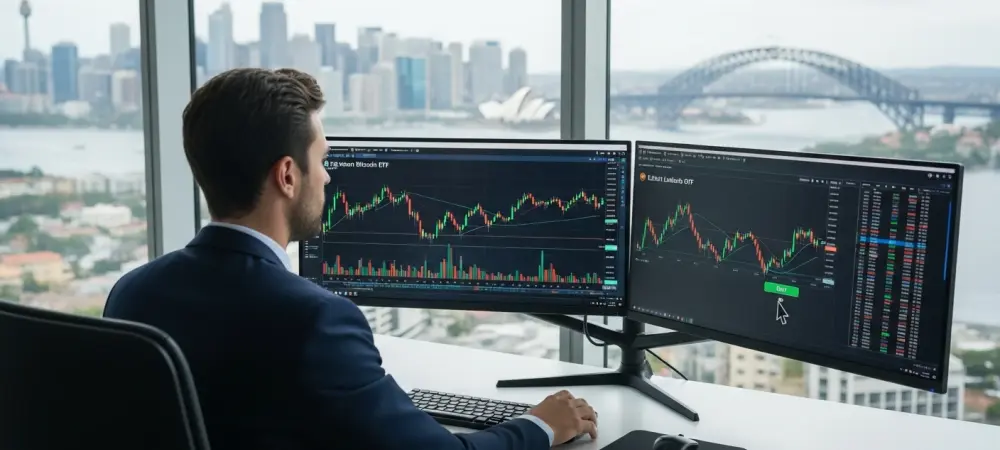
Sudden price surges followed by gut-churning drops have pushed Bitcoin into mainstream conversation, but the harder question for many Australians is how to capture the upside while avoiding the hassles and security risks that come with direct crypto ownership. A Bitcoin ETF listed on the ASX offers a bridge: regulated market access, standard brokerage tools, and familiar reporting, all wrapped around an asset known for sharp swings.
This guide frames that access through best practices. It sets a practical path from understanding structures to sizing exposure, executing trades, tracking costs, handling tax, and defining exit rules, so decisions are deliberate rather than reactive.
What a Bitcoin ETF on the ASX Is and Why This Guide Matters
An ASX-listed Bitcoin ETF is an exchange-traded fund that seeks to mirror Bitcoin’s price, traded like any other share on a brokerage account. Unlike buying coins outright, investors hold units of a regulated fund that either owns Bitcoin directly or uses futures to deliver economic exposure, which removes private keys and wallet management from the equation.
That distinction matters because structure drives outcomes. Spot ETFs typically hold Bitcoin and aim to track it closely, while futures-based funds rely on derivatives that can add costs or slippage. Because Bitcoin’s market moves quickly, adopting a best-practice approach reduces the chance of paying more, tracking less, or abandoning a plan mid-volatility.
This guide walks through how these funds work, how to invest via a standard broker, how to compare fees and tracking, what risks and taxes to expect, and which performance drivers and decision rules tend to separate disciplined investors from lucky ones.
Why Following Best Practices Protects Results
Volatility magnifies small errors. A loose order at the wrong time, an oversized position, or a misunderstanding of tracking can compound into avoidable losses when prices jump or gap. A structured process creates guardrails that keep choices consistent even when headlines tempt a swing-for-the-fences impulse.
Moreover, best practices deliver practical advantages. A right-sized allocation can fit cleanly within portfolio risk limits, lower total cost of ownership by minimizing spreads and turnover, and reduce operational burden through familiar brokerage and compliant reporting. Standardized statements and clearer CGT treatment also simplify record-keeping when compared with dozens of wallet transactions.
Best Practices for Investing in an ASX-Listed Bitcoin ETF
Best Practice 1: Align Exposure With Your Strategy and Risk Tolerance
Clarity on the role of Bitcoin exposure comes first. Treat it as a diversifier, a growth tilt, or a tactical trade, then size accordingly; many investors cap the allocation between 1% and 5% after stress-testing drawdowns and volatility. Define a holding period, set rebalancing rules to trim after large rallies or add after sizable pullbacks, and match order type to conditions by favoring limit orders and avoiding thin pre-open or late-close windows.
Monitoring should be purposeful. Track the ETF’s performance versus spot Bitcoin to gauge tracking difference, and set portfolio-level risk stops that trigger partial or full exits if volatility breaches predetermined thresholds. Document thesis-change triggers and tax-aware timing, so decisions follow policy rather than emotion.
Consider a balanced investor allocating 3% via a spot Bitcoin ETF. They place staged limit orders during liquid hours, rebalance quarterly to prevent drift, and cut exposure if a preset portfolio drawdown is hit. Monthly, they review tracking versus spot and reduce the position if realized volatility rises beyond their cap.
Best Practice 2: Select the Right ETF Structure and Optimize Costs
Structure choice drives results. Spot ETFs usually track more closely because they hold Bitcoin, whereas futures ETFs can lag in contango due to roll costs and basis effects. When comparing products, stack up more than the headline fee: include buy/sell spreads, brokerage, expected tracking difference, and any custody or operational expenses that appear in disclosures.
Liquidity and tax planning round out the selection. Favor funds with consistent volume and visible market depth, and trade during peak liquidity to reduce slippage. Expect capital gains tax upon sale and occasional distributions depending on the fund; holding-period decisions can influence CGT treatment. Confirm the ticker is supported by the broker, check for distribution handling options, and ensure reporting integrates cleanly with tax software.
Consider a case where a spot ETF carries a slightly higher management fee but tighter spreads, while a futures-based ETF posts a lower fee yet faces persistent roll drag. In a rising market, the spot fund’s after-cost return can hew closer to Bitcoin’s path, while the futures fund underperforms due to contango and a wider tracking gap.
Bottom Line: Who Should Consider an ASX Bitcoin ETF—and What to Check First
An ASX-listed Bitcoin ETF has been a practical, regulated on-ramp for gaining exposure without managing wallets, and results tended to hinge on position sizing, product structure, and cost control. Those who benefit most include investors seeking Bitcoin within a standard brokerage account, diversified portfolios that can carry a small, high-volatility satellite, and tax- and compliance-minded investors who prefer clearer reporting.
Before buying, confirm whether the ETF is spot or futures-based, review fees, spreads, and historical tracking, and test the fit within portfolio risk limits and a rules-based rebalancing plan. Clarify CGT implications and record-keeping, assess liquidity, and use limit orders during robust trading periods to control execution. The most effective next step had been to shortlist two or three ASX tickers, compare total cost and tracking history side by side, run allocation simulations against portfolio risk targets, and implement with written rules for rebalancing and exits that remain steady when markets move fast.