

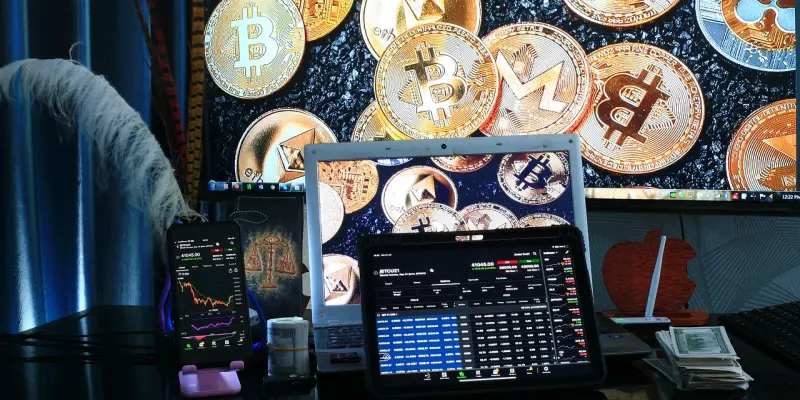
President Trump’s recent announcement on Truth Social about establishing a US crypto reserve has propelled discussions about government involvement in the digital currency market. The proposed reserve would invest in specific cryptocurrencies, including XRP, ADA (Cardano), SOL (Solana), Bitcoin, and Ethereum. The announcement did not go unnoticed, leading to significant price hikes for many of these digital assets. This government intervention presents both opportunities and challenges, raising pivotal questions about the role of governments in the cryptocurrency space and the implications for the market’s future.
Immediate Market Reactions
Price Surges and Market Speculations
The news of a potential US crypto reserve featuring XRP, ADA, SOL, Bitcoin, and Ethereum had an immediate and profound impact on the market. Prices surged as investors reacted to the perceived government endorsement. SOL increased by 11%, XRP by 14%, and ADA by an astonishing 44% following the announcement. Initially, Bitcoin and Ethereum were not mentioned, leading to significant speculation and some consternation among investors. However, this exclusion was quickly corrected, affirming the inclusion of these leading cryptocurrencies.
The market’s reaction underscored the powerful influence of governmental signals in the digital currency space. Investors rushed to buy, prompted by the belief that official recognition could lead to broader adoption and stability. Yet, this also sparked debates about whether such government interventions are beneficial or distortive. Cryptocurrency markets thrive on decentralized principles, and government interventions seen as ‘picking winners’ could be contrary to these foundational ideals. Some argue such moves could introduce volatility, while others see them as necessary for mainstream adoption.
Implications for Regulatory Bodies
Coinbase CEO Brian Armstrong was among the prominent voices expressing concerns and suggestions. Armstrong proposed that Bitcoin alone might suffice for the reserve, arguing that any broader investment should be based on relative market capitalization to maintain impartiality. Meanwhile, Nic Carter from Castle Island Ventures raised alarms about potential insider trading and the rationale behind selecting these specific coins. The proximity of bets placed shortly before the announcement certainly adds a layer of suspicion, placing regulatory bodies like the CFTC (Commodity Futures Trading Commission) and SEC (Securities and Exchange Commission) under scrutiny to assess and possibly investigate potential breaches.
These developments compel regulatory authorities to navigate uncharted waters. They must evaluate the legitimacy and timing of such government-led market interventions. Questions regarding the criteria for coin selection and the transparency of such decisions will likely dominate regulatory discussions. The growing influence of cryptocurrencies has already necessitated increased scrutiny from these entities, but a move towards an official reserve introduces complexities around market manipulation and insider trading that need careful consideration.
The Necessity and Relevance of a National Crypto Reserve
Comparison with Traditional Reserves
The debate about the necessity and relevance of a national crypto reserve draws parallels with traditional reserves like oil or gold. Historically, countries have maintained reserves of productive assets to stabilize their economies. However, cryptocurrencies like Bitcoin are not traditionally seen as productive assets in the same vein. Nevertheless, proponents argue that establishing a reserve could legitimize Bitcoin and others further, enhancing their role as long-term stores of value. Institutions like Sygnum Bank support this view, suggesting that government reserves can mitigate volatility and boost confidence among investors.
Conversely, skeptics highlight the inherent volatility and political uncertainty surrounding cryptocurrencies as significant risks. Unlike tangible commodities or fiat currencies, the value of digital currencies can fluctuate wildly. This volatility could render them unreliable as a stable reserve asset. Additionally, future administrations may not uphold such decisions, introducing layers of uncertainty for long-term economic planning. This unpredictability challenges the traditional roles and utility of national reserves.
Economic and Political Ramifications
President Trump recently made headlines on Truth Social by unveiling plans to establish a US crypto reserve, sparking extensive debates about governmental participation in the digital currency landscape. The proposed reserve aims to invest in a select group of cryptocurrencies, namely XRP, ADA (Cardano), SOL (Solana), Bitcoin, and Ethereum. This announcement has already spurred significant price increases for many of these digital assets. The initiative underscores a pivotal moment, presenting both opportunities and challenges as it raises critical questions regarding the extent and impact of government involvement in the cryptocurrency sector. The implications of such an initiative could shape the market’s future trajectory, influencing everything from regulation to investor confidence. As the conversation continues, many are eager to see how this move will affect the broader financial ecosystem and the evolving relationship between traditional finance and the rapidly growing digital currency world.