

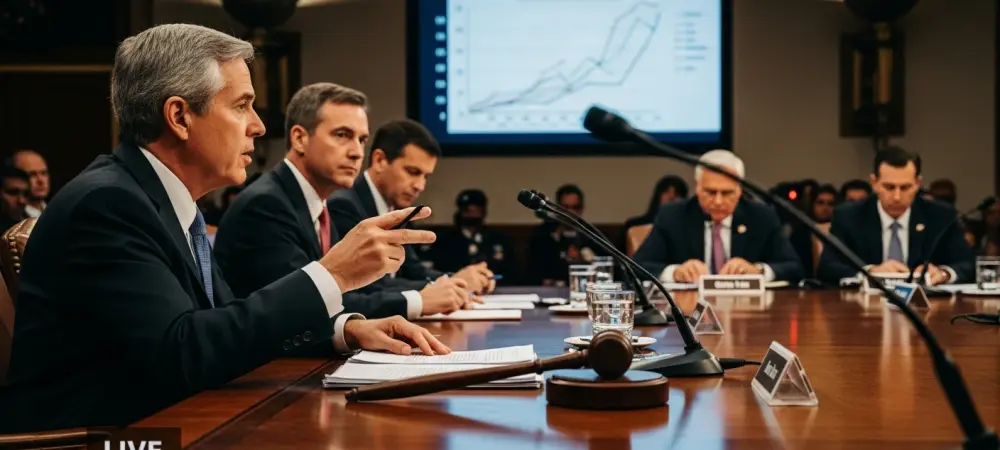
The Senate Banking Committee’s recent advancement of the Digital Asset Market Clarity Act serves as a definitive signal that the era of legislative ambiguity for cryptocurrencies is rapidly drawing to a close. This legislative milestone arrived after years of intense lobbying and regulatory uncertainty, positioning the federal government to finally establish a cohesive oversight framework. By a 15–9 margin, the committee moved the bill forward, signaling a broad desire to integrate digital assets into the formal American financial architecture. However, the path toward total transparency encountered a significant hurdle when lawmakers narrowly rejected an amendment designed to address the personal financial involvements of federal officials. This tension between institutional growth and political accountability defined the proceedings, creating a complex landscape for both investors and policy influencers to navigate.
The bill’s momentum reflects a shift in the political climate, where the need for market structure has begun to outweigh traditional jurisdictional hesitation. For the first time, there is a clear legislative path toward granting the Commodity Futures Trading Commission and the Securities and Exchange Commission specific, non-overlapping mandates. This progress suggests that the internal divisions within Washington are slowly consolidating around a shared vision of consumer protection and dollar-backed stability. Yet, the refusal to codify ethics rules alongside these new powers suggests that the regulatory journey is far from over.
The Legislative Foundation: Drive for Regulatory Certainty
For several years, the digital asset industry operated within a fragmented legal environment characterized by conflicting enforcement actions and a lack of clear definitions for various tokens. The Clarity Act sought to resolve these disputes by providing a comprehensive roadmap for market participants, aiming to replace the “regulation by enforcement” model with a statutory perimeter. This shift is essential because it allows institutional capital to enter the space with a clearer understanding of the compliance requirements enforced by federal agencies. The committee’s decision to advance the bill on May 14 highlighted a growing consensus that the United States cannot afford to remain behind other global financial hubs in establishing digital asset rules.
Understanding the history of these jurisdictional turf wars is vital to grasping the significance of the current progress. Previous attempts at regulation often stalled due to a lack of agreement on which assets qualified as securities versus commodities. The Clarity Act bypasses these old stalemates by creating a shared oversight model that utilizes the strengths of both the SEC and the CFTC. This foundation matters because it provides the market with the structural integrity required to protect retail investors while maintaining the global relevance of American financial markets. Despite this progress, the legislative victory remains shadowed by the unresolved debate over how to handle the personal financial interests of those holding the regulatory pen.
Navigating the Intersection: Policy and Personal Financial Gain
The Ethical DilemmProhibiting Lawmaker Participation in Digital Markets
Central to the committee’s recent deliberations was a defeated amendment that would have closed what many observers call an ethical vulnerability at the highest levels of government. This proposal aimed to prohibit the President, Vice President, and members of Congress from owning or participating in cryptocurrency businesses while holding office. Proponents of the measure argued that as the Clarity Act grants unprecedented new powers to regulators, the officials defining those powers should not have a direct financial stake in the market’s performance. The concern is that without such guardrails, the very process of crafting regulation could be influenced by the personal portfolios of the lawmakers involved.
The debate was particularly focused on reports concerning high-level political figures and their alleged interests in decentralized finance projects and specific digital tokens. These ventures have reportedly generated massive profits for select insiders, even as the broader retail market faced significant volatility. This highlights a critical challenge for the future of digital asset governance: whether a regulatory framework can be viewed as legitimate if it permits potential conflicts of interest among its architects. The rejection of these ethics rules leaves a gap in the legislation that may continue to face scrutiny as the bill moves toward the full Senate.
Strategic Partisanship: Jurisdictional Arguments as a Shield for Influencers
The defeat of the ethics amendment followed a strict 13–11 party-line vote, revealing a deep polarization regarding political accountability. Opponents of the measure utilized a tactical strategy that centered on jurisdictional boundaries rather than the merits of the ethics reform itself. By arguing that the Banking Committee was not the appropriate venue for such changes and that the matter belonged to the Senate Judiciary Committee, the opposition was able to block the measure without engaging in a potentially damaging debate about specific crypto holdings. This procedural maneuver allowed the broader Clarity Act to maintain its momentum while shielding individual lawmakers from direct criticism.
This tactical insulation effectively allowed the primary legislation to advance, but it also highlighted the partisan divide that persists in Washington. While both sides of the aisle agree on the necessity of market structure, they remain fundamentally at odds regarding the transparency requirements for federal officials. This strategy may have successfully protected the bill in the short term, but it leaves a structural weakness that critics argue could undermine public trust in the resulting regulatory regime.
Unresolved Complexities: DeFi Vulnerabilities and Developer Liability
Beyond the ethics debate, the committee also addressed the technical challenges posed by decentralized finance through a failed amendment that would have imposed strict Anti-Money Laundering obligations on protocol developers. The defeat of this measure was seen as a victory for the technology sector, which has long contended that traditional bank-style compliance is incompatible with autonomous code. However, the rejection leaves significant questions regarding how the federal government will address illicit finance within decentralized ecosystems. By sidestepping both ethics reform and the complexities of developer liability, the committee prioritized the establishment of a broad market structure while deferring more disruptive questions to future legislative sessions.
Future Trends: Emerging Shifts in Federal Crypto Oversight
As the legislative process moves forward, several trends are beginning to emerge that will likely shape the final version of the law. There is a noticeable increase in bipartisan cooperation on core market structure issues, with some members of the opposition crossing party lines to support the underlying goals of the act. This suggests that the fundamental principles of regulatory clarity may eventually secure enough support to overcome a potential filibuster on the Senate floor. Furthermore, the focus of the debate is expected to shift from high-level definitions to the specific details of institutional compliance and the role of decentralized protocols in the broader financial system.
Looking further ahead, experts anticipate that the controversy surrounding official profit-taking will remain a primary point of contention. The evolution of the market toward more sophisticated decentralized applications will continue to challenge the legislative imagination, likely leading to a second phase of regulation once the primary framework is settled. This future phase will likely focus on the unique risks posed by autonomous finance, requiring a more nuanced approach than the broad strokes provided by the current bill.
Strategic Takeaways: Recommendations for Industry Stakeholders
For businesses and investors, the advancement of the Clarity Act serves as a clear signal that the window for operating without federal oversight is closing. Organizations should prioritize the development of robust compliance infrastructures capable of interfacing with both the SEC and the CFTC simultaneously. Proactive engagement with regulators will be essential for firms looking to navigate the transition from an unregulated environment to a structured marketplace. Additionally, investors should remain vigilant regarding the political risks associated with certain assets, particularly those linked to high-profile political figures or unproven decentralized models. Stakeholders must also monitor the ongoing jurisdictional debates, as the final placement of ethics and anti-money laundering rules will have a direct impact on the cost of compliance and the speed of innovation. Building transparent and accountable governance models within crypto firms will not only help in meeting future legal requirements but also in establishing trust with a public that is increasingly wary of insider advantages. Preparing for a more structured and politically charged environment is no longer optional for those who wish to remain competitive in the digital asset space.
Institutional Integrity: Balancing Market Growth with Public Accountability
The Senate Banking Committee’s strategic decision to advance the Clarity Act while rejecting specific ethics reform defined the current legislative climate for digital assets. Lawmakers prioritized the establishment of a robust market structure over the immediate resolution of political conflicts of interest. This choice allowed the core bill to move toward the floor with bipartisan support, yet it ensured that the debate over official profit remained a central theme in the national discourse. Industry participants recognized that while the regulatory perimeter became clearer, the standards for those managing that perimeter stayed largely unchanged.
The process demonstrated a sophisticated use of procedural maneuvers to insulate the primary goals of the legislation from more controversial ethical questions. Market analysts observed that the defeat of the DeFi amendment offered a temporary reprieve for developers, though it also left the long-term status of autonomous protocols in a state of flux. Ultimately, the committee’s actions signaled that the federal government was prepared to stabilize the market’s external operations, even if it was not yet ready to reform its own internal financial conduct. These developments established a new baseline for future negotiations, where the focus shifted from whether to regulate to the precise terms of that oversight and the accountability of the regulators themselves.