

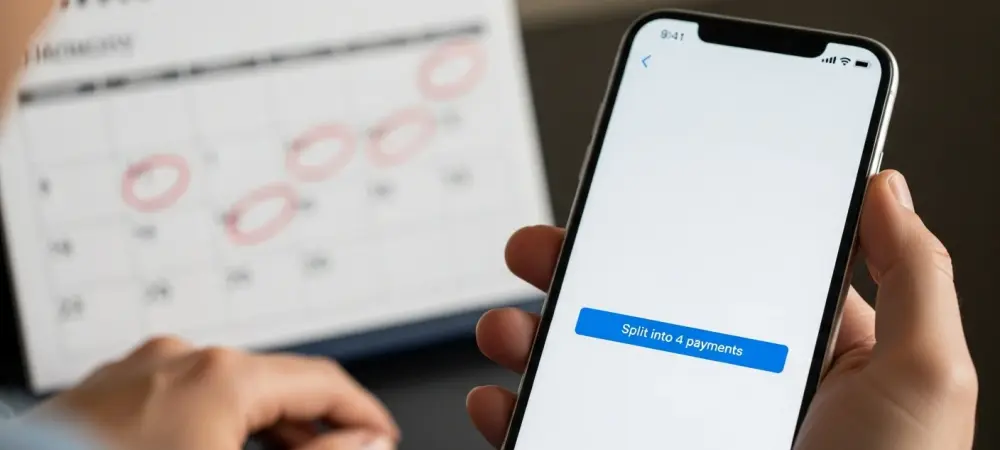
The seamless convenience of splitting a purchase into four interest-free installments has rapidly transformed the retail landscape, yet beneath this frictionless surface, a worrying trend of missed payments reveals a growing financial vulnerability for millions of consumers. This new form of credit, marketed as a smarter way to shop, is creating a complex web of debt where the lines between benefit and burden are increasingly blurred. The rise in delinquencies signals a critical disconnect between consumer understanding and the financial realities of Buy Now, Pay Later (BNPL) services, posing risks that are often overlooked until it is too late.
The Billion-Dollar Question Is Your Easy Payment Plan a Financial Trap
Buy Now, Pay Later services present themselves as a modern, flexible alternative to traditional credit, but their rapid adoption masks an escalating problem. Recent data indicates that over half of all BNPL users have missed at least one payment, with delinquency rates climbing from 34% to 41% in just the last year. This surge suggests that the simplicity of these platforms may encourage overextension, leading consumers into cycles of debt that are difficult to escape.
What begins as a convenient way to manage expenses can quickly devolve into a financial trap. While the allure of interest-free payments is strong, the penalties for falling behind can be significant. The ease of approval and lack of comprehensive credit checks, which are central to the BNPL appeal, also mean that borrowers may be taking on more debt than they can responsibly handle, turning a short-term solution into a long-term problem.
The New Landscape of Debt Why BNPL Is More Than Just Modern Layaway
Unlike traditional layaway, where goods are held until they are paid for, BNPL services provide immediate gratification, fundamentally altering the consumer’s relationship with debt. This instant access to products without immediate full payment lowers the psychological barrier to spending. Consequently, users may accumulate multiple small loans across different platforms, losing track of their total obligations and payment schedules, which complicates personal budgeting and financial oversight.
This model reshapes the definition of consumer debt by operating largely outside the established credit reporting framework. While this can be an advantage for those with limited credit history, it also means that responsible borrowing behavior often goes unrecognized. The separation from traditional financial systems creates a parallel debt environment, one that is less regulated and transparent, leaving consumers to navigate a new and often confusing landscape of financial obligations.
A Tale of Two Ledgers The Lender-Borrower Disconnect
From the lender’s perspective, late payments are not necessarily a system failure but an integral part of the business model. BNPL providers have discovered that late fees, typically around $10 per missed payment, can constitute a substantial and reliable revenue stream. This financial incentive means that companies may tolerate, and in some cases indirectly encourage, a certain level of delinquency, mirroring the profitable late-fee structure of the credit card industry.
For consumers, however, this dynamic creates a significant blind spot. The small, seemingly manageable size of individual late fees can mask the cumulative financial damage. These penalties can quickly negate any savings or benefits gained from using the service, turning an interest-free loan into a costly one. This disconnect between the lender’s profit motive and the borrower’s financial well-being is at the heart of the hidden risks associated with BNPL.
The Data Behind the Danger Unpacking the Statistics
Contrary to popular belief, it is not just lower-income consumers who are struggling with BNPL payments. Surprisingly, high-income earners are among the most frequent late payers. This demographic often treats BNPL services with the same casual approach as credit cards, weighing the convenience of a delayed payment against a minor late fee. This behavior indicates a broader normalization of casual debt, where the consequences are underestimated across all income levels.
A critical misunderstanding fuels the risk for many borrowers: the impact of BNPL on credit scores. Over 60% of users believe that making on-time payments will help build their credit history. In reality, most BNPL providers do not report positive payment activity to the major credit bureaus. This gives consumers a false sense of security, as they are exposed to potential credit damage from collections without reaping any of the rewards for responsible financial behavior.
Protecting Your Finances Strategies for Smart BNPL Use
The first step toward safer BNPL use is to look beyond the convenience and assess the true cost. Before committing to a payment plan, consumers should treat it with the same seriousness as any other form of debt. This involves reviewing personal budgets to ensure that future installments are manageable and understanding the specific fee structure and policies of the provider. Resisting impulse purchases fueled by easy credit is essential for maintaining financial health.
Furthermore, it is vital to understand the credit reporting reality. Consumers should not assume that BNPL usage will affect their credit score, positively or negatively, without verification. By checking directly with the provider or monitoring their credit reports, users can gain clarity on how their payment history is being recorded. This knowledge empowers consumers to make informed decisions and avoid the pitfalls of a system that often operates in the shadows of the traditional financial world.
Ultimately, the rise of BNPL and its associated late payments underscored a fundamental shift in consumer credit. The challenge for borrowers was to navigate this new terrain with a clear understanding of its rules and risks. By adopting a more cautious and informed approach, consumers could better harness the convenience of these services without falling prey to their hidden costs, ensuring that short-term purchasing power did not lead to long-term financial instability.