

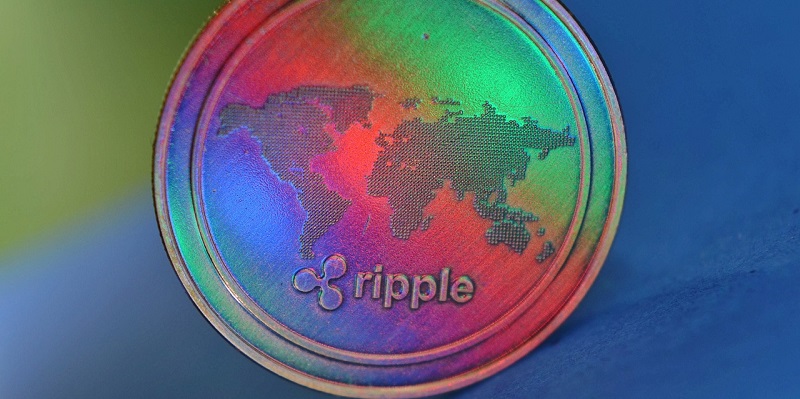
The cryptocurrency market has always been a rollercoaster ride, with prices surging and plummeting in a matter of hours. One recent development that has sent ripples through the crypto community is the astounding $710 million volume surge of Ripple ($XRP), a top ten cryptocurrency known for its unique blockchain technology and ambitious goals. However, as traders strategize their portfolios, it is essential to explore the stability of other cryptocurrencies like Cardano ($ADA) and immerse ourselves in emerging projects such as Borroe.Finance ($ROE).
Ripple’s Volatility and Portfolio Repositioning
The recent surge in Ripple’s ($XRP) volume has prompted traders to reconsider their positions. Some may be offloading $XRP to cut their losses, while others are engaging in buying activities, anticipating a potential rebound. While Ripple grapples with volatility, Cardano ($ADA) has remained relatively calm in its price action.
Cardano’s Stability amid Ripple’s Volatility
Cardano ($ADA) showcases its resilience during these volatile times with modest losses in recent price data. Despite this, Cardano still boasts a market capitalization exceeding $8.5 billion. The stability of Cardano provides investors with an alternative option to navigate the unpredictable cryptocurrency market.
Bullish Potential of Cardano
One notable indicator of Cardano’s ($ADA) bullish potential is the Moving Average Convergence Divergence (MACD)’s bullish crossover. This technical analysis tool increases the likelihood of a northbound price movement in the coming days. With this in mind, investors and traders are keeping a close eye on Cardano as it holds promise for potential gains.
Focus on Emerging DeFi Projects
As the crypto world buzzes with excitement and uncertainty, traders are increasingly focusing on new DeFi projects like Borrow.Finance ($ROE). The emergence of decentralized finance has ushered in innovative ideas and solutions for the financial industry, and projects like Borrow.Finance are at the forefront of this revolution.
Validation of Borroe.Finance’s Security
Borroe.Finance ($ROE) recently received validation from BlockAudit, a third-party security auditing firm. This validation verifies that the project has taken adequate measures to ensure security against malware and cyberattacks. Such verification provides investors with confidence in the legitimacy and safety of the project.
Pre-sale Details of Borroe.Finance
Currently, Borroe.Finance ($ROE) is in Stage 2 of its presale, where investors can acquire $ROE tokens at a trading price of $0.015. The project has already sold over 95 million tokens, indicating strong interest and support from the crypto community.
Attraction for Investors and Crypto Enthusiasts
The intriguing price projection of Borroe.Finance ($ROE) is captivating not only investors but also crypto enthusiasts. With its unique approach to decentralized finance, Borroe.Finance aims to disrupt the traditional financial systems and create new opportunities for investors. Many crypto enthusiasts follow the project’s journey on Twitter, eagerly staying informed about its progress and its potential impact on the crypto landscape.
The recent developments with Ripple and Cardano highlight the inherent volatility of the cryptocurrency market. As prices soar and plummet within short timeframes, investors need to diversify their portfolios and seek opportunities in emerging projects that show promise, such as Borrow.Finance ($BOR). However, stability can still be found in cryptocurrencies like Cardano ($ADA), which offer an alternative for investors looking for more consistent returns. By staying informed, assessing market trends, and embracing innovative projects, investors can navigate the ever-changing crypto landscape and potentially reap the rewards of their investments.