

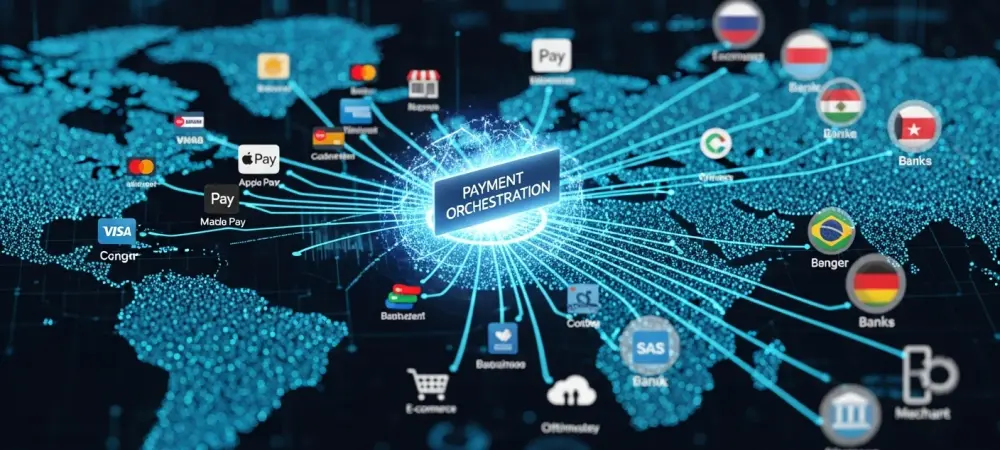
The digital commerce environment of 2026 has evolved into a labyrinthine ecosystem where a single checkout attempt might trigger a cascade of invisible failures across five different continents. As businesses attempt to capture global market share, they are discovering that the traditional model of connecting to a single payment processor is no longer sufficient to maintain high authorization rates or provide a localized customer experience. The modern checkout stack has become a brittle collection of legacy integrations, regional workarounds, and fragmented data points that often stifle growth rather than facilitate it. Payment orchestration has emerged as the critical software layer designed to resolve this complexity by sitting above the existing payment infrastructure and unifying disparate gateways into a single, cohesive hub. By centralizing control, merchants can finally move away from the “all-or-nothing” reliance on individual providers, instead creating a dynamic environment where transactions are routed based on performance, cost, and regional compliance requirements. This shift represents a move toward operational maturity, allowing financial leaders to manage global payments with the same precision they apply to their supply chains or cloud computing resources.
Overcoming Operational Friction in Global Markets
Expanding a digital footprint into new international territories frequently introduces a level of operational friction that can overwhelm even the most sophisticated engineering teams. Every new region typically requires a local payment provider to ensure high acceptance rates, but each provider brings a proprietary API, unique error codes, and distinct settlement cycles. When a merchant attempts to manage these integrations manually, the result is often an “API sprawl” that consumes a disproportionate amount of developer time just for maintenance and troubleshooting. Instead of building innovative product features that drive revenue, engineers find themselves stuck in a perpetual cycle of updating legacy code and mapping incompatible data fields across multiple systems. This technical debt creates a significant bottleneck that prevents companies from reacting quickly to market shifts or emerging consumer preferences in specific geographic zones.
The ongoing market transition toward multi-processor strategies is a direct response to this complexity, with a majority of high-volume merchants now utilizing at least three different payment providers simultaneously. This diversification is no longer a luxury but a strategic necessity to mitigate the risk of downtime and to provide redundant paths for transaction processing. However, managing a multi-processor setup without a centralized orchestration layer leads to siloed data and inconsistent reporting, making it nearly impossible for finance teams to get a clear view of global performance. Payment orchestration addresses this by providing a unified interface that absorbs the differences between providers, allowing a merchant to add or remove regional acquirers without rewriting their entire checkout logic. This flexibility allows businesses to scale at an unprecedented pace, transforming the payments function from a technical hurdle into a competitive advantage in the global marketplace.
The Architecture of Abstraction and Intelligent Routing
At the core of a robust payment orchestration platform is the concept of gateway abstraction, which serves as a universal translator for the global financial network. This technical layer standardizes the way a merchant interacts with various underlying providers by normalizing data fields and transaction statuses into a single, consistent internal model. Whether a customer is paying with a local wallet in Southeast Asia or a traditional credit card in Europe, the orchestration engine treats the transaction as a standardized object that can be moved across the infrastructure with ease. This normalization is critical because it ensures that internal reporting and downstream financial systems receive uniform data, regardless of which gateway actually handled the processing. Without this abstraction, a business would be forced to maintain separate reconciliation processes for every single provider in their stack, a task that grows exponentially more difficult as the company expands.
Building on this foundation of abstraction is the intelligent routing engine, a sophisticated decision-making tool that operates in the milliseconds between a customer clicking “buy” and the transaction being authorized. This engine utilizes real-time data, such as the bank identification number, the geographic origin of the cardholder, and current provider performance metrics, to determine the optimal path for every individual request. For instance, if a specific regional acquirer is experiencing a momentary spike in latency or a higher-than-average decline rate for premium cards, the routing engine can instantly redirect that traffic to a better-performing alternative. This level of granularity allows merchants to optimize for both cost and conversion, ensuring that high-value transactions are sent to the provider most likely to approve them while lower-value traffic is routed to the most cost-effective gateway.
Beyond the initial routing decision, the orchestration layer provides an essential safety net through automated failover and retry logic. In the event of a technical glitch or a temporary network outage at a primary provider, the system can automatically re-submit the transaction to a backup gateway without the customer ever knowing a problem occurred. This process relies on sophisticated idempotency patterns to ensure that even if a connection is lost mid-stream, the customer is never double-charged for the same purchase. By managing these retries at the infrastructure level, merchants can recover a significant percentage of “lost” revenue that would have otherwise been abandoned due to technical errors. This proactive approach to transaction management not only protects the bottom line but also preserves the customer’s trust in the brand during the most critical moment of the purchasing journey.
Strengthening Security and Financial Oversight
Security remains a primary concern for any merchant handling sensitive financial data, and payment orchestration offers a streamlined approach to managing this risk through independent tokenization vaults. By decoupling sensitive card data from the specific payment gateways, a merchant can store tokens in a secure, provider-agnostic environment that significantly reduces the complexity of PCI compliance. These vaults allow a business to use the same secure token across multiple processors, which is particularly beneficial for managing recurring billing, subscription models, and saved customer profiles. Because the merchant is no longer locked into the tokenization service of a single gateway, they gain the freedom to switch providers or distribute volume based on performance without having to ask customers to re-enter their payment details. This portability of data is a cornerstone of modern financial flexibility and a key driver of long-term customer retention.
In addition to enhancing security, the orchestration layer serves as a centralized hub for financial visibility by performing what is known as webhook fan-in. This process involves collecting real-time status updates and event notifications from various global providers and funneling them into a single, standardized stream of information. This consolidated data feed is then used to populate an internal ledger that provides an auditable record of every cash movement, refund, and chargeback across the entire organization. Having a “single source of truth” for payment data allows for more accurate forecasting, better cash flow management, and a deeper understanding of the true cost of acceptance across different markets and payment methods.
It is vital for organizational leaders to understand that true payment orchestration is far more comprehensive than simple smart routing or traditional gateway services. While a basic router might choose a transaction path based on a few rules, a full orchestration platform manages the entire lifecycle of a payment, including the heavy lifting of back-office reporting and cross-provider reconciliation. Many legacy gateways have attempted to market themselves as orchestrators by adding basic routing features, but they often lack the independent tokenization and data normalization capabilities required for a truly provider-agnostic setup. Selecting a solution that offers deep integration into the broader financial stack ensures that the payments function is not just an isolated technical component, but a strategic asset that supports the overall financial health and governance of the enterprise.
Practical Applications and Emerging Workflows
The real-world utility of orchestration becomes evident when examining the complex transactional flows that define modern international commerce. Consider a high-growth retail brand that encounters a “soft decline” from a primary acquirer due to a temporary risk mismatch or an outdated security protocol. In a traditional setup, this would result in a lost sale and a frustrated customer; however, an orchestration system can instantly recognize the nature of the decline and attempt a second authorization through a different regional provider that has a better relationship with the issuing bank. This immediate recovery capability can increase overall authorization rates by several percentage points, which translates into millions of dollars in additional revenue for enterprise-scale merchants. This level of responsiveness ensures that the checkout experience remains seamless, even when the underlying financial plumbing is experiencing turbulence.
The impact of this technology is also felt in the shifting landscape of B2B finance and the integration of hybrid digital asset workflows into traditional treasury stacks. As companies begin to explore the intersection of traditional fiat currencies and digital assets, the orchestration layer provides the necessary control plane to bridge these two worlds. It allows a global treasury department to manage liquidity across multiple currencies and platforms, providing a unified view of the company’s total financial position. By acting as a universal hub, orchestration enables a company to adopt new financial technologies without disrupting their existing operational workflows or reporting structures. This capability is particularly relevant for businesses operating in regions with volatile currencies or those looking to leverage the speed and transparency of blockchain-based settlement systems alongside traditional banking rails.
Strategies for Implementation: From Testing to Scaling
Successfully transitioning to a payment orchestration model required a disciplined, phased approach to ensure that the new logic did not disrupt existing revenue streams. The most effective implementations began with a “shadow traffic” phase, where the orchestration engine mirrored live transactions to analyze how its routing decisions would have performed compared to the legacy system. This allowed engineering and finance teams to validate the system’s decision-making process and fine-tune the business rules in a risk-free environment. Once the logic was proven to be superior, merchants typically moved to a failover-only mode, where the orchestrator only intervened if the primary gateway failed. This gradual rollout ensured that the organization could gain confidence in the platform’s stability before eventually enabling full active routing and utilizing the system to its maximum potential.
When the time came to select a specific vendor, businesses focused on critical performance metrics like decision latency and the breadth of the pre-built integration library. A platform that added significant delay to the checkout process was deemed unacceptable, as even a few hundred milliseconds of latency could negatively impact conversion rates. Furthermore, the level of reporting automation and the ability to handle complex regional data residency laws were paramount for companies operating in heavily regulated markets. The goal was to find a partner that offered not only the technical tools for routing and tokenization but also the strategic insight to help navigate the ever-changing global regulatory landscape. Ultimately, the most successful merchants were those that viewed orchestration not as a one-time software purchase, but as a foundational element of their long-term growth strategy.
The transition toward payment orchestration represented a fundamental shift in how global merchants approached financial scalability and operational resilience. Organizations that adopted these centralized control layers were able to reduce their reliance on single-provider ecosystems, thereby mitigating the risks associated with technical outages and regional market shifts. By decoupling the checkout experience from the underlying payment processing, these businesses gained the agility to enter new markets in weeks rather than months. Moving forward, the focus for financial leaders shifted toward optimizing the vast amounts of data generated by these systems to drive deeper insights into customer behavior and treasury efficiency. Those who mastered the orchestration of their global payments were better positioned to navigate the complexities of the modern economy and maintain a competitive edge in an increasingly interconnected world.