

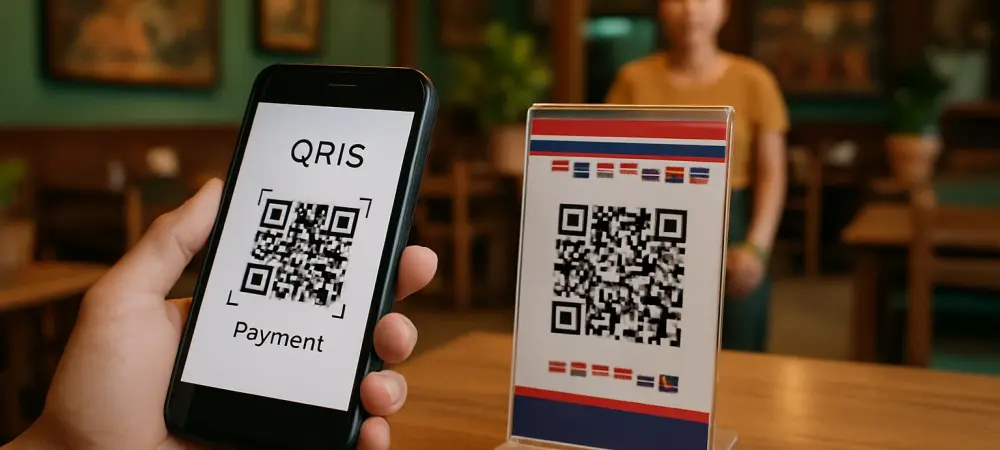
What if a single scan could pay for a meal in Jakarta, a souvenir in Bangkok, or a coffee in Singapore without the hassle of currency exchange or high fees? This is no longer a distant dream but a reality brought to life by Moolahgo, a leading FinTech company licensed by the Monetary Authority of Singapore (MAS). With the launch of QRIS “Scan & Pay” on its moolahPAY digital wallet, Moolahgo is pioneering a seamless cross-border payment solution across the ASEAN region. This innovation promises to transform how millions of people transact daily, making international payments as effortless as a tap on a screen.
The significance of this development cannot be overstated in a region where economic diversity often means fragmented payment systems. As travelers, expatriates, and migrant workers navigate multiple currencies and high transaction costs, Moolahgo’s integration of QRIS—a unified payment standard developed by Bank Indonesia—offers a much-needed bridge. This feature positions moolahPAY as the first non-bank mobile wallet in Singapore to adopt QRIS, connecting users to approximately 40 million merchants in Indonesia alone, alongside compatibility in Singapore, Thailand, Malaysia, and Japan. This is more than a technological upgrade; it’s a step toward financial inclusion and regional connectivity.
A Timely Revolution in Cross-Border Transactions
In the bustling markets of ASEAN, where economic integration is a priority, the timing for a unified payment solution couldn’t be more critical. With millions crossing borders for tourism, work, or family, the friction of differing payment systems—think exorbitant card fees or the risks of carrying cash—creates daily challenges. Moolahgo’s QRIS “Scan & Pay” emerges as a direct response to these pain points, leveraging technology to simplify transactions in a hyper-connected region. This launch aligns with broader regional goals, as seen in discussions at the ASEAN Ministerial Summit held in Malaysia earlier this year. Governments across Southeast Asia are pushing for interoperable payment ecosystems to boost trade and mobility. By introducing QRIS on moolahPAY, Moolahgo taps into this momentum, offering a tool that not only serves individual users but also supports systemic change in how money moves across borders.
The ASEAN Payment Challenge and Why It Matters
ASEAN’s diversity is its strength, but it also poses unique hurdles in financial transactions. From Singapore’s high-tech economy to Indonesia’s sprawling merchant networks, the region’s varying currencies and payment infrastructures often lead to inefficiencies. High fees—sometimes as much as 5% per transaction on credit cards—and security risks associated with cash handling are persistent issues for the millions who travel or work across these nations.
Moolahgo’s initiative addresses these gaps by integrating QRIS, a system that unifies multiple payment providers into one interoperable platform. This means a street vendor in Jakarta and a major retailer in Kuala Lumpur can accept the same payment method without the usual complications. Such innovation is vital for fostering economic collaboration and ensuring that even underserved communities gain access to secure, digital payment options.
Inside QRIS Scan & Pay: Features That Transform Transactions
At the heart of Moolahgo’s latest offering are features designed to make payments smoother and more affordable. The moolahPAY app, now equipped with QRIS “Scan & Pay,” connects users to an extensive network of merchants—40 million in Indonesia, including e-commerce giants like Lazada and Shopee. Its reach extends to Singapore, Thailand, Malaysia, and Japan, making it a versatile tool for international travelers and locals alike. Cost efficiency stands out as a major benefit. Unlike traditional card payments that often carry fees of 2-5%, QRIS transactions reduce expenses for both consumers and merchants. Additionally, moolahPAY offers competitive exchange rates—often better than those of conventional money changers—and real-time SGD-to-IDR conversion, eliminating currency fluctuation worries. Security is also prioritized with PIN-protected access and contactless payments, minimizing risks associated with cash.
Beyond functionality, user incentives add value to the experience. Merchant discounts and app-based rewards encourage adoption among diverse groups, from tourists exploring new cities to retirees managing expenses abroad. This combination of practicality and perks positions QRIS on moolahPAY as a game-changer in the digital payment landscape.
Leadership and Vision Driving Financial Inclusion
John Hakim, CEO of Moolahgo, encapsulates the ambition behind this launch with a clear mission: “The aim is to create a seamless digital payment infrastructure that empowers users and advances financial inclusion across the region.” This vision resonates with ASEAN’s broader objectives for connectivity, emphasizing accessible financial tools for all.
Industry analysts reinforce this perspective, highlighting the role of private sector innovations in addressing payment disparities, especially in less-served areas. Moolahgo’s neoConnect platform further amplifies this impact by extending QRIS capabilities to other financial institutions, potentially reshaping the FinTech ecosystem. Such efforts suggest that digital payments are not merely about convenience but about creating opportunities for millions who have been excluded from traditional financial systems.
Making the Most of moolahPAY for Everyday Payments
Navigating payments with moolahPAY’s QRIS “Scan & Pay” is straightforward and designed for ease. Start by downloading the app from a device’s store, completing registration, and securing the account with a PIN. This initial setup ensures that funds are protected while preparing for seamless transactions.
Once set up, users can add funds via bank transfer or other supported methods, keeping SGD ready for automatic conversion as needed. At any QRIS-enabled merchant—be it a small stall in Bali or a shopping center in Bangkok—simply open the app, scan the provided QR code, confirm the transaction amount, and complete the payment. The app also allows tracking of rewards and discounts, ensuring users maximize savings on every purchase. For those traveling across ASEAN or to Japan, this system eliminates the burden of handling multiple currencies, making it an essential companion for borderless transactions.
Reflecting on this milestone, Moolahgo’s launch of QRIS “Scan & Pay” on moolahPAY stood as a defining moment in simplifying digital payments across Southeast Asia and beyond. The integration of a widely accepted standard like QRIS connected millions of merchants and users, while aligning with regional aspirations for financial interoperability. Looking ahead, stakeholders were encouraged to explore how such tools could further evolve—perhaps by expanding to more countries or integrating additional currencies. The focus remained on harnessing technology to build a more inclusive economy, ensuring that every scan moved the region closer to a truly connected future.