

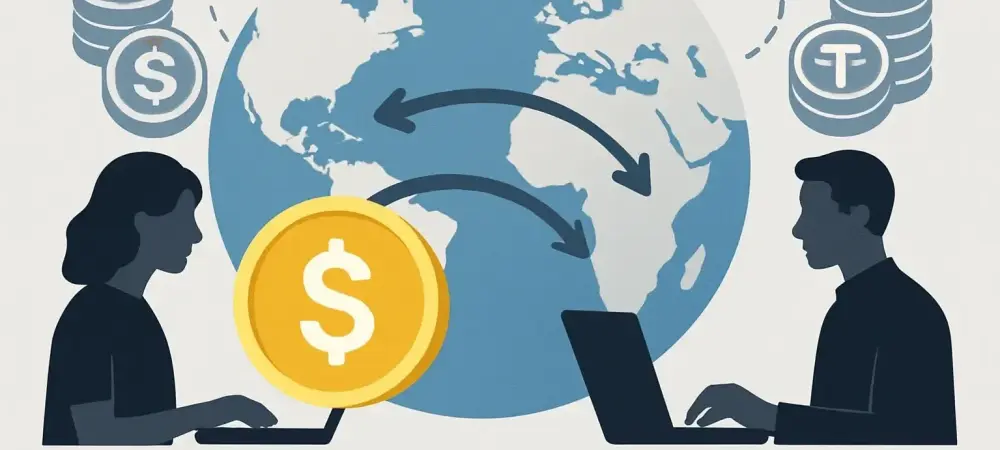
Imagine a world where sending money across borders is as easy as sending a text message, unaffected by the volatility of local currencies or the exorbitant fees that often burden traditional remittance services. This vision is becoming a reality through a groundbreaking partnership between a global payments giant and an innovative wallet infrastructure provider. Their newly launched mobile app leverages stablecoin technology to offer a fast, low-cost solution for cross-border transactions, starting with a key market in Latin America. By integrating digital dollars on a robust blockchain network, this initiative promises to shield users from currency fluctuations while enhancing financial access. This development marks a significant shift in how remittances are handled, moving away from conventional systems toward a more inclusive, technology-driven approach that could redefine financial interactions on a global scale.
Revolutionizing Cross-Border Payments with Stablecoins
In a bold move to transform the remittance landscape, MoneyGram has joined forces with Crossmint to introduce a mobile app that utilizes stablecoins for international money transfers. Specifically, the app employs Circle’s USDC, a U.S. dollar-denominated stablecoin, on the Stellar blockchain to facilitate seamless transactions. Initially launched in Colombia, a market heavily reliant on remittances, this service allows senders in the U.S. to transfer funds in USD, which are instantly converted to USDC and delivered to recipients’ smart wallets within the app. This innovation tackles a pressing issue in regions where local currencies, like the Colombian peso, have faced significant depreciation over recent years. By enabling users to hold funds in a stable digital currency, the app offers a safeguard against economic instability, providing a practical alternative to traditional banking systems that often fail to address such challenges effectively.
Beyond merely facilitating transfers, this app empowers recipients with unprecedented flexibility in managing their funds. Once the USDC is received in their Crossmint-powered wallets, users can choose to retain their savings in a stable, dollar-backed format or convert them to local currency at thousands of MoneyGram locations across Colombia. This dual functionality not only mitigates the risks associated with currency devaluation but also enhances convenience by offering multiple access points for cash withdrawals. The focus on user-centric design is evident, as the service caters to the real-world needs of individuals in volatile economic environments, ensuring they can access their money when and how it suits them best. This strategic rollout in Colombia serves as a testing ground for a solution that could soon benefit other regions facing similar financial uncertainties, highlighting a forward-thinking approach to global remittances.
Bridging Technology and Trust for Financial Inclusion
The collaboration between MoneyGram and Crossmint exemplifies a shared commitment to making financial services more accessible through cutting-edge technology. MoneyGram, long recognized as a leader in global payments, envisions a future where digital dollars are universally available, as articulated by CEO Anthony Soohoo. The app is engineered for scalability, with plans to introduce features like spending USDC balances worldwide using linked Visa or Mastercard debit cards and offering incentives on deposits through integrated savings options. This reflects a broader trend in the fintech sector toward adopting blockchain and digital currencies to create efficient, inclusive systems. By starting in Latin America, a region with substantial remittance inflows and economic challenges, the partnership strategically positions itself to address unmet needs, paving the way for expansion into additional markets in the near future with tailored solutions.
Crossmint’s contribution to this initiative cannot be overstated, as their infrastructure simplifies the complexities of blockchain technology for MoneyGram. By managing intricate elements such as private keys and gas fees, Crossmint enabled a rapid product rollout without requiring MoneyGram to build an in-house team of specialized engineers. Their platform offers smart wallets with programmable controls, comprehensive stablecoin transaction orchestration, and robust security measures, including AML screening and KYC processes. Josh Bivins, MoneyGram’s director of product, praised Crossmint’s enterprise-grade solutions and hands-on support for accelerating their stablecoin strategy. This synergy not only ensures a seamless user experience but also underscores the potential of combining trusted financial networks with innovative tech to make stablecoins a practical tool for everyday transactions across diverse demographics.
Paving the Way for a Digital Financial Future
Reflecting on this landmark collaboration, the launch of the stablecoin-powered app in Colombia represents a pivotal moment in the evolution of cross-border payments. It addresses critical issues like currency risk while setting a precedent for how technology can bridge gaps in traditional financial systems. The integration of USDC on the Stellar blockchain, supported by Crossmint’s advanced infrastructure, demonstrates a viable path toward greater stability and efficiency in remittances. Looking ahead, the planned expansion to other Latin American markets signals an opportunity to scale this impact, potentially transforming the lives of millions who rely on international money transfers. Stakeholders in the fintech space should consider how such innovations can be adapted to other regions, ensuring that digital solutions continue to evolve in response to global economic challenges and user needs, fostering a more connected and resilient financial ecosystem.