

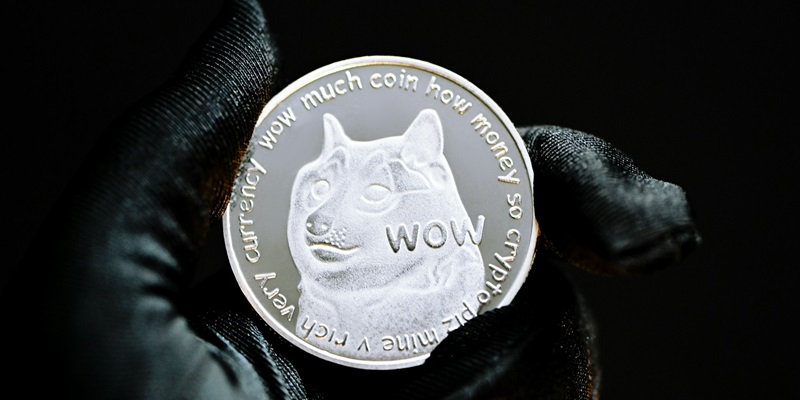
Both meme coins and more established cryptocurrencies have felt the pressures of economic meetings, such as the recent Federal Open Market Committee (FOMC) session. This section explores how investor uncertainty around policy decisions has resulted in bearish sentiment across the market.
Meme Coins’ Reaction to Macroeconomic Data
Meme coins often respond more dramatically to economic data releases, given their speculative nature. This part of the article discusses the specific drops in the value of SHIB, DOGE, and PEPE and analyzes their correlation with real-time economic events.
Meme Coins’ Market Performance and Data Analysis
Shiba Inu’s Decline in Value and Derivatives Data
Shiba Inu, identified as a ‘Dogecoin killer’ by its supporters, witnessed a steep decline. We will look into SHIB’s trading price drop and consider how indicators in its derivatives data reveal broader market sentiments.
Dogecoin and Pepe Coin’s Bearish Indicators
Comparable to SHIB, DOGE experienced a notable market downturn. This part focuses on DOGE’s loss in value, interpreting the derivatives statistics and what they signify about investor confidence. Additionally, Pepe Coin’s market statistics are analyzed to understand its place within the meme coin ecosystem.
The Domino Effect on Other Meme Coins
Extent of the Downturn Across All Meme Coins
This section scrutinizes the price decline of other meme coins like FLOKI, WIF, and BONK, which followed the trend set by the market leaders, reflecting the breadth of the market’s bearishness.
On-Chain Data and Bearish Signals
Bearish signals can often be predicted by analyzing on-chain data. We will examine the on-chain metrics for various meme coins and how they have presaged the recent price drops, providing insight into the health of the meme coin market.
Investor Sentiment and Market Stability
Analysis of Investor Behavior and Trends
Here, we discuss how market sentiment, influenced by macroeconomic factors, has affected investor behavior within the meme coin sector, sowing seeds of concern regarding future prospects.
The Future of Meme Coins Amid Economic Uncertainty
The recent slump in meme cryptocurrency values, such as Dogecoin (DOGE), Shiba Inu (SHIB), and Pepe Coin (PEPE), reflects a larger downward trend in the overall crypto market. This market dip aligns with significant economic developments and reports. Meme coins, known for their internet culture origins and often speculative nature, have not been immune to the volatility affecting the larger crypto space. These digital assets have experienced a notable decrease in value, showcasing how they can be impacted by the same macroeconomic factors that influence conventional cryptocurrencies. As these meme-based coins face a downturn, it’s a reminder of the inherent risks and fluctuations within the digital currency landscape, correlating with broader economic events, trends, and sentiments prevalent across financial markets.