

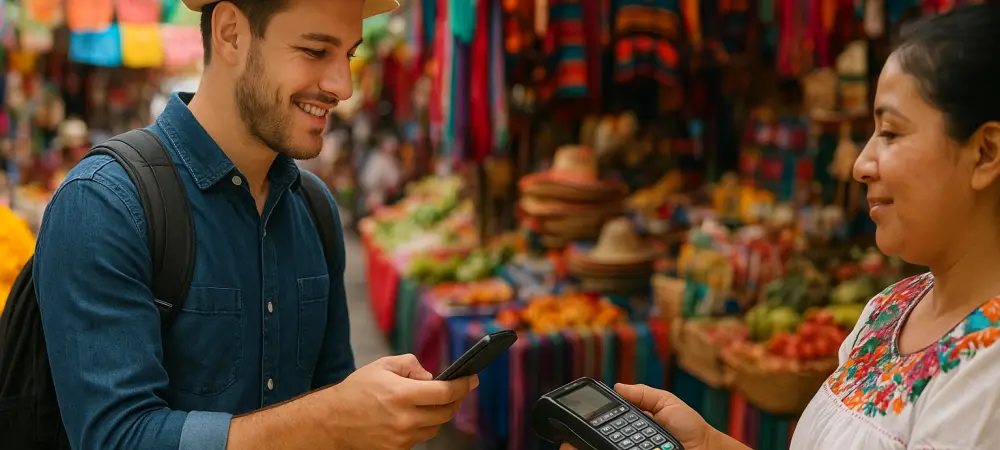
Nikolai Braiden has spent over a decade at the intersection of decentralization and traditional finance, witnessing firsthand the clumsy transition from physical cash to fragmented digital apps. As a prominent advisor who has guided dozens of startups through the regulatory and technical mazes of the industry, he brings a grounded perspective to the recent expansion of global payment ecosystems. Today, we delve into the evolution of digital wallet infrastructure and how the latest cross-border solutions are finally bridging the gap for billions of users worldwide. We explore the move toward universal interoperability, the integration of 150 million global merchants, and the tangible impact these technologies have on financial inclusion for the unbanked.
As we look toward the end of the decade, digital wallet users are projected to hit the 6 billion mark. How do you see the current payment infrastructure evolving to handle this massive influx of activity without losing speed or reliability?
The scale we are discussing is truly monumental, moving from our current global base of 4.3 billion users to an anticipated 6 billion by 2030. To support this weight, we are seeing a critical shift away from rigid, legacy systems toward cloud-based architectures that utilize modular pillars to handle different payment types. It is not just about the raw volume of people; it is about the staggering complexity of managing 3.7 billion credentials across a web of 200 countries and territories. When a consumer in Mexico uses a wallet like Clip, they now expect immediate interoperability from day one, which requires a backend capable of processing 150 different currencies without a blink. We are finally entering an era where infrastructure is no longer a bottleneck but a silent, efficient engine that allows local providers to scale globally without overhauling their entire existing tech stack.
Interoperability has long been the “holy grail” of the fintech world, yet the landscape often remains fragmented. In what ways can a unified portfolio of solutions actually dismantle the silos between diverse providers like TenPay Global, DaviPlata, and Mercado Pago?
The historical fragmentation of digital payments has been a logistical nightmare for both merchants and travelers, but the integration of over 50 mobile payment partners into a single gateway is a massive step toward a cure. By connecting diverse platforms like MTN, Axian, and KakaoPay, we are witnessing the birth of a truly borderless digital economy that encompasses 150 million global merchants. I find the blend of different hardware technologies particularly fascinating; for example, AlipayHK is now enabling NFC payments alongside traditional QR codes, providing a tactile, seamless experience regardless of the local scanning habits. This isn’t just a software update; it is the creation of a global network where a provider in one corner of the world can instantly offer credit or debit programs. It feels like we are finally stitching together a safety net of value transfer that actually functions in real-time across different continents.
Beyond the convenience for travelers, there is a significant push toward financial inclusion for the underbanked in emerging markets. What tangible impact does connecting these populations to global networks have on local economic health?
For the unbanked, a digital wallet is far more than a convenient way to pay for coffee; it is a vital launchpad for broader financial services and a gateway to the global digital economy. Initiatives like the Global Financial Health Coalition are critical because they bridge the massive gap between having simple access to a tool and achieving genuine financial stability. In regions served by providers like CRED or MTN, the ability to move money swiftly between cards, wallets, and accounts across 150 currencies means a local entrepreneur is no longer isolated by their geography. There is a profound sense of empowerment when a user can suddenly access a prepaid program or a credit facility that was previously reserved for those with elite traditional bank accounts. We are watching the democratization of finance happen in real-time, where trust and scale are finally reaching the hands of the people who were historically left behind.
What is your forecast for the digital wallet ecosystem?
From 2026 to 2030, I predict the total disappearance of the “payment friction” that has historically defined cross-border trade and personal travel. As we climb toward that 6 billion user milestone, the distinction between a local QR code and a global credit credential will evaporate, leaving us with a singular, fluid financial identity. I expect that the expansion of mobile agentic commerce will lead to a world where 150 million merchants are essentially part of one unified local market, regardless of their physical location. We are not just building faster ways to send money; we are constructing the foundational layer for a global society where financial opportunity is no longer dictated by the passport you hold or the specific bank on your street corner.