

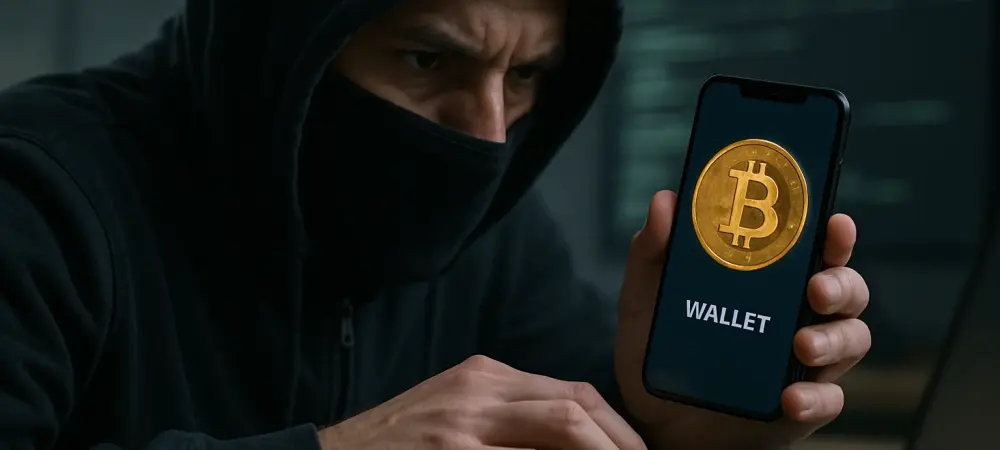
Today we’re joined by qa aaaa, a renowned expert in blockchain security and cyberattacks. With crypto theft becoming increasingly sophisticated, we’re diving into the recent $107,000 drain across multiple wallets to understand the evolving tactics of attackers. We’ll explore the “low and slow” theft method, the challenges of on-chain investigation, the alarming rise in individual wallet compromises, and the specific vulnerabilities introduced by common tools like browser extensions.
The recent $107,000 theft involved an attacker draining small amounts, under $2,000, from many wallets. Can you explain the typical technical methods behind this “low and slow” approach and why an attacker might choose this strategy over a single, high-value heist?
This strategy is all about staying under the radar. When you see a massive, multi-million dollar exploit, it sets off alarms everywhere—on-chain monitoring services, security firms, and social media light up instantly. But draining less than $2,000 from dozens of wallets is a different beast. These smaller transactions often don’t trigger automated alerts. The attacker is likely using a script that iterates through a list of compromised private keys, systematically siphoning funds below a certain threshold. It’s a game of volume. Instead of one big score, they accumulate a significant sum, like the $107,000 we’ve seen so far, before anyone really pieces together the full scale of the operation. It’s a patient, methodical attack that preys on the difficulty of coordinating and identifying a widely distributed, low-impact-per-user event.
Blockchain investigator ZachXBT flagged a wallet address linked to this theft, but the initial entry point remains unknown. What steps are involved in tracing these funds on-chain, and what are the main challenges in identifying the original exploit vector after the fact?
Tracing the funds is the more straightforward part, though it’s still complex. You start with the wallet ZachXBT identified, the one ending in 8Bf9bFB, and you follow the money. We map out every transaction, seeing where the funds are consolidated and where they go next. Often, attackers will use mixers to obscure the trail, but the real Herculean task is finding that initial point of entry. The funds being stolen are the symptom, not the disease. To find the cause, you have to work backward from the victims. Did they all interact with the same malicious smart contract? Did they download a compromised version of a popular application? The problem is that your evidence is scattered across potentially thousands of individual users, each with a different setup. Without a clear common denominator, pinpointing the original security flaw feels like searching for a needle in a global haystack.
Individual wallet compromises accounted for 20% of all stolen crypto value in 2025, a sharp rise from 2022. What key factors are driving this trend, and what common mistakes are users making that lead to these widespread breaches?
The landscape has definitely shifted. Attackers are realizing that while hacking a major protocol is a huge payday, it’s also incredibly difficult. It’s often easier to go after the end-user. The data is stark: jumping from about 54,000 wallet compromises in 2022 to an estimated 158,000 in 2025 shows this is now an industrialized operation. The driving factor is the sheer number of new users entering the space who may not be familiar with best security practices. The most common mistakes are heartbreakingly simple: clicking on phishing links in emails or social media, storing their seed phrase digitally in a place like a notes app or cloud drive, or granting permissions to a malicious dApp without understanding what they’re signing. Users are the front line of defense, and unfortunately, they are often the most vulnerable point of failure.
The article mentions a $7 million breach at Trust Wallet was linked to a browser extension. Could you walk us through the most common security risks of using browser extensions for crypto wallets and what specific safeguards users should look for in these tools?
Browser extensions are a double-edged sword; they offer convenience but exist in a very insecure environment—the web browser. A malicious extension can read everything on your screen, log your keystrokes, and even manipulate the content of a webpage before you see it. Imagine you’re about to send crypto. The extension could swap the destination address you pasted with the attacker’s address right before you click “confirm.” That $7 million Trust Wallet incident is a terrifying, real-world example of these risks. The most crucial safeguard is to be incredibly selective. Only use extensions from highly reputable, well-audited developers. Always download them directly from the official web store, and be very suspicious of the permissions an extension requests. If a simple tool wants permission to read and change all data on all websites, that is a massive red flag.
What is your forecast for crypto wallet security and the evolution of theft tactics in the coming year?
I predict we’ll see a continued arms race. Attackers will double down on targeting individual users with increasingly sophisticated, AI-driven phishing and social engineering schemes that are almost indistinguishable from legitimate communications. The “low and slow” draining tactic we just discussed will likely become more common and refined. On the defensive side, the industry has to respond by making security simpler for the user. I expect a significant push toward smart contract wallets and multi-party computation (MPC) technology that eliminates the single point of failure of a seed phrase. We will also see more wallets integrating proactive security features, like transaction simulations and flagging of known scam addresses, to warn users before they make a costly mistake. The battle is moving from the protocol level to the user level, and the winning platforms will be those that can protect users from themselves.