

A New Era for Digital Commerce Begins
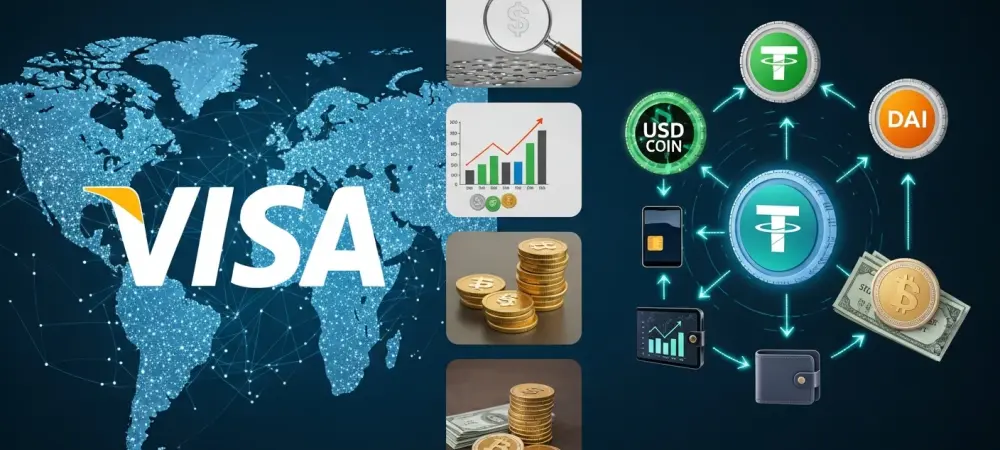
In a move signaling a seismic shift in the financial landscape, payments giant Visa is aggressively pushing into the world of digital assets, leveraging stablecoins to streamline a historically complex process: cross-border payments. The company’s recent initiatives, particularly a strategic partnership with infrastructure provider BVNK, aim to harness the efficiency of blockchain technology without forcing businesses to navigate the complexities of cryptocurrency. This article explores how Visa is not just experimenting with stablecoins but is strategically integrating them into its core operations, potentially reshaping the very architecture of global commerce. We will dissect the mechanics of its innovative model, analyze its competitive advantages, and consider the long-term implications for merchants, banks, and the future of money itself.
The Long-Standing Challenge of Cross-Border Payments
For decades, international payments have been a bottleneck in global commerce, characterized by slow settlement times, high fees, and a reliance on the cumbersome correspondent banking system. This multi-layered process, often taking several business days to complete, creates significant friction and operational costs for businesses of all sizes. While stablecoins—digital tokens pegged to a stable asset like the US dollar—have long been hailed as a solution, their mainstream adoption has been hampered by significant barriers. For most merchants, the challenges of price volatility, complex treasury management, and regulatory uncertainty associated with holding and transacting in digital assets have far outweighed the potential benefits, leaving the technology largely confined to the crypto-native world.
Deconstructing Visa’s Strategic Playbook
The ‘Indirect’ Model Bridging TradFi and Digital Assets
At the heart of Visa’s strategy is an elegantly simple “indirect” model that shields merchants from crypto’s inherent complexities. Through its partnership with BVNK, businesses can continue to accept and receive traditional fiat currencies as they always have. The magic happens on the back end, where stablecoins are used as a settlement layer to facilitate near-instant, low-cost international transfers over Visa’s real-time payment network, Visa Direct. Businesses can pre-fund payments using digital assets, with payouts sent directly to recipients’ digital wallets, while BVNK handles the crucial infrastructure and compliance checks. This design masterfully solves the adoption problem by allowing businesses to reap the benefits of blockchain efficiency without ever having to directly handle volatile digital assets on their balance sheets.
The Competitive Landscape and Visa’s Unmatched Advantage
While competitors like Stripe and Shopify have also launched services integrating digital assets, Visa’s dominant position in the global payments ecosystem gives it a formidable advantage. The company’s unparalleled scale, deep-rooted trust, and existing relationships with millions of merchants and financial institutions worldwide create a powerful network effect. This established infrastructure allows Visa to deploy and scale its stablecoin solutions far more rapidly and broadly than newer players. By leveraging its trusted brand and expansive Visa Direct network, which operates 24/7, the company is not just entering the market—it is positioned to define it.
Beyond a Pilot: A Deep Commitment to a Digital Future
This initiative is far from a tentative experiment; it represents a core component of Visa’s broader, aggressive strategy to solidify its role in the future of finance. The company is already processing over $4.5 billion in annualized stablecoin settlement volume, a clear indicator of its deep integration. Further cementing this commitment, Visa’s venture arm has invested directly in its partner, BVNK, signaling a long-term belief in the model. Moreover, the recent launch of a Stablecoin Advisory Practice to guide banks and enterprises in developing their own digital asset strategies proves that Visa views this technology not as a niche product but as a foundational element of the next generation of financial services.
The Emerging Trajectory of Global Settlement
Visa’s move is a powerful catalyst for a broader trend: the fusion of traditional financial rails with the efficiency of decentralized technology. As stablecoin settlement becomes more integrated, we can expect a future where 24/7, near-instantaneous global transactions become the industry standard, making current multi-day settlement cycles obsolete. This evolution will likely challenge the long-held dominance of the correspondent banking system and force a re-evaluation of how value moves across borders. As regulatory frameworks mature to accommodate these innovations, the path will clear for even deeper integration, potentially leading to the tokenization of a wide array of financial assets settled on networks like Visa’s.
Key Takeaways and Strategic Imperatives
The analysis reveals several critical insights. First, Visa’s indirect, “behind-the-scenes” approach to stablecoins provides a masterful blueprint for driving mainstream merchant adoption by removing key friction points. Second, the company’s immense scale and trusted brand give it a decisive advantage in the race to build the payment rails of the future. For businesses, the key takeaway is the need to explore how these new payment channels can drastically reduce costs and improve cash flow in international operations. Financial institutions, in turn, must recognize that the wall between traditional and decentralized finance is crumbling and that strategic partnerships are essential for remaining relevant in this new landscape.
Conclusion: Building the Bridge to a New Financial World
Visa’s foray into stablecoin settlement is more than just a technological upgrade; it is a strategic masterstroke that positions the legacy giant at the center of financial innovation. By building a practical bridge between the familiar world of fiat currency and the powerful potential of digital assets, Visa is not simply participating in the crypto revolution—it is actively shaping its mainstream application. This initiative legitimizes stablecoins as a viable, large-scale settlement layer and underscores a fundamental shift in the plumbing of global finance. Ultimately, by abstracting away the complexity, Visa may be the key that unlocks the benefits of blockchain for the global economy, fundamentally changing how money moves without forcing the world to become crypto experts.