

Today, we’re joined by Nicholas Braiden, a renowned FinTech expert and a passionate advocate for technology’s power to reshape financial services. With deep experience advising startups, he offers a unique perspective on how innovations like AI-driven workflows and no-code platforms are dismantling legacy barriers in the insurance sector. We’ll explore how integrated solutions are creating a seamless digital experience, from rapid product development to AI-enhanced claims processing. This conversation will uncover how such strategic partnerships empower insurers to accelerate transformation, streamline operations, and deliver tangible value in a rapidly evolving market.
Your integrated offering unites product configuration, servicing, and claims into one solution. Can you walk me through a practical scenario of how this seamless, end-to-end experience benefits an insurer and what specific operational efficiencies they can expect to see?
Absolutely. Imagine an MGA that identifies a new market opportunity—say, specialized coverage for gig economy workers. Traditionally, launching this would be a monumental task bogged down by legacy systems. With an integrated solution, the entire process is fluid and connected. The product team can configure the new policy in real-time using a no-code platform. The moment it’s live, the servicing and claims workflows are already connected and aware of its rules. This eliminates the siloed, manual hand-offs that create delays and errors. The benefit isn’t just speed; it’s about operating smarter and engaging customers coherently at every single touchpoint, from the initial quote to a potential claim.
Many insurers are challenged by legacy constraints that slow down innovation. How does combining a no-code platform with intelligent workflows specifically help them overcome these barriers? Please provide a step-by-step example of how an MGA could launch a new product much faster.
Legacy constraints are like anchors holding back a ship that’s trying to sail into the future. Combining a no-code platform with intelligent workflows essentially cuts those ropes. For an MGA, the process becomes incredibly agile. Step one, they use the no-code interface to design and configure the new product—no coding, no waiting on IT backlogs. Step two, as they build it, the platform’s intelligent workflows automatically map the processes for policy administration and claims. Step three, they can test and deploy it rapidly. This integration means you’re not just building a product; you’re launching a fully operational, end-to-end digital service. This is how you eliminate the friction that stifles innovation and truly accelerate digital transformation.
The solution promises an enhanced claims experience using AI-driven triage and routing. Could you elaborate on how this technology reduces manual effort and improves accuracy for claims teams? What key metrics would you use to measure its impact on resolution times and customer satisfaction?
The claims process is often where the customer experience is won or lost. AI-driven triage is a game-changer because it automates the very first, and often most tedious, step. When a claim comes in, the AI can instantly analyze the information, categorize its complexity, and route it to the right adjuster with the right expertise. This completely removes the manual sorting process, which is not only slow but also prone to human error. For measuring impact, the key metrics are clear: first, a direct reduction in claim resolution time, as we’re cutting out the administrative dead space. Second, you’d track customer satisfaction scores, because a faster, more accurate resolution translates directly into a better, more personalized experience for a customer in a stressful time.
Delivering measurable value is a key goal for digital transformation. What specific real-time insights do these integrated workflows provide to insurance teams, and how can those insights be used to reduce costs while creating more personalized experiences for customers?
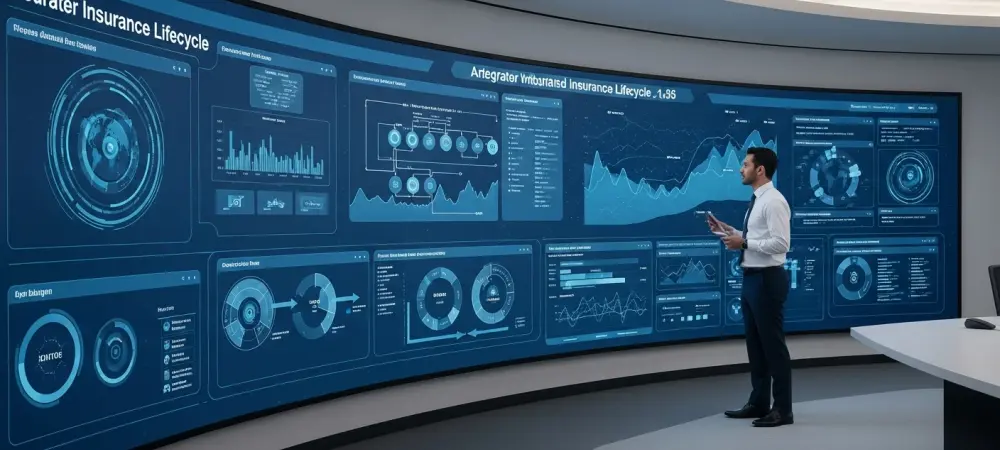
Transformation has to deliver measurable value with clarity and confidence, and that’s where real-time insights become critical. Integrated workflows give teams a live view of the entire insurance lifecycle. They can see where bottlenecks are forming in the claims process, which product features are causing the most service inquiries, or how long it takes to onboard a new policyholder. These aren’t just data points; they’re actionable insights. An insurer can see a process is taking too long and re-allocate resources instantly, reducing operational costs. At the same time, understanding a customer’s journey allows them to create exceptional, personalized experiences, focusing on what truly matters instead of getting bogged down in inefficient processes.
As a ServiceNow Build Partner, you can develop applications directly with its AI platform. What unique capabilities does this close collaboration enable for insurers, and how does it empower them to adapt more quickly to complex risks and evolving compliance requirements?
Being a Build Partner is fundamentally different from a simple integration. It means the application is developed with the ServiceNow AI Platform, not just plugged into it. This creates a deeply unified system. For insurers, this unlocks a new level of agility and coordination. They can leverage tailored configurations that are purpose-built for their complex needs, whether it’s managing a sophisticated risk portfolio or adapting to shifting compliance mandates. This seamless foundation empowers them to innovate and scale with confidence, knowing their core technology is not just connected, but intrinsically woven together to be fast, flexible, and ready for whatever the future holds.
What is your forecast for the role of no-code and AI-driven automation in shaping the insurance industry over the next five years?
Over the next five years, no-code and AI-driven automation will become the standard for any insurer that wants to remain competitive. The industry is moving away from monolithic, rigid systems toward a model defined by speed, flexibility, and customer-centricity. These technologies are the engine for that shift. We will see insurers launching highly personalized products in weeks, not years. AI will handle the bulk of administrative tasks, freeing up human talent to focus on complex problem-solving and building customer relationships. Ultimately, the future of insurance isn’t just about being digital; it’s about being intelligently automated, agile, and future-ready from the core.