

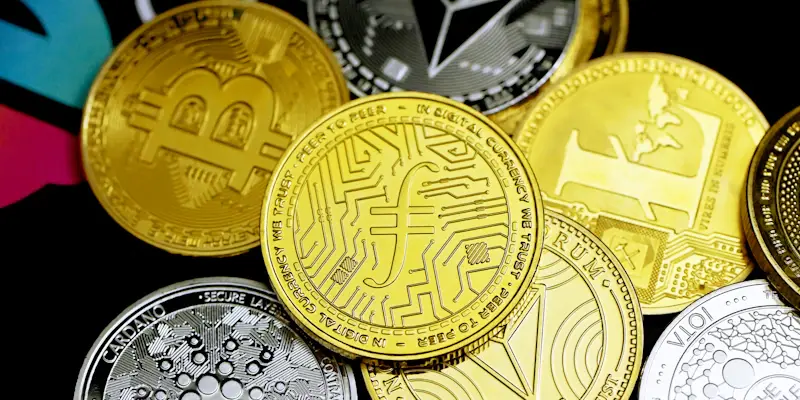
In recent months, the global cryptocurrency market has been under significant pressure, marked by declining asset values and reduced trading volumes.The total market capitalization has fallen to $2.65 trillion, representing a 1.02% loss over the last 24 hours. This environment has affected most major cryptocurrencies, though Bitcoin has managed to hold its ground above $82,000 despite a week-to-week decline of 4.00%. Bitcoin’s market dominance has increased, standing at 62.01%, with a market cap of $1.64 trillion and a recent 24-hour transaction volume of $34.14 billion.These fluctuations raise questions about whether the cryptocurrency market is gearing up for greater volatility.
Bitcoin and Ethereum’s Market Dynamics
Bitcoin’s Resilience Amid the Downturn
Bitcoin, often seen as the benchmark for the cryptocurrency market, has shown remarkable resilience amidst the broader downturn.Despite the recent weekly decline of 4.00%, Bitcoin has managed to stay above the $82,000 mark. This strength has solidified its dominance, now at 62.01%, indicating that investors still view Bitcoin as a safer harbor in turbulent times.Its market capitalization of $1.64 trillion, coupled with a 24-hour transaction volume of $34.14 billion, underscores the robust trading activity surrounding this digital asset.
The factors contributing to Bitcoin’s perceived stability include its established reputation, wider adoption by institutional investors, and its growing utility as a store of value. However, it is not entirely immune to market pressures. The recent dip in weekly performance hints at underlying volatility, influenced by macroeconomic factors such as inflation rates, interest rates, and broader financial market sentiments. Additionally, regulatory developments remain a critical element, as continued uncertainty in global regulatory landscapes can significantly impact Bitcoin’s market behavior.
Ethereum’s Struggles in Current Market Conditions
Ethereum, the second-largest cryptocurrency by market capitalization, has not fared as well in the recent market conditions. Priced at $1,788.24, Ethereum has faced a daily loss of 2.61% and a weekly decline of 7.66%. Its current market cap stands at $215.78 billion, with a 24-hour trading volume of $15.89 billion.These figures reflect the selling pressure Ethereum has been experiencing, which is partly attributed to the broader market volatility.
The decrease in Ethereum’s value is tied to multiple factors, including congestion issues on its blockchain, high gas fees, and the ongoing transition to Ethereum 2.0. While the transition aims to improve scalability and reduce fees, the uncertainty surrounding the timeline and effectiveness of these upgrades contributes to its current struggles. Furthermore, like Bitcoin, Ethereum is affected by macroeconomic conditions and regulatory developments, which add layers of complexity to its market performance.
Altcoins and Stablecoins: A Mixed Bag
Positive Performance of TRON Amid Declines
Among altcoins, TRON (TRX) has demonstrated a positive performance across various timeframes, even as the broader market shows declines.TRON’s price has recorded gains of 0.26% in the last hour, 0.87% over the day, and 3.13% over the week, bringing its value to $0.2395. This performance highlights TRON’s relative strength and resilience in the current market conditions. Several factors contribute to TRON’s positive performance, including its strong community support, steady development updates, and increasing adoption for decentralized applications (dApps).
In contrast, other altcoins have faced significant declines. For instance, Solana (SOL) has seen its price drop by 4.18% over the day and 14.64% over the week, now trading at $115.12 with a market cap of $59.22 million. Solana’s decline can be attributed to technical issues on its blockchain network and broader market sentiment. Other altcoins like Dogecoin (DOGE) and Cardano (ADA) have also faced losses, with DOGE trading at $0.1623 and ADA priced at $0.6485.These altcoins exhibit minor hourly gains but significant losses over longer timeframes, reflecting the challenges they face in the current market environment.
Stability of Stablecoins in Turbulent Times
Stablecoins like Tether (USDT) and USD Coin (USDC) have maintained their prices around $1, showing minor gains amid the turbulent market conditions. Tether has experienced a trading volume of $69.31 billion, while USD Coin has a trading volume of $12.04 billion within the same period.These figures underscore the role of stablecoins as a safe haven for investors seeking to hedge against volatility in the broader cryptocurrency market.
The stability of these assets is primarily due to their pegged value to fiat currencies, which provides a level of predictability and security that other cryptocurrencies cannot offer. This feature makes stablecoins particularly attractive during times of market uncertainty. Additionally, their dominance in trading volumes, comprising about 95.35% of total market activity, further emphasizes their importance in the current market landscape.
Factors Influencing Market Conditions
Economic and Regulatory Considerations
Several macroeconomic factors contribute to the current weak market backdrop, including persistent economic headwinds and muted trading volumes that indicate uncertain market directions. Factors such as inflation rates, interest rates, and broader financial market trends play significant roles in shaping the cryptocurrency market’s behavior. These economic variables influence investor sentiment and risk appetite, which in turn affects market dynamics and asset prices.Regulatory considerations add another layer of complexity and uncertainty to the market. Ongoing discussions and potential regulatory changes across different jurisdictions can have significant implications for the cryptocurrency market. These regulations can impact everything from trading activities and market participation to the adoption and usage of digital assets. Therefore, keeping a close watch on regulatory developments is crucial for understanding future market trends.
The Role of DeFi and Market Sentiment
The decentralized finance (DeFi) sector represents only about 6.72% of the total trading volume, highlighting its relatively small yet growing role within the cryptocurrency market. DeFi platforms offer various financial services, such as lending, borrowing, and trading, without intermediaries, which can potentially revolutionize traditional financial systems. However, the DeFi space also faces challenges, including security vulnerabilities, regulatory scrutiny, and liquidity concerns, which investors must navigate.Market sentiment plays a critical role in the current environment, influencing trading behavior and asset prices. The substantial drop in trading volume, which has decreased by 31.17% to $89.43 billion in the last 24 hours, signals caution among investors. This caution is driven by various factors, including macroeconomic uncertainties, regulatory developments, and the overarching market sentiment.As a result, market participants are likely to remain vigilant and responsive to these influences in navigating the cryptocurrency landscape.
Looking Ahead: Navigating Future Trends
In recent months, the worldwide cryptocurrency market has faced substantial pressure, characterized by dropping asset values and lower trading volumes. The overall market capitalization has decreased to $2.65 trillion, showing a 1.02% loss over the past 24 hours. This trend has impacted most major cryptocurrencies, yet Bitcoin has managed to stay above $82,000, even though it experienced a 4.00% decline over the past week.Bitcoin’s market dominance has increased, now standing at 62.01%, with a market cap of $1.64 trillion and a 24-hour transaction volume of $34.14 billion. These fluctuations raise significant questions about the potential for increased volatility in the cryptocurrency market. Analysts and traders are keenly observing these developments to understand whether these trends signal the beginning of a more turbulent phase in the market. This period of uncertainty requires investors to be vigilant and consider the broader implications for future investments in the cryptocurrency landscape.