

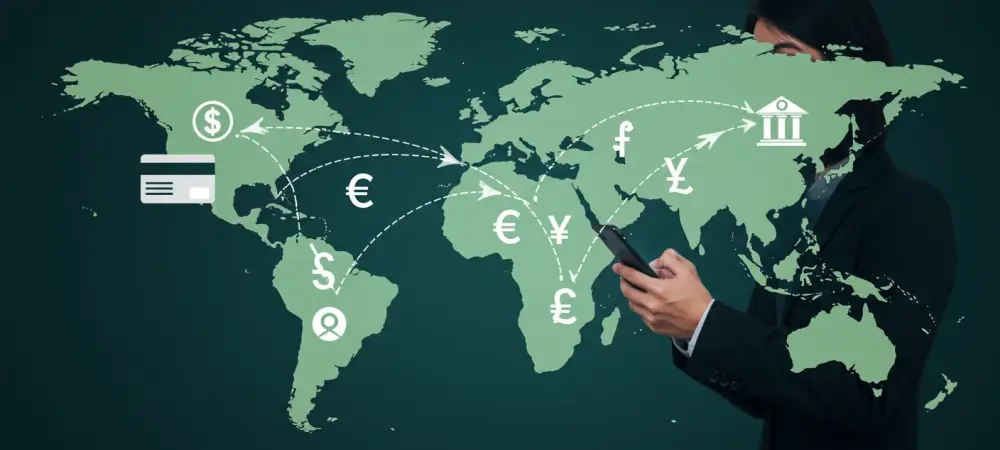
How Often Does Global Commerce Get a Revolutionary Upgrade?
Imagine the ripple effect on your business if international payments were as seamless as local transactions. Global businesses frequently wrestle with the complexities and inefficiencies tied to cross-border payments. These headaches include prolonged processing times, hidden fees, and opaque exchange rates. Payset, a company committed to transforming financial transactions, promises to change this narrative.
Why Transforming International Transfers Matters
In the realm of global commerce, inefficient payment processes can stifle growth and limit opportunities. As businesses increasingly operate on an international scale, the demand for seamless and efficient financial solutions has skyrocketed. The global marketplace thrives on innovation, and Payset’s strides in refining cross-border payment solutions align with this need. Their developments speak to the broader trend of creating a more interconnected financial ecosystem, emphasizing the importance of innovation.
Transformative Steps by Payset to Enhance Global Transactions
Payset’s latest innovation lies in the launch of their upgraded website, which promises drastic improvements by making international financial dealings faster, simpler, and more transparent. The platform’s intuitive interface enhances users’ understanding, effectively bridging the gap in managing complex transactions. The streamlined onboarding process now allows businesses to set up and verify accounts within ten minutes, a game-changer in today’s fast-paced economic landscape. Optimized for mobile, Payset ensures accessibility, allowing users to manage transactions whether at their desks or on the go. By offering solutions specific to various industries, Payset empowers businesses with customized tools, reflecting their commitment to inclusivity and broader outreach.
Insights from Industry Leaders and Users
Rudi Reager, Payset’s CEO, underscores this transformation as pivotal, designed to simplify international payments and offer clearer, faster, and more accessible services. Payset’s improvements are seen by experts as potentially transformative for global finance. Businesses like a leading e-commerce firm have credited Payset’s solutions for significantly reducing transaction times and fees, demonstrating real-world efficacy and enhancing operational efficiency.
Strategic Approaches for Businesses to Harness Payset
For businesses keen to leverage Payset’s offerings, strategic integration is key. Companies should assess their financial operations to determine where Payset’s solutions can be most beneficial, whether enhancing payment processes in e-commerce or optimizing billing in hospitality. Adopting such innovative payment solutions is crucial to maintaining competitiveness in an increasingly global market. By aligning with Payset, companies not only refine their financial transactions but also position themselves as forward-thinking industry leaders.
The Road Ahead: Embracing Change in Global Finance
As businesses look to the future, embracing innovations in cross-border payment solutions becomes critical. Payset’s advancements have set a new standard for transactional efficiency with user-centric features and transparent pricing. Moving forward, companies that adapt by embedding such revolutionary solutions into their operations will not only improve their transactional efficiency but also strengthen their global competitive edge.