

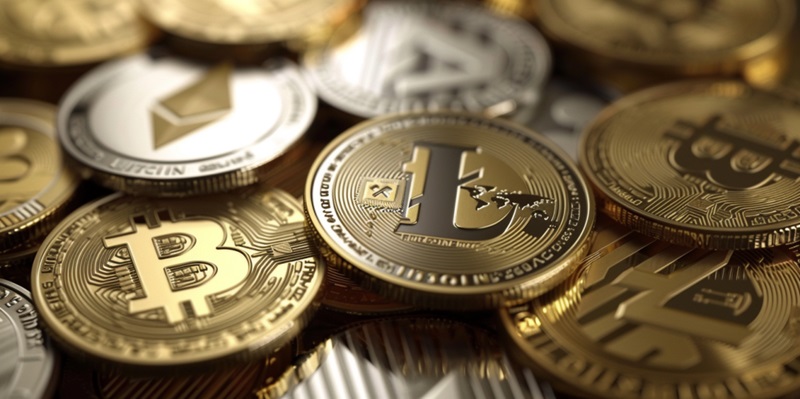
As digital currencies continue to evolve and shape the future of transactions, Litecoin (LTC) emerges as a significant player, witnessing a notable surge in network activity. Historically an early rival to Bitcoin, Litecoin’s recent uptick in activity is garnering attention, rivalling even Ethereum with its number of active addresses. A staggering spike of 75% in active users and a remarkable peak of 426,000 daily transactions paint a clear picture: the cryptocurrency community is placing increased trust in Litecoin’s capacity for digital transactions. Rooted in its core attributes of stability, speed, and lower transaction costs, Litecoin’s upward trends not only suggest but substantiate a soaring user adoption rate.
The Current Tide: A Surge in Litecoin’s Ecosystem
Litecoin’s foundational strengths are becoming more pronounced with the inclusion of smart contract functionality, marking a new era of versatility for the digital coin. This enhancement aligns it with the advancements of Bitcoin and other Proof-of-Work protocols, bolstering its place in the ever-expansive cryptocurrency landscape. Perhaps even more intriguing is the attention it has drawn from analysts who are optimistic about its value trajectory, eyeing the $100 price horizon. Poised at $83.59 with a respectable $6.24 billion market capitalization, Litecoin demonstrates a compelling blend of dynamism and reliability. While volatility is an inescapable facet of the crypto world, the relative steadiness that Litecoin maintains has been instrumental in sustaining and nurturing investor confidence.
Litecoin’s origin story is tied to an intent to enhance what Bitcoin established. Introduced to the world by creator Charlie Lee in 2011, it sought to address the scalability concerns that shadowed Bitcoin by boosting transaction speeds with the Scrypt hashing algorithm. Often lauded as the ‘silver’ to Bitcoin’s ‘gold,’ the continual relevance of Litecoin in the ebb and flow of the crypto market can be attributed to its competitive edge—an edge that has not only withstood the test of time but also seems aptly sharpened for future challenges.
Litecoin’s Prospective Horizons
In the ever-evolving landscape of digital currency, Litecoin (LTC) has made a splash with a significant boost in network action. Once a direct competitor to Bitcoin, Litecoin is now on par with Ethereum in terms of active users, thanks to an impressive 75% hike in network participants. It recently hit a daily transaction high with 426,000. This flurry of activity signals the growing confidence the crypto community has in Litecoin’s ability to handle digital exchanges. The core elements that define Litecoin — reliability, swift processing, along with reduced fees for transactions — are driving its increasing acceptance. With its recent dramatic increase in user engagement, Litecoin is demonstrating its potential to significantly contribute to the digital transaction space, indicating a notable trend of rising user adoption. This showcases Litecoin’s strengthening position in the cryptocurrency market as it continues to attract more users with its efficiency and affordability.