

Introduction
Digital asset markets are currently undergoing a profound metamorphosis where the line between legacy finance and community-driven speculation has practically vanished. This environment has created a unique dichotomy where established protocols act as the backbone of global banking while agile, utility-focused projects provide a gateway to early-stage growth. The objective of this comprehensive analysis is to explore the current trajectory of the cryptocurrency market, specifically focusing on the institutional evolution of XRP and the emerging speculative opportunity found within the Pepeto ecosystem.
By examining the integration of blockchain into traditional financial infrastructure and the rise of decentralized tools, readers can gain a clearer understanding of how to navigate these diverse assets. The scope of this content covers recent technological deployments, market sentiment, and the fundamental differences between high-utility legacy coins and innovative presale projects. Through this exploration, the intent is to provide actionable insights for those looking to balance stability with significant growth potential in the current economic landscape.
Key Questions or Key Topics Section
Why Has Ripple Successfully Integrated into the Global Financial System?
he integration of XRP into the traditional financial world is driven by a fundamental shift toward more efficient cross-border settlement systems. On July 9, SWIFT announced that its blockchain-based ledger reached a state of readiness for initial deployment, involving seventeen major global banking institutions including HSBC, Citibank, and Standard Chartered. These banks have increasingly looked toward Ripple’s On-Demand Liquidity and the XRP Ledger to facilitate real-time tokenized payments, reducing the friction and cost associated with legacy banking methods. Furthermore, the global transition toward the ISO 20022 messaging standard has solidified Ripple’s position as a cornerstone of modern financial architecture. Because the XRP Ledger is natively interoperable with these standards, it allows for a seamless flow of data and value across different jurisdictions. The inclusion of Ripple in the SWIFT Certified Partner Program earlier this April further signaled that the asset has moved beyond its early legal challenges to become an operational reality within the world’s largest payment networks.
What Makes Pepeto a Compelling Alternative for High-Growth Seekers?
While institutional assets provide a sense of security, the search for asymmetric risk-to-reward opportunities often leads to projects that bridge the gap between community culture and functional utility. Pepeto has emerged as a primary candidate in this category, having raised over $10.4 million during its presale phase. The project distinguishes itself by offering a suite of live exchange tools, such as a zero-fee swap engine and a cross-chain bridge, which address the common pain points of high transaction costs and liquidity fragmentation in decentralized finance.
Security remains a top priority for this ecosystem, as reflected in its SolidProof audit and a transparent tokenomics structure featuring a fixed supply of 420 trillion tokens. Beyond simple speculation, the project offers a proprietary AI risk-scoring tool designed to evaluate potential trades and protect users from high-risk positions. With a current staking APY of 168% and a leadership team consisting of veterans from major exchanges like Binance, the project aims to capture the early growth phase that typically evaporates once an asset reaches mainstream institutional status.
How Do These Assets Compare in Terms of Market Risk and Reward?
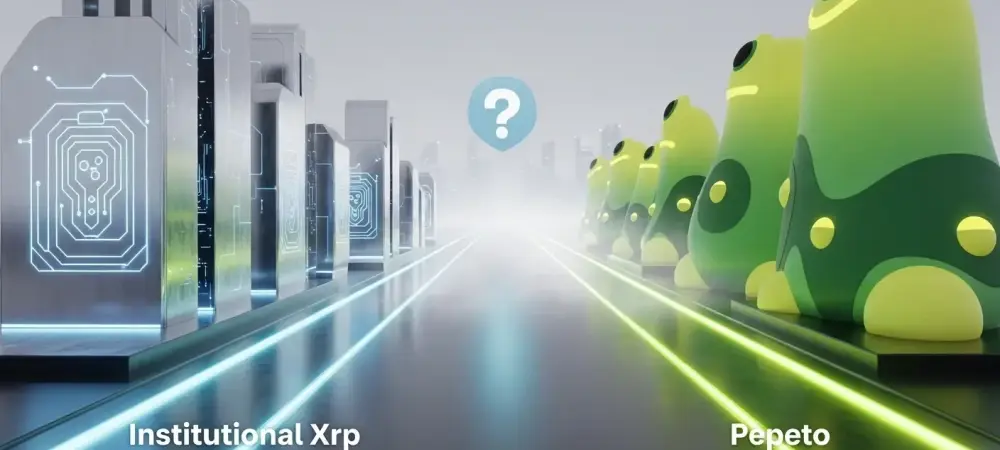
The current market is defined by a clear bifurcation between the validation phase and the presale phase. XRP represents the validation phase, where success is measured by bank adoption, regulatory clarity, and steady inflows through exchange-traded funds. While this maturation offers lower volatility and a higher degree of institutional trust, the asset’s $69 billion market capitalization means that the era of explosive, life-changing multipliers has likely passed in favor of a “slow and steady” growth profile.
In contrast, entering a project like Pepeto during its presale mimics the early-stage entries that defined previous bull market success stories. This approach offers significantly higher potential returns but comes with the inherent risks of a project still building its primary volume and user base. Market participants are increasingly recognizing that the most significant wealth generation occurs before an asset is listed on major tier-one exchanges, suggesting that a balanced portfolio might benefit from combining the foundational stability of Ripple with the high-utility upside of newer projects.
Summary or Recap
The digital asset landscape is no longer a monolith, as the market has separated into institutional infrastructure and high-growth utility projects. XRP serves as a vital bridge currency for global banking, leveraging its integration with SWIFT and ISO 20022 standards to provide long-term stability and reliability. Its recent price action, characterized by resilience near the $1.10 mark, reflects a maturing asset that rewards institutional patience and provides a hedge against the volatility of smaller projects. Meanwhile, Pepeto offers a distinct path for those seeking high-multiplier growth through a comprehensive suite of DeFi tools. Its successful presale and focus on solving trader issues like fees and cross-chain interoperability position it as a leader in the next wave of utility-driven community assets. Both projects demonstrate that value in the current cycle is derived from functional utility—whether that involves facilitating multibillion-dollar bank transfers or providing a decentralized ecosystem for individual retail traders to thrive.
Conclusion or Final Thoughts
The market evolution observed throughout the current year demonstrated that a strategic approach required a deep understanding of both institutional validation and speculative growth. Investors who prioritized technological utility found that the integration of XRP into global payment networks provided a durable foundation for long-term wealth preservation. It was clear that the widespread adoption of blockchain by major financial institutions transformed digital assets from experimental tools into essential components of the global economy.
Simultaneously, the success of the Pepeto presale showed that there was still significant appetite for projects that offered early-stage entry points combined with robust technical features. Those who analyzed the market understood that the highest growth potential existed in assets that addressed specific user needs before achieving broad mainstream recognition. As the landscape continued to mature, the most effective strategy involved balancing the security of established protocols with the dynamic possibilities of new ecosystems, ensuring a portfolio was prepared for both stability and expansion.