

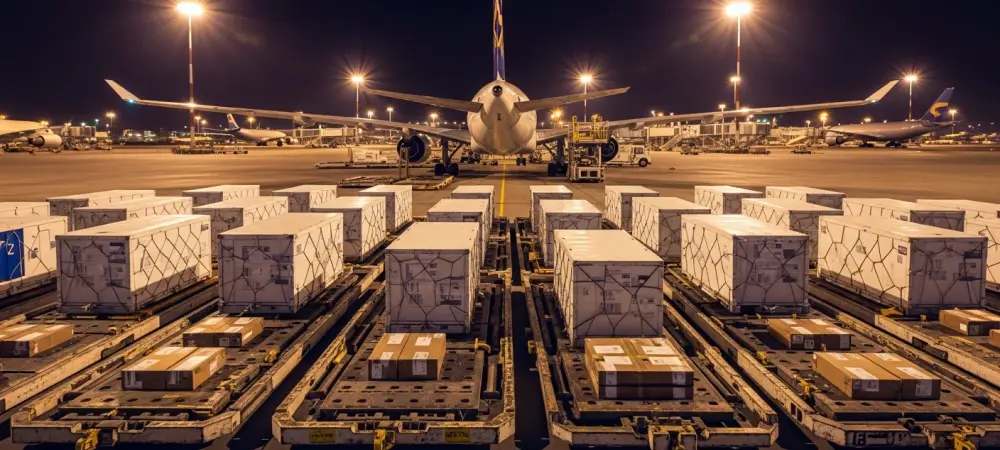
The modern consumer’s expectation for forty-eight-hour cross-border delivery has fundamentally rewired the circuitry of international trade, pushing air cargo from a background service to a front-line retail necessity. The global air cargo industry is undergoing a profound structural shift where e-commerce has evolved into the primary growth engine for the entire sector. Driven by a surge in international online shopping, this trend has altered the volume, velocity, and variety of goods traveling by air. As expectations for rapid delivery reach new heights, traditional frameworks are being dismantled to make way for an agile, digitally integrated supply chain. This shift is not just adding volume but is completely recalibrating the operational DNA of global air logistics.
The Great Transformation: E-Commerce as the Engine of Modern Airfreight
Global air trade is currently experiencing a transition where digital retail dictates market health. Recent data indicates that without the contribution of online shopping platforms, overall air cargo growth would significantly stall. What was once a niche segment is now a core requirement for profitability, as millions of individual parcels replace the heavy industrial crates of the past. This transformation requires a move away from passive transportation toward active, data-driven logistics management.
From Niche to Necessity: The Historical Evolution of Air Logistics
For decades, air cargo was a premium service for manufacturing components, electronics, and pharmaceuticals. The industry operated on a predictable model centered around weight and bulk, where profitability was tied to large-scale industrial shipments. However, current market dynamics mark a turning point as global marketplaces democratize international trade. The shift from business-to-business dominance to a direct-to-consumer model has accelerated. This history highlights the friction between legacy systems designed for palletized freight and the modern reality of individual consumer shipments.
The Structural Pivot in Global Trade Flows
The Dominance of Transpacific and Asia-Europe Trade Lanes
The geographical concentration of growth is most evident in trade lanes connecting Asian manufacturing hubs to North American and European consumers. Nearly half of the cargo volume on these critical routes is now tied directly to online retail. The sheer scale of cross-border platforms has turned these lanes into digital silk roads where the demand for capacity is constant rather than seasonal. This forces airlines to prioritize these routes, often at the expense of secondary markets, creating a lopsided global capacity map.
Shifting Values: From High-Margin Weight to High-Volume Density
The composition of airfreight is moving toward high-volume, lower-value shipments, presenting a challenge for yield management. Carriers once focused on the weight of massive crates; today, they must manage the parcel density of millions of small packages. While these shipments provide consistent volume, they demand higher operational overhead for sorting and tracking. This change forces a recalibration of profitability as the industry balances lower margins with the massive, recurring scale provided by e-commerce.
Rethinking Infrastructure: Moving Beyond the Traditional Hub
To accommodate rapid throughput, the traditional hub-and-spoke model is being challenged. Logistics providers are looking toward secondary gateways and regional sortation centers located closer to the final consumer. This decentralization helps avoid congestion at major international airports. Furthermore, modern infrastructure must now include advanced digital customs processing. Efficiency in clearance has become a critical competitive differentiator, as delays at the border can negate the speed advantage that makes air cargo attractive.
Anticipating the Next Wave: Automation and Integrated Digital Supply Chains
The future of air cargo lies in the total integration of physical logistics with digital data. There is an increasing trend toward dedicated freighter fleets owned or leased by e-commerce giants, reducing reliance on commercial bellyhold capacity. Innovations such as AI-driven demand forecasting and autonomous ground handling will become standard to manage the complexity of parcel-heavy flows. Regulatory shifts regarding tax thresholds and sustainability will also force the industry to innovate in green logistics and more transparent reporting.
Strategic Recommendations for an E-Commerce-Centric Market
For businesses to thrive in this landscape, adaptability is key. Stakeholders should invest in data-rich platforms that provide real-time visibility into the status of individual parcels. Carriers must find a strategic balance between widebody bellyhold capacity and flexible freighter operations to hedge against market volatility. Finally, implementing automated sortation and digital-first customs protocols is now a requirement for maintaining delivery velocity. By focusing on density and digital integration, companies can turn these challenges into long-term advantages.
Conclusion: The New Era of Global Connectivity
E-commerce is the catalyst for a fundamental industry-wide evolution that moves air cargo toward becoming a seamless component of the global digital supply chain. This transformation highlights the significance of air logistics in a world that demands instant gratification and borderless commerce. The winners in this new era are those who embrace technology and flexible networking to meet the relentless pace of the modern consumer. Air transport is no longer just a highway for freight; it serves as the essential backbone of the global digital economy.