

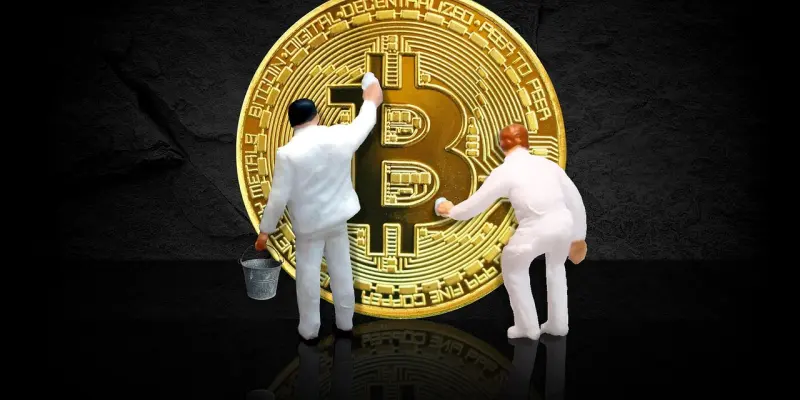
In recent years, the trade war between the United States and China has sent shockwaves through global financial markets. The imposition of reciprocal import tariffs by US President Donald Trump marked a significant escalation in trade tensions, leading to substantial sell-offs in stock markets. Amid this turmoil, Bitcoin’s value saw a notable correction, fueling discussions about its potential as a safe-haven asset. Traditional investors have long flocked to gold during periods of economic uncertainty, but Bitcoin’s digital nature, liquidity, and around-the-clock market accessibility have gradually positioned it as an attractive alternative.
Bitcoin’s Growing Appeal as a Safe-Haven Asset
Digital Nature and Accessibility of Bitcoin
Bitcoin’s increasing appeal as a safe-haven asset can be attributed to several factors that distinguish it from traditional refuges like gold. One key advantage is its digital nature, which allows for seamless transactions and transfers across borders without the physical limitations associated with precious metals. Unlike gold, Bitcoin can be stored and accessed through digital wallets, providing investors with instant access to their assets regardless of their geographic location. Additionally, Bitcoin offers unparalleled liquidity, allowing investors to quickly convert their holdings into fiat currency or other digital assets. This characteristic is especially important during times of geopolitical stress and currency devaluation concerns, where the ability to swiftly move assets can mitigate potential losses. Hunter Horsley, CEO of crypto asset manager Bitwise, emphasized this point, noting that Bitcoin’s resilience against debasement and lack of control by any single nation makes it an attractive option in volatile times.
Long-Term vs. Short-Term Safe-Haven Potential
Despite Bitcoin’s growing allure, debates persist about its viability as a short-term safe-haven asset. Aurelie Barthere from Nansen asserts that gold will continue to dominate the safe-haven landscape in the near term due to its historical stability and lower volatility. The extreme price fluctuations associated with Bitcoin can deter risk-averse investors seeking immediate refuge from market disruptions. However, the long-term prospects for Bitcoin as a safe haven are more promising. Over the past few years, Bitcoin’s volatility has gradually decreased, indicating a maturing market. As Bitcoin continues to gain acceptance and integration into mainstream financial systems, its stability is expected to improve further. Analysts like André Dragosch and Michaël van de Poppe highlight the potential for a shift towards crypto investments once markets recognize Bitcoin’s undervaluation and its evolving role in the global economy. This transition may take time, but the current trends and increasing institutional interest suggest a positive trajectory for Bitcoin as a long-term safe-haven asset.
The Impact of US-China Trade War on Bitcoin
Escalating Trade Tensions and Investor Behavior
The ongoing trade war between the United States and China has had profound implications for global financial markets, including the crypto market. Following President Trump’s announcement of tariffs on Chinese imports, China retaliated with tariffs of up to 84% on US goods. This escalating conflict has heightened uncertainty, typically discouraging risk appetite among investors. However, Bitcoin has exhibited a different behavior in response to these geopolitical tensions. Contrary to traditional markets, which often experience sell-offs amid uncertainty, Bitcoin has seen periods of increased interest. Some analysts view this as evidence of Bitcoin transitioning from a speculative asset to a functional monetary tool during unfavorable economic conditions. The unique properties of Bitcoin, such as its decentralized nature and immunity to government intervention, make it an appealing option for investors looking to mitigate geopolitical risks. This divergence from conventional market dynamics underscores Bitcoin’s potential as a hedge against global trade uncertainties.
Emerging Trends in Bitcoin Adoption
Recent developments indicate a growing trend of countries exploring the use of Bitcoin and other digital assets for international trade settlements. This shift is particularly notable in nations like China and Russia, which have started to bypass traditional financial systems in favor of digital currencies. For example, Bolivia has initiated plans to use cryptocurrencies for electricity imports, while French utility firm EDF is exploring Bitcoin mining with surplus power. These instances highlight Bitcoin’s potential to evolve from a mere speculative instrument to a functional part of the global monetary system. The adoption of Bitcoin for real-world applications signals a broader acceptance and recognition of its utility beyond trading and investment. As more countries consider integrating digital assets into their economic frameworks, the perception of Bitcoin as a viable safe-haven asset strengthens. This trend is further supported by the gradual stabilization of Bitcoin’s market, with decreasing volatility making it a more attractive option for risk-averse investors.
Future of Bitcoin as a Safe-Haven Asset
Moving Toward Mainstream Adoption
The future of Bitcoin as a safe-haven asset hinges on its ability to achieve mainstream acceptance and integration into the global financial system. The gradual reduction in volatility and the increasing interest from institutional investors indicate a maturing market poised for further growth. As governments and corporations continue to explore the practical applications of Bitcoin, its role in the economy is likely to expand. Moreover, the ongoing trade tensions and geopolitical uncertainties provide a context in which Bitcoin’s unique properties can be fully appreciated. Unlike traditional assets, Bitcoin operates independently of any central authority, offering a level of security and stability that is particularly valuable during times of crisis. This independence makes Bitcoin an appealing option for both individual investors and nations looking to diversify their financial strategies.
Challenges to Overcome
Despite the positive outlook, several challenges remain before Bitcoin can fully transition into a mainstream safe-haven asset. One of the primary obstacles is its inherent volatility, which can deter conservative investors. While the market has shown signs of stabilization, further efforts to reduce price fluctuations are crucial. Additionally, regulatory uncertainties surrounding cryptocurrencies pose a significant challenge. Governments around the world adopt varying approaches to crypto regulation, creating an environment of uncertainty that can hinder broader adoption. To address these issues, continued collaboration between regulatory bodies, financial institutions, and cryptocurrency developers is essential. Clear and consistent regulations can provide the necessary framework for Bitcoin’s growth, ensuring that it operates within a secure and transparent environment. As these challenges are addressed, Bitcoin’s potential as a stable and reliable safe-haven asset will become increasingly apparent.
Conclusion
In recent years, the trade war between the United States and China has had a profound impact on global financial markets. US President Donald Trump’s decision to impose reciprocal import tariffs significantly escalated trade tensions, causing major sell-offs in stock markets. This financial uncertainty also affected the value of Bitcoin, resulting in a notable correction. The situation has sparked discussions about whether Bitcoin could serve as a safe-haven asset during economic turmoil. Traditionally, investors have turned to gold in times of economic stress. However, Bitcoin’s unique attributes—its digital nature, high liquidity, and 24/7 market availability—have increasingly made it an appealing alternative to gold. As these trade tensions continue to influence the global economy, Bitcoin’s role in the financial landscape is gaining attention. Its potential as a stable asset in times of uncertainty is becoming more widely considered, and investors are keeping a close eye on its performance. Consequently, Bitcoin is gradually securing its position as a viable option for safeguarding against economic instability.