

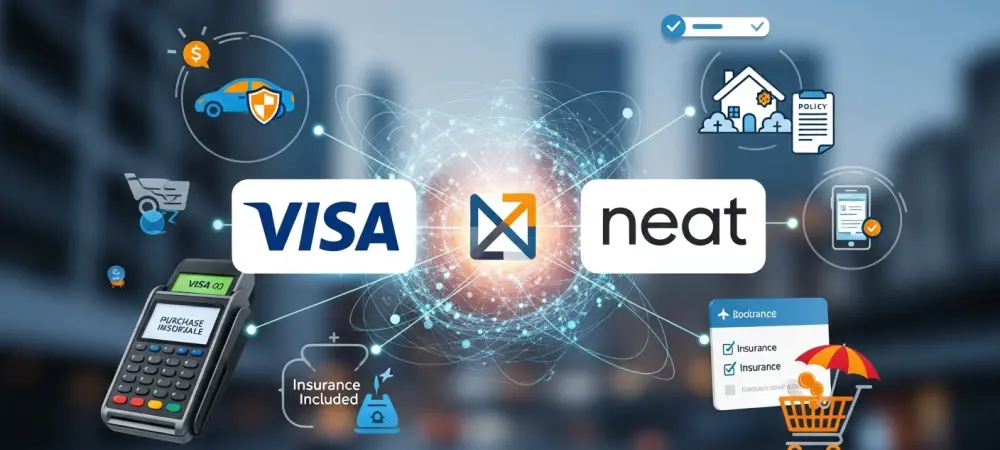
Redefining Financial Protection Through Strategic Collaboration
The modern consumer no longer views a payment card as a simple tool for transactions but as a gateway to a comprehensive suite of secure, digital-first financial services. The strategic partnership between global payments leader Visa and European InsurTech firm Neat marks a significant milestone in this evolution, aiming to modernize how insurance and medical assistance are delivered to millions of cardholders. This collaboration is not merely an administrative update; it represents a fundamental move toward a digital-first ecosystem where insurance is a seamless, transparent feature of the payment experience. By exploring the integration of Neat’s agile infrastructure with Visa’s massive global network, this article examines how this partnership aims to solve long-standing consumer frustrations and set a new standard for value-added financial products.
The Evolution of Card-Linked Benefits and the Rise of Embedded Protection
Historically, insurance benefits attached to credit and debit cards have been viewed as “invisible” perks—secondary features that many consumers were aware of but rarely understood or utilized. These traditional programs often suffered from opaque terms, complex manual claims processes, and a general lack of digital accessibility. In the past, cardholders frequently found themselves navigating a labyrinth of paperwork and phone lines during emergencies, leading to a disconnect between the brand promise and the user experience. As the digital economy matured, the demand for “embedded insurance”—the real-time integration of protection into digital transactions—became a necessity rather than a luxury. This background sets the stage for the Visa-Neat partnership, which seeks to transform these legacy systems into a proactive, high-value component of the modern financial toolkit.
Elevating the Cardholder Experience Through Digital Innovation
Transparency and AI-Driven Personalization in Modern Coverage
A critical aspect of this partnership is the move toward radical transparency and the use of artificial intelligence to tailor protection to the individual. One of the primary hurdles in traditional insurance is the “coverage gap,” where cardholders are unsure of what is protected and under what circumstances. By utilizing Neat’s advanced technological stack, Visa can now offer cardholders an intuitive interface that clearly outlines their benefits in real-time. Furthermore, the integration of AI allows for a level of personalization previously unseen in mass-market card programs. Instead of a one-size-fits-all policy, the technology analyzes user context to ensure that insurance plans are relevant to the specific needs of the cardholder, whether they are a frequent international traveler or a small business owner managing domestic logistics.
Streamlining Claims Management via Technological Integration
The efficiency of the claims process is often the ultimate litmus test for any insurance product, and this collaboration aims to revolutionize this touchpoint. By building a digital-first claims infrastructure, Neat and Visa are addressing the industry’s most persistent pain point: the slow resolution of requests. The partnership leverages automated workflows and digital documentation, significantly reducing the time from claim submission to resolution. This shift not only benefits the consumer by providing faster financial relief and assistance but also allows Visa to strengthen its brand loyalty. For business cardholders, especially, this speed is vital for maintaining operational continuity, turning what was once a bureaucratic burden into a reliable safety net.
Scalability and Geographic Expansion in the European Market
The initial rollout of this initiative in France—a market where Visa already covers over 25 million cardholders—serves as a high-stakes proof of concept. However, the partnership is designed with international scalability at its core, with plans for a progressive expansion across Europe. This strategy addresses the regional complexities of the European insurance market, where regulatory requirements and consumer expectations can vary significantly between borders. By deploying a unified technological framework that is flexible enough to adapt to local nuances, Neat and Visa are positioning themselves to dominate the European embedded insurance space. This approach debunks the misconception that large-scale insurance programs must remain slow-moving and rigid, proving instead that agile InsurTech solutions can meet the demands of a global payment giant.
The Future of the Financial Ecosystem and Integrated Services
Looking ahead, the collaboration between Visa and Neat is a precursor to a broader trend where financial products become “everyday companions.” We are likely to see a shift toward even more proactive insurance models, where protection is triggered automatically based on spending patterns or geographic location via GPS. Technological advancements in blockchain and smart contracts could further automate the payout process, potentially eliminating the need for manual claims in specific scenarios like flight delays or lost luggage. From a regulatory perspective, as embedded insurance becomes more prevalent, we can expect increased scrutiny on data privacy and consumer disclosures, forcing firms to maintain the high standards of clarity that Visa and Neat are currently prioritizing.
Actionable Insights for the Digital-First Economy
The primary takeaway from this partnership is that the value of a financial product is increasingly defined by the ecosystem of services surrounding it. For businesses, the lesson is clear: integrating protection directly into the customer journey can significantly enhance the value proposition and drive user retention. Professionals in the fintech and insurance sectors should look to this model as a blueprint for successful cross-industry collaboration, emphasizing the importance of API-driven architectures and user-centric design. Consumers, on the other hand, should become more proactive in exploring the digital tools provided by their financial institutions, as the shift toward transparent, AI-powered benefits makes it easier than ever to utilize the protection they are already paying for.
Conclusion: A New Standard for the Interconnected World
The partnership between Visa and Neat represented a decisive step toward a more integrated and user-friendly financial landscape. By stripping away the complexity of traditional insurance and replacing it with a transparent, digital-first experience, these organizations fundamentally changed the expectations surrounding payment cards. This shift ensured that protection moved from being a separate, burdensome chore to a seamless part of the consumer’s daily financial life. As this model scaled across the continent, it reinforced the reality that the most successful financial tools were those that provided not just utility, but peace of mind through constant innovation and structural clarity. Moving forward, the industry learned to prioritize the unification of disparate services into a single, cohesive user journey.