

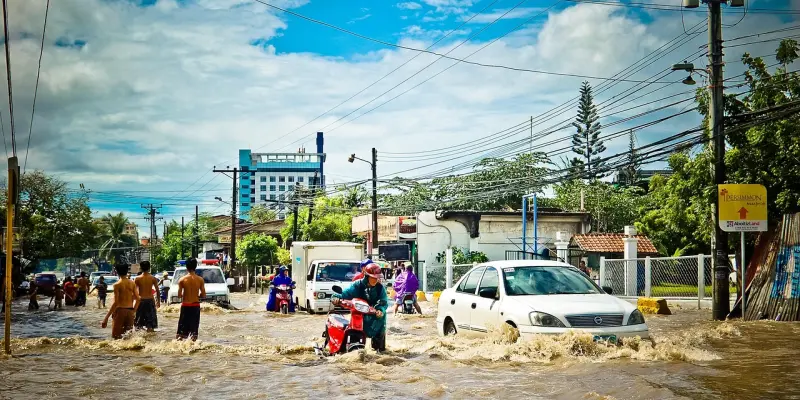
In a concerted effort to tackle the heightened risk of flooding in the UK and Ireland, Previsico, a flood forecasting and sensor technology company, has joined forces with Descartes Underwriting, a prominent provider of parametric insurance. This significant collaboration aims to provide businesses with advanced flood warnings and expedite claims payments, thereby offering a robust solution to the growing flood risks, which are projected to increase markedly by 2050 due to climate change. The enhanced initiative combines cutting-edge technology and innovative insurance solutions, addressing one of the most pressing concerns in modern risk management.
Addressing the Escalating Flood Risks
The agreement stems from pressing concerns regarding the rise in flooding incidents, exacerbated by climate change. According to projections, under a 2°C warming scenario, the number of people at risk from flooding could surge by 61%, and by as much as 118% under a 4°C warming scenario. These escalating risks have already influenced insurers’ risk appetites, rendering affordable flood insurance increasingly difficult to obtain for many businesses. Consequently, enterprises are often left vulnerable, with limited financial protection available to safeguard against flood damages.
Previsico excels in delivering world-leading flood forecasting through its Flood Intel Platform, which integrates sensor technologies. This platform is crucial for organizations aiming to manage flood risks effectively, as it provides detailed forecasts for surface water and ordinary watercourse flooding up to 48 hours in advance. By continuously monitoring local conditions, including water levels, Previsico’s sensors offer real-time insights into potential flood risks. This technology empowers organizations to take proactive steps in mitigating flood damage and protecting their assets against impending flood events. Moreover, the system’s accuracy and user-friendliness make it an invaluable tool for businesses across various sectors.
The Role of Parametric Insurance
On the insurance side, Descartes Underwriting specializes in parametric insurance solutions, which provide insurance coverage that is highly responsive and efficient. Unlike traditional insurance, which operates on indemnity principles requiring proof of loss, parametric insurance pays out when predefined parameters are met. Descartes’ policies cover both tangible and intangible losses and boast a big underwriting capacity of up to $70 million per policy. Furthermore, Descartes prides itself on processing claims swiftly, typically within days of a flood event, guaranteeing timely financial support for businesses. This quick response is particularly vital for organizations seeking to recover and resume operations swiftly after a disaster.
The collaboration between Previsico and Descartes leverages the strengths of both companies to provide a comprehensive flood risk management solution. By combining real-time data from Previsico’s IoT flood sensors with Descartes’ parametric insurance capabilities, the new offering aims to establish a more efficient, transparent, and responsive approach to managing flood risks. This cooperation is particularly critical in flood-prone areas, where businesses face heightened threats exacerbated by climate change. The seamless integration of these technologies offers a groundbreaking approach, revolutionizing traditional methods of flood risk management.
Empowering Businesses with Proactive Measures
A key theme of this partnership is empowering businesses to act decisively before a flood event occurs, thus potentially reducing financial impacts significantly. Steven Hayward, IoT Systems Manager at Previsico, emphasized that a third of commercial properties in the UK are at risk from flooding. He further mentioned that 40% of small and medium-sized businesses never reopen after experiencing significant flood losses. Hayward pointed out that the partnership with Descartes is transformative, as it will provide businesses with advanced flood warnings and ensure that more organizations receive parametric insurance payments in the event of a flood, thus enhancing their financial resilience. This proactive stance enables businesses to implement effective, timely flood risk mitigation measures.
Alessandro Girelli, Underwriting Director for the UK and Ireland at Descartes, elaborated on the partnership’s benefits by underscoring the simplicity, transparency, and speed of managing corporate flood risk. By combining real-time data from Previsico’s sensors and public river gauges, Descartes can undergird claims payments with a bespoke payout structure that increases with the flood’s severity. This arrangement enables Descartes to support businesses in flood risk mitigation, facilitating proactive measures based on Previsico’s forecasts. The customization and adaptability of the solution ensure that businesses receive tailored support and can better manage their unique flood risk profiles.
Enhancing Insurance Products with Advanced Technology
In a concerted effort to address the heightened risk of flooding in the UK and Ireland, Previsico, a company specializing in flood forecasting and sensor technology, has partnered with Descartes Underwriting, a leading provider of parametric insurance. This notable collaboration seeks to provide businesses with advanced flood warnings and hasten claims payments, offering a potent solution to the increasing flood risks expected to surge by 2050 due to climate change. The initiative blends state-of-the-art technology with innovative insurance solutions, tackling one of the most urgent issues in modern risk management. By joining forces, Previsico and Descartes Underwriting aim to mitigate the financial and operational impacts of flooding on businesses, ensuring that they are better prepared and can recover more swiftly after flood events. This strategic partnership underscores the critical need for forward-thinking approaches to environmental challenges and the importance of marrying technology with insurance to protect against growing climate-related threats.