

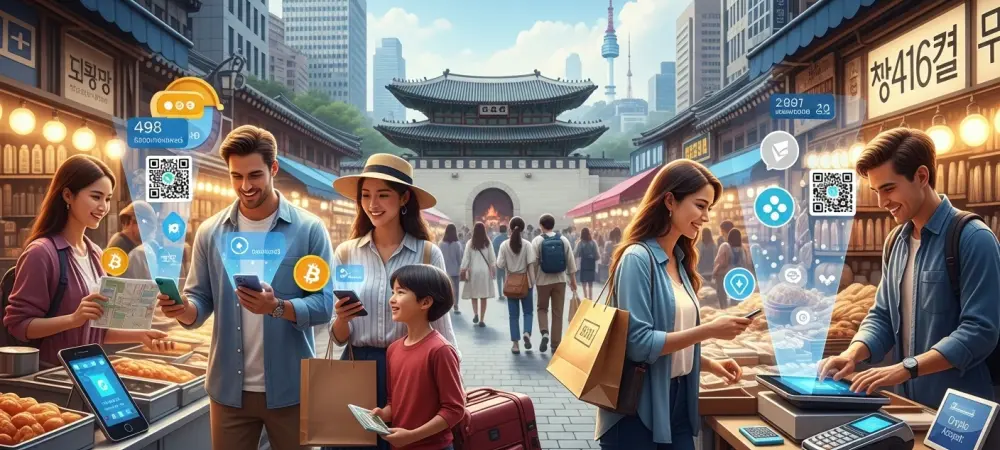
The landscape of international travel is shifting as digital assets move from speculative investments to practical tools for global commerce. In South Korea, a partnership between a digital asset giant and a gateway controlling nearly half the market is redefining how tourists interact with local businesses. This conversation explores the mechanics of high-scale payment integration, the mitigation of price volatility for merchants, and how businesses are adapting to the demands of a tech-savvy generation of travelers.
How does the scale of tapping into a gateway controlling 40% of South Korea’s payment market influence the speed of merchant adoption, and what technical challenges must be overcome for seamless point-of-sale integration?
When you integrate with a gateway that commands 40% of a nation’s payments, you enable a massive, “switch-on” capability for thousands of businesses simultaneously. This level of scale drastically reduces the time it takes to reach a critical mass of adoption because merchants do not need to install new, specialized hardware to begin accepting digital assets. However, the technical challenge lies in the “handshake” between the international digital wallet and the local merchant’s existing register. For a tourist in a busy Seoul market, the transaction must feel as instant as a credit card tap, requiring a robust API that manages high-speed communication between global networks and local infrastructure. Ensuring this process is invisible to the user is essential for making digital assets a viable tool for every traveler.
Since transactions are instantly converted into South Korean won on the backend, how does this mechanism mitigate risk for local businesses and impact their willingness to bypass traditional banking rails?
The risk of price volatility is the primary reason many merchants hesitate to accept digital assets, but instant conversion to KRW effectively removes that fear. By locking in the exchange rate at the moment of the transaction, the gateway ensures the merchant receives exactly what they priced their product for in local currency. This means a shop owner does not have to worry about a sudden 10% dip in market value before they can cash out their daily earnings. When the volatility is managed entirely on the backend, businesses feel much more secure bypassing the slower, high-fee traditional banking rails. It transforms a complex financial asset into a simple, reliable payment stream that feels just like fiat but settles much faster.
How should local businesses tailor their checkout experiences to meet the expectations of Millennials and Gen Z travelers, and what metrics indicate that offering these alternatives increases overall tourism spending?
Millennial and Gen Z travelers increasingly expect their payment experiences to be as digital and mobile-first as the rest of their daily lives. To meet this demand, local businesses should integrate digital asset options directly into their primary customer-facing terminals rather than treating them as a hidden afterthought. We know from industry surveys that these younger demographics are actively seeking out “crypto-friendly” destinations, making the mere presence of these options a powerful marketing tool. While transaction volume is a key metric, we also look at “basket size” and repeat visits, as travelers who save on the typical currency exchange fees often spend those savings directly back into the local economy. Providing these options signals to a traveler that a business is forward-thinking and ready to accommodate their modern financial habits.
Beyond simple cost savings, how do stablecoins and other digital assets provide greater visibility for the consumer compared to the traditional currency conversion process at a physical register?
Traditional cross-border spending often leaves travelers in the dark, with hidden fees and exchange rate markups that do not appear until their bank statement arrives weeks later. Digital assets, particularly stablecoins, offer a level of transparency where the consumer sees the exact conversion rate and final cost in real-time on their smartphone device. This eliminates the “black box” of legacy finance where physical registers might use predatory dynamic currency conversion rates that favor the bank. The immutable nature of the blockchain also provides a clear, permanent record of the transaction for both the merchant and the tourist. This step-by-step clarity builds trust and allows a visitor to manage their travel budget with far greater precision and peace of mind.
As payment gateways evolve into orchestration platforms, what regulatory hurdles must be cleared to maintain security while ensuring the user experience remains intuitive for a first-time crypto user?
The shift toward orchestration platforms means gateways are now managing complex flows of liquidity and compliance, requiring a close relationship with regulators to maintain security. In South Korea, providers must ensure every transaction adheres to strict protocols while keeping that complexity “under the hood” so it does not interrupt the user’s flow. For a traveler who has never used crypto for a physical purchase, the experience must be stripped of technical jargon and look like a standard mobile payment. Security features like biometrics or one-tap confirmations are essential to make the process feel familiar, safe, and professional. Success is defined by a system that is robust enough to satisfy the government but simple enough for a tourist to use without a second thought.
What is your forecast for the future of crypto-integrated tourism in South Korea?
I forecast that South Korea will emerge as the global leader in digital-asset-integrated tourism, with most major urban merchants accepting crypto-to-fiat payments within the next few years. This 40% market share partnership is just the first domino; as competitors see the influx of Gen Z and Millennial spending, adoption will become a competitive necessity. We will see a shift where physical currency exchange booths become obsolete as travelers move entirely to “borderless” digital wallets that offer better rates and instant utility. Ultimately, this will not just be about payments, but about a total digital ecosystem that connects travel bookings, dining, and retail into one seamless, cost-effective journey.