

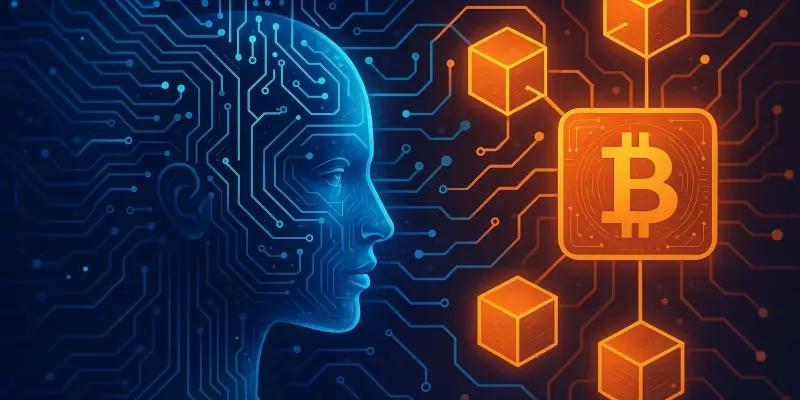
The fusion of Artificial Intelligence (AI) and blockchain is fundamentally reshaping the technological landscape, opening new horizons. This intertwining of AI and blockchain has birthed AI agents, intelligent digital constructs that autonomously execute complex tasks within decentralized frameworks. These AI agents complement the operations of decentralized applications (dApps) and smart contracts, augmenting their capabilities and redefining the realm of blockchain technology. Such advancements underscore the pivotal role that AI tokens are playing in catalyzing innovations within Web3, crafting smarter and automated digital ecosystems that promise novel investment avenues.
The Convergence of AI and Blockchain
Redefining Decentralized Networks
The amalgamation of AI and blockchain is unveiling new potentials, establishing frameworks for innovative digital agents capable of autonomous operation. These AI agents are designed to execute multifaceted tasks within decentralized environments, including data management, smart contract execution, and market analysis. The advent of AI tokens is central to these technological progresses, each representing unique initiatives contributing distinctively to the integration and advancement of AI within blockchain ecosystems. As these tokens spearhead developments, they signal a paradigm shift toward automated systems that offer robust solutions and investment potentials. AI tokens such as Bittensor (TAO) and Artificial Superintelligence Alliance (FET) exemplify the blending of AI and blockchain, facilitating the global sharing of machine learning models and enabling autonomous digital agents. Their development signifies a growing trend where decentralized networks can harness AI’s power to optimize and automate processes, scaling efficiencies across various applications. This evolution heralds a transformative era, marked by the potential for diverse AI-driven undertakings across multiple sectors, each aimed at refining and enhancing decentralized systems.
Market Valuation and Investment Trends
The rising valuation and trading dynamics of AI tokens are indicative of mounting interest and capital influx within this sector, underscoring their substantial potential. With the collective market value of AI agent tokens reaching beyond $7.7 billion and daily trading around $1.7 billion, these figures reflect an acknowledged sentiment towards AI-augmented blockchain applications as key components of future decentralized technologies. Investors and stakeholders are increasingly attuned to these opportunities, recognizing AI’s inherent capabilities to revolutionize the digital landscape.
The marked increase in attention represents a broader consensus on AI’s integral role within blockchain ecosystems, further evidenced by burgeoning trading volumes and expanding market reach. As investors rally behind these AI tokens, the proliferation of innovative solutions grows, leveraging AI for enhanced decentralized functionalities. This evolution not only drives technological progress but also fosters an ecosystem ripe for lucrative investment, with AI tokens at the forefront of comprehensive digital transformations.
Leading AI Agent Tokens
Exemplars of Innovation
Several AI agent tokens have emerged as exemplars of the synergy between AI and blockchain innovation, each contributing uniquely to the technology’s evolution. Bittensor (TAO) allows for broad collaboration across the global AI community, promoting shared knowledge and resources for machine learning model improvement. Similarly, the Artificial Superintelligence Alliance (FET) enables the development of autonomous digital agents, showcasing examples of decentralized intelligence at work. This diversification of AI applications underscores the adaptability and potential inherent within AI-driven projects.
Additional tokens, such as Internet Computer (ICP) and NEAR Protocol, provide adaptive platforms that facilitate the development of scalable AI tools, broadening the scope for innovation. These tokens not only represent significant strides in AI integration but are also pivotal in fortifying blockchain networks, subsequently driving technological progress. The ongoing evolution of these tokens signifies an expanding horizon where AI’s capabilities are seamlessly integrated into blockchain, heralding a transformative impact on technological infrastructures.
Diverse Applications and Opportunities
Diverse applications highlighted by AI tokens like Virtual Protocol (VIRTUAL) and Oraichain (ORAI) reveal innovative directions AI and blockchain are embarking upon. Virtual Protocol’s focus on advancing interactions through AI-powered avatars fosters enriching digital experiences, elevating social engagements in virtual environments. In contrast, Oraichain’s specialization in smart contract intelligence offers improvements in executing blockchain transactions, making operations more efficient and reliable. Such diversity exemplifies the breadth and depth of AI’s application potential within varied digital contexts.
Other notable tokens like Render (RNDR) focus on enhancing graphics rendering, epitomizing AI’s versatility and adaptability across industries. These varied tokens collectively illustrate how AI, integrated within blockchain systems, can address distinct technological needs, offering a suite of opportunities for developers and investors alike. This growing array of applications reaffirms AI’s fundamental role in evolving technological landscapes, opening myriad possibilities for decentralized technologies to flourish.
Real-World Applications and Developments
Corporate and Individual Adoption
Recent developments in AI technology demonstrate tangible applications that enhance operational efficiencies and democratize AI creation. Large corporations, like Block, employ AI agents such as Goose to streamline and optimize internal processes, highlighting practical adaptability and effectiveness in real-world settings. This adaptation reflects AI’s ability to resolve complex challenges within corporate frameworks, providing significant operational benefits and competitive advantages.
Moreover, platforms focusing on democratizing AI development, like Nimanode, allow individuals with limited coding expertise to create AI agents tailored to specific needs. This accessibility fosters broader participation in AI’s developmental progress, propelling innovation across different societal sectors. By lowering barriers to AI creation, these platforms catalyze a diverse array of creative endeavors, fueling further expansion within decentralized ecosystems and enhancing the potential for new technological breakthroughs.
Future Prospects and Pathways
The future trajectory of AI agents within Web3 is poised for substantial expansion, driven by growing interest and awareness of AI’s advantages. This rising demand suggests that AI-powered crypto tokens will increasingly serve as catalysts for technological advancements, driving value and fostering innovative solutions. As developers and investors explore these opportunities, the integration of AI with blockchain systems is expected to sustain its upward momentum, signifying broader participation across global technology landscapes.
The interplay between AI agents and decentralized technologies presents lucrative prospects for stakeholders, positioning these technologies as central to future digital transformations. This trending expansion forecasts a dynamic landscape where AI continues to redefine possibilities, providing concrete benefits to developers, investors, and users. The ascent of AI-enhanced digital ecosystems signifies a promising frontier for technological and financial growth, setting the stage for ongoing innovation within Web3 domains.
The Future of AI in Decentralized Technology
The merging of Artificial Intelligence (AI) and blockchain is profoundly transforming the tech world, opening new paths forward. By combining AI with blockchain, AI agents have emerged—these are smart digital entities that autonomously perform complex tasks within decentralized systems. Such agents enhance the functionality of decentralized applications (dApps) and smart contracts, thus expanding their potential and reshaping what blockchain technology can achieve. This progress highlights the essential role of AI tokens in driving innovation within the Web3 space, crafting more intelligent and automated digital ecosystems. These ecosystems offer fresh opportunities for investment, promising to broaden the scope of possibilities in the digital world. This dynamic synergy between AI and blockchain is not only expanding technological capabilities but also offering novel investment avenues, inviting participants to explore and engage in increasingly complex and efficient digital platforms.