

Setting the Stage for Global Transactions
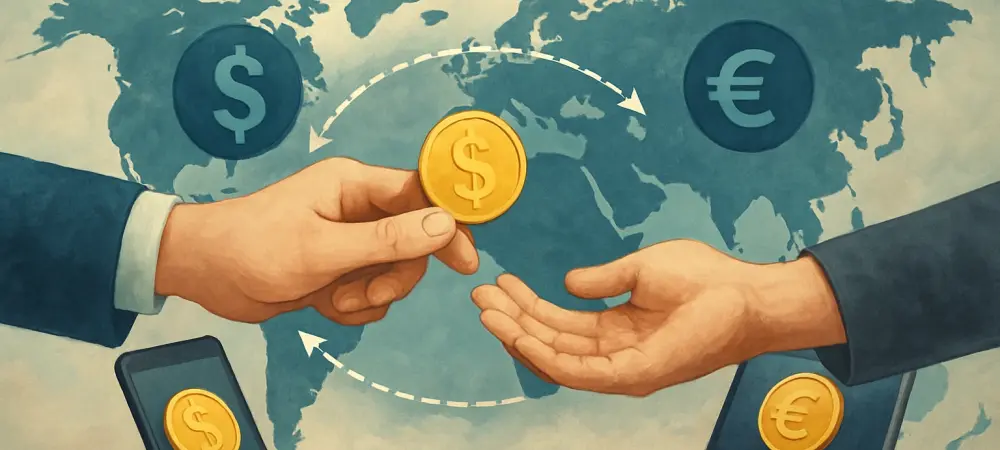
In an era where international trade and personal remittances drive economic activity, the inefficiencies of traditional cross-border payments stand out as a persistent bottleneck, frustrating businesses and individuals alike with delays, high fees, and opaque processes. With billions of dollars transferred across borders daily, this scenario underscores the urgent need for innovative solutions that prioritize speed, transparency, and security in global money movement. Enter the realm of advanced fintech, where partnerships like the one between Paysend and Visa are redefining how money flows across continents. This review delves into the technological advancements propelling cross-border payments, spotlighting a collaboration that promises to reshape financial interactions for merchants and consumers worldwide.
Unpacking the Paysend-Visa Collaboration
Real-Time Transfers: Speed as a Game-Changer
At the heart of the Paysend-Visa partnership lies the capability to execute real-time money transfers to Visa debit cards in over 100 markets. This feature tackles one of the most significant pain points in international transactions: the agonizing wait for funds to clear. By enabling near-instantaneous transfers, the technology ensures that recipients access funds without the typical multi-day delays, enhancing user satisfaction and trust. For businesses, this translates into smoother cash flow and the ability to meet urgent financial obligations without hiccups.
Beyond immediacy, the real-time transfer system streamlines the user experience by integrating seamlessly into existing Visa card infrastructures. Merchants and individuals benefit from a frictionless process that minimizes manual intervention and reduces errors. This leap forward not only boosts operational efficiency but also sets a new standard for what users expect from cross-border payment platforms in terms of responsiveness and reliability.
Enterprise API Integration: Empowering Merchants
Another cornerstone of this alliance is the integration of Paysend’s Enterprise API into Visa’s ecosystem, particularly targeting North American merchants. This technical fusion allows businesses to embed Paysend’s payment functionalities directly into their systems, offering customers instant and secure payment options. Such integration eliminates the need for third-party intermediaries, cutting costs and enhancing transaction security through direct processing within a trusted network.
The significance of this API extends to market expansion for merchants. By tapping into Visa’s vast network, businesses can reach a broader customer base without navigating the complexities of multiple payment gateways. This scalability is crucial for e-commerce platforms and service providers looking to capitalize on global demand while maintaining a seamless checkout experience for international clients.
Performance Metrics and Industry Alignment
Analyzing the performance of this partnership reveals a strong alignment with current fintech trends, particularly the industry’s push toward real-time and transparent transactions. Since deepening their collaboration in recent years, Paysend and Visa have focused on broadening adoption across Visa’s extensive network, ensuring that more merchants and partners can leverage instant payment capabilities. This strategic expansion reflects a commitment to addressing user demands for clarity and speed in financial dealings.
Moreover, the collaboration’s emphasis on transparency tackles another persistent issue: hidden fees and unclear transaction statuses. By providing clear, upfront information on costs and processing times, the system builds trust among users who have long been wary of unexpected charges. Supported by backend processing and regulatory compliance through Central Payments in the U.S., the partnership ensures operational smoothness while adhering to stringent standards, further solidifying its position as a leader in the sector.
Real-World Impact and Applications
The practical implications of the Paysend-Visa alliance are evident in its transformative effect on North American merchants and global consumers. For businesses, especially in the e-commerce space, instant payment options mean faster order fulfillment and improved customer satisfaction, as funds are available without delay for inventory restocking or service delivery. This capability is particularly valuable during peak shopping seasons when timing is critical to maintaining a competitive edge.
For individuals, the benefits manifest in faster, more reliable remittances and personal transfers. Families separated by borders can now send money for urgent needs, such as medical expenses or education fees, without the stress of prolonged waiting periods. Unique use cases, like facilitating cross-border gig economy payments, also emerge, enabling freelancers to receive earnings from international clients with unprecedented ease and clarity.
Challenges in the Cross-Border Landscape
Despite these advancements, the field of cross-border payments is not without hurdles. Slow processing times remain a challenge in regions outside the partnership’s current reach, where legacy systems dominate. Additionally, regulatory complexities across different jurisdictions create compliance burdens that can slow down innovation and adoption, as varying laws demand tailored approaches to transaction handling.
The Paysend-Visa collaboration addresses some of these issues through technological innovation and strategic alliances, such as with Central Payments for U.S. operations. However, global regulatory differences persist as a barrier, requiring ongoing efforts to harmonize standards or develop adaptable frameworks. These challenges highlight the need for continued investment in solutions that can navigate diverse legal landscapes while maintaining user-centric design.
Looking Ahead: The Future of Global Payments
Peering into the horizon, the trajectory of cross-border payment technologies appears promising, with the Paysend-Visa partnership poised for further growth. Anticipated developments include expanding coverage to additional markets and introducing enhanced features like predictive analytics for transaction costs. Such advancements could further democratize access to efficient financial services, especially in underserved regions.
The long-term impact on the fintech industry may involve setting new benchmarks for speed and transparency, pushing competitors to elevate their offerings. As these technologies evolve, their influence on society could be profound, fostering greater economic inclusion by connecting more people to global financial networks. This evolution signals a shift toward a more interconnected and responsive financial ecosystem.
Final Thoughts and Next Steps
Reflecting on this technology review, the strides made by the Paysend-Visa partnership stand as a testament to the power of collaboration in overcoming longstanding inefficiencies in cross-border payments. The integration of real-time transfers and robust API solutions marks a significant step forward, delivering tangible benefits to merchants and consumers alike. Moving forward, stakeholders should focus on advocating for standardized regulatory frameworks to ease global adoption of such technologies. Additionally, investing in user education around these tools could amplify their impact, ensuring that both businesses and individuals fully harness the potential of instant, transparent transactions. The journey to redefine global finance continues, with innovation paving the way for a more accessible future.