

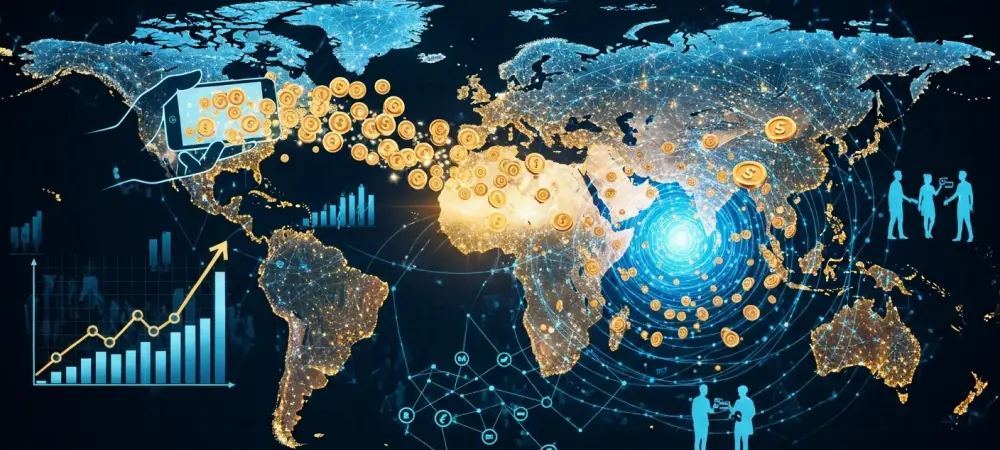
The rapid transformation of the global financial landscape has been defined by the meteoric rise of mobile money, a technology that once served as a niche solution for the unbanked but now functions as a primary engine for international economic integration. As of 2026, this digital evolution has fundamentally altered how billions of people interact with currency, moving beyond simple peer-to-peer transfers to become a comprehensive ecosystem for savings, credit, and insurance. The integration of mobile wallets into the daily routine of consumers has effectively bridged the gap between the informal economy and the formal financial sector, creating a more inclusive environment that bypasses the limitations of traditional brick-and-mortar banking. By fostering a digital-first approach to commerce, mobile money has not only streamlined individual transactions but has also provided governments and international organizations with a robust framework for distributing aid, collecting taxes, and monitoring economic health in real time.
Scaling Digital Finance: A Milestone in Market Evolution
The velocity at which digital financial services have scaled is truly remarkable, exemplified by the industry doubling its annual transaction value from one trillion to two trillion dollars within a mere four-year window ending in 2026. This exponential growth is supported by a massive user base that now exceeds two billion registered accounts globally, signaling that mobile wallets have transitioned from an experimental alternative to an essential utility. For millions of households, these platforms provide the only reliable means of participating in the modern economy, offering a level of convenience and speed that physical banks often fail to match in emerging markets. This surge in volume is not merely a reflection of more users signing up but is driven by a profound increase in the frequency of usage, as digital payments become the default method for everything from utility bills to school fees. The reliability of these systems has cultivated a level of consumer confidence that has effectively marginalized cash in several key demographic sectors across the globe.
As the industry matures in 2026, the data indicates that the demand for digital alternatives remains high even in regions where traditional banking is present, suggesting a permanent shift in consumer behavior. The convenience of managing finances through a smartphone has eliminated the geographic and temporal barriers that once hindered economic participation for rural populations. Furthermore, the ability of mobile money providers to offer tiered services—ranging from basic wallets to sophisticated investment tools—has ensured that the platform remains relevant across different income levels. This scalability has allowed the industry to withstand global economic fluctuations, as the low cost of digital transactions makes them more resilient than traditional wire transfers. The continuous expansion of these services into new territories ensures that the digital financial web continues to tighten, bringing even the most remote communities into the fold of the global marketplace while driving a sustained increase in the overall velocity of money.
Regional Leadership: The African Digital Frontier
Sub-Saharan Africa continues to serve as the global epicenter for mobile money innovation, accounting for approximately two thirds of the total transaction value recorded worldwide in 2026. While East African nations like Kenya were early pioneers of this technology, the current landscape reveals a significant surge in West African markets, which are growing at a rate that is rapidly narrowing the gap with their eastern counterparts. This regional dominance is characterized by a unique behavioral pattern where users engage with their digital wallets at a much higher frequency than those in South Asia or the Pacific. For instance, the average active user in Sub-Saharan Africa now completes over two hundred transactions per month, a figure that underscores the deep integration of these services into the fabric of daily life. This high level of engagement has turned the region into a living laboratory for new financial products, as providers leverage the high transaction volume to test everything from micro-insurance to automated agricultural loans.
The competition between East and West African markets has sparked a wave of innovation that benefits the consumer through lower fees and better service quality. In 2026, West Africa’s growth rate of thirty-four percent has outpaced the more mature East African market, suggesting that the region is currently in a high-growth phase fueled by favorable regulatory shifts and a young, tech-savvy population. This dynamic environment has attracted significant international investment, as global fintech firms look to partner with local providers to gain a foothold in these rapidly expanding economies. The success of these regional markets provides a blueprint for other developing areas, demonstrating how mobile technology can be used to leapfrog traditional infrastructure. By focusing on local needs and maintaining a low barrier to entry, African mobile money operators have created a sustainable model that balances social impact with commercial profitability, ensuring that the region remains at the forefront of the digital financial revolution for the foreseeable future.
Economic Efficiency: Transparency and National Prosperity
The transition from physical currency to digital ledgers has provided a measurable boost to national economies by enhancing transparency and reducing the systemic costs associated with managing cash. Governments in low- and middle-income countries have increasingly recognized that digital payments are faster, safer, and significantly more cost-effective to process at a national scale. By digitizing government-to-person payments and tax collection, nations have seen a reduction in leakage and corruption, as digital trails provide an immutable record of where money goes and who receives it. This increased accountability has a direct and positive correlation with gross domestic product, as more capital is retained within the formal system where it can be reinvested into public infrastructure and services. The efficiency gained through these digital systems allows for more precise economic forecasting and policy-making, as officials can access real-time data on consumer spending and liquidity across various sectors of the economy.
Furthermore, the shift toward a digital-first economy reduces the physical risks and logistical burdens placed on small businesses and individual citizens. In 2026, the cost of transporting and securing large amounts of cash is being replaced by the nominal fees of digital transfers, which are often a fraction of the price. This saving is particularly impactful for micro-merchants who operate on thin margins and cannot afford the losses associated with theft or physical damage to currency. The transparency afforded by mobile money also simplifies the process of auditing and compliance, making it easier for small enterprises to formalize their operations and gain access to international trade opportunities. As more sectors of the economy embrace digitization, the resulting increase in financial velocity creates a multiplier effect that stimulates local markets. The collective impact of these individual efficiencies contributes to a more resilient national economy that is better equipped to handle external shocks and maintain steady growth in a competitive global environment.
The Human Element: The Vitality of Agent Networks
Despite the rapid push toward full digitization, the physical agent network remains the indispensable backbone of the mobile money ecosystem in 2026. These local businesses, often small shops or kiosks, serve as the primary bridge between the world of physical cash and the digital wallet, performing the critical task of converting paper currency into electronic funds. In 2026 alone, these agents were responsible for digitizing over four hundred billion dollars, a testament to their role as the primary entry point for the global digital economy. The volume of funds entering the system through these physical touchpoints consistently outweighs all other sources, including direct bank transfers and international remittances. This highlights a fundamental truth about the current state of global finance: for the digital economy to expand, it must maintain a robust and accessible physical presence that accommodates the realities of the cash-heavy informal sectors where many users still operate.
These agent networks do more than just facilitate transactions; they provide a face-to-face interaction that builds trust among users who may be skeptical of purely digital services. Agents often act as informal educators, helping customers navigate new features, reset passwords, and understand the security protocols necessary to protect their funds. This human-centric approach is vital for maintaining high levels of activity within the ecosystem, as it ensures that technical barriers do not become a reason for user churn. In many rural areas, the mobile money agent is the only financial service provider within a day’s journey, making them a cornerstone of community stability and economic activity. For the digital economy to remain inclusive, providers must continue to invest in the health and security of these networks, ensuring that agents are well-compensated and equipped with the tools needed to manage high volumes of cash and digital data safely. This synergy between physical infrastructure and digital innovation is what allows mobile money to reach the “last mile” of global commerce.
Merchant Solutions: Empowering the Small Enterprise
A significant shift in the mobile money landscape in 2026 is the rapid diversification of use cases, with merchant payments emerging as the fastest-growing segment of the industry. While peer-to-peer transfers remain a staple, the ability for consumers to pay for goods and services directly with their phones has seen a dramatic forty-two percent increase in adoption over the past year. Innovative products, such as specialized business wallets, have allowed micro-merchants to separate their personal finances from their business operations, providing a level of professional organization that was previously unattainable. These services often include simplified onboarding processes that eliminate the need for expensive hardware like card readers, allowing even the smallest street vendor to accept digital payments. By lowering these barriers, mobile money providers have brought millions of small businesses into a structured financial environment where their transaction history can be used to prove creditworthiness for the first time.
The success of these merchant-centric solutions is largely attributed to the value-added services that accompany the payment platform. Merchants in 2026 are increasingly gaining access to instant business loans, inventory management tools, and loyalty programs that were once reserved for large corporations. This access to credit is particularly transformative, as it allows vendors to manage their cash flow more effectively and invest in growth without relying on predatory informal lenders. Furthermore, the integration of these payment systems into broader supply chains allows for more efficient procurement, as wholesalers can accept digital payments from retailers instantly, reducing the time and risk involved in physical delivery cycles. As more vendors adopt these digital tools, the entire local economy becomes more interconnected and efficient. This focus on the merchant experience has turned the mobile phone into a comprehensive point-of-sale terminal, empowering small entrepreneurs to compete more effectively and contribute to the broader economic vitality of their communities.
Securing Progress: Trust and the Path Forward
The long-term sustainability of the mobile money revolution was ultimately secured through a dedicated focus on building user trust and enhancing systemic security. Providers recognized that moving customers away from the perceived safety of physical cash required more than just convenience; it demanded a guarantee of reliability and protection. In 2026, the industry has prioritized instant transaction fulfillment and the implementation of robust privacy protections to safeguard sensitive user data. Furthermore, the establishment of responsive customer service departments and rapid dispute resolution mechanisms helped mitigate the fears of users who were previously hesitant to trust digital platforms with their life savings. By ensuring that refunds for failed transactions were processed quickly and that fraud detection systems were working behind the scenes, providers were able to foster a sense of security that was comparable to, or better than, traditional banking institutions.
Moving forward, the focus has shifted toward deeper financial education and the integration of even more sophisticated services like cross-border payments and specialized savings products. The lessons learned during the rapid expansion phase pointed toward the necessity of maintaining a user-centric approach that values simplicity and accessibility above all else. Stakeholders were encouraged to continue refining regulatory frameworks that protect consumers while still allowing for the innovation necessary to drive economic growth. The goal became the creation of a seamless global network where a digital wallet could be used as easily in a remote village as in a metropolitan center. By centering the development of these tools on the principles of transparency and security, the mobile money industry was able to cement its role as a permanent and vital fixture of the global economic landscape, ensuring that the progress made toward financial inclusion would result in lasting prosperity for billions.