

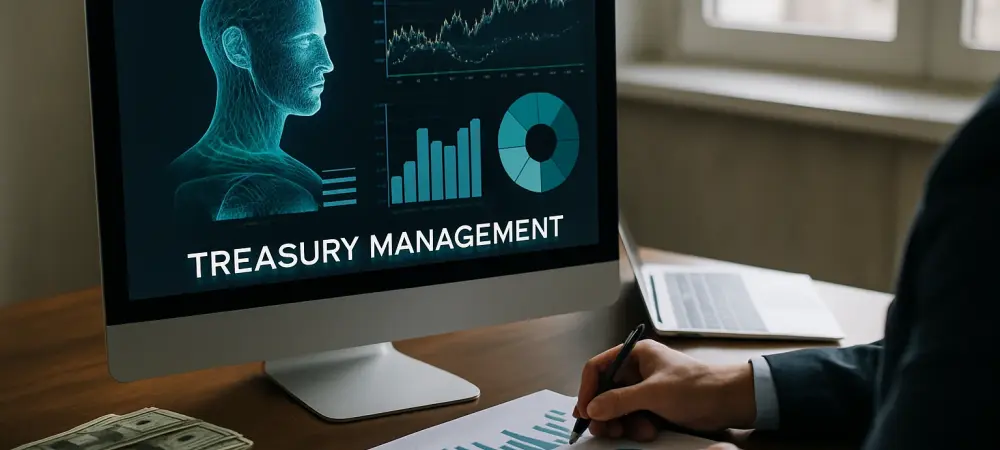
What if a single missed currency fluctuation could cost a multinational corporation millions in a matter of hours? In today’s fast-paced global economy, where cross-border transactions tally in the trillions annually, the stakes for treasury and foreign exchange (FX) management have never been higher. Businesses grapple with unpredictable markets, high transaction costs, and the constant threat of financial disruption. Yet, a powerful force—artificial intelligence (AI)—is stepping in to transform this landscape, offering precision, speed, and cost savings that were once unimaginable. This technology is not just a tool; it’s becoming the backbone of financial resilience for companies navigating international trade.
The importance of AI in this domain cannot be overstated. With volatility in currency markets posing a relentless challenge, organizations need more than traditional methods to stay competitive. AI’s ability to predict risks with over 90% accuracy and slash costs by up to 60% marks a turning point for treasury operations. This shift is already reshaping how global businesses manage liquidity and FX exposure, setting a new standard for efficiency. The collaboration between major players like Standard Chartered and Ant International exemplifies this revolution, proving that AI is no longer an option but a necessity for staying ahead in an interconnected world.
The Urgent Push for Smarter Financial Solutions
Global finance is at a critical juncture, with cross-border transactions surging and creating unprecedented challenges for managing FX risks. The sheer volume of these dealings—trillions of dollars each year—amplifies the impact of even minor currency shifts on corporate bottom lines. Traditional approaches, often slow and prone to human error, struggle to keep pace with the demands of a hyper-connected economy. This gap has sparked an urgent need for innovation, driving financial leaders to seek tools that can handle complexity with agility.
AI emerges as the answer to these pressing demands, offering a way to automate processes and enhance decision-making. Unlike older systems that rely on delayed data or manual intervention, AI-driven platforms provide real-time insights, enabling businesses to react swiftly to market changes. This capability is crucial for minimizing losses and optimizing cash flow in an environment where timing is everything. The push toward such technology reflects a broader industry trend of embracing digital transformation to tackle the intricacies of global trade.
AI’s Transformative Impact on Treasury Operations
At the forefront of this financial revolution is the integration of AI tools that address real-world challenges in treasury and FX management. A prime example is the partnership between Standard Chartered and Ant International, which combines Ant’s Falcon Time-Series Transformer (TST) model—boasting over 90% accuracy in forecasting cash flow and FX exposure—with Standard Chartered’s Aggregated Liquidity Engine (SCALE). This powerful combination facilitates 24/7 risk mitigation, cutting hedging costs by as much as 60% and liquidity management expenses by 50%.
Beyond cost reductions, this synergy streamlines complex processes like multi-currency bookings and international vendor settlements. Businesses can now handle cross-border operations with unprecedented ease, reducing friction and financial exposure. The ability of AI to not only predict market movements but also act on them instantly sets a benchmark for operational agility. Such advancements demonstrate how technology can turn volatile markets into manageable landscapes for global enterprises.
Industry Pioneers Speak on AI’s Potential
The real-world impact of AI in treasury management gains further credibility through the voices of those leading the charge. Madhu Menon, Global Head of SC PrismFX Sales at Standard Chartered, underscores a commitment to cutting-edge platforms, stating, “The focus remains on supporting clients through economic uncertainty with innovative solutions.” This perspective highlights the strategic importance of technology in safeguarding financial stability for businesses worldwide.
Echoing this sentiment, Kelvin Li, General Manager of Platform Tech at Ant International, emphasizes, “Technology serves as the foundation for next-generation cross-border payment systems.” The tangible results speak volumes—over 60% of Ant International’s FX conversion transactions are processed with high precision thanks to AI integration. These insights from industry leaders reveal a shared vision: AI is not just an enhancement but a fundamental shift in how financial risks are managed, paving the way for broader adoption across sectors.
Real-World Benefits Driving Business Success
The practical advantages of AI in treasury and FX operations are evident in the outcomes of pioneering collaborations. The integration of predictive models like Falcon TST with platforms such as SCALE delivers guaranteed FX rates and seamless settlements across multiple currencies. This capability significantly lowers operational costs for companies engaged in international trade, providing a competitive edge in volatile markets.
Moreover, the emphasis on real-time data exchange ensures that businesses can respond to currency fluctuations as they happen, a critical factor in minimizing financial risks. The continuous availability of these systems—operating around the clock—further enhances their value, allowing for uninterrupted management of global transactions. Such benefits illustrate how AI is not merely theoretical but a proven solution delivering measurable impact for organizations of all sizes.
Steps to Integrate AI into Financial Strategies
For companies aiming to capitalize on AI’s potential in treasury and FX management, adopting structured approaches is essential. Start by partnering with financial institutions or tech providers that offer specialized AI tools for forecasting and liquidity management. Platforms that combine predictive analytics with robust pricing engines can provide a strong foundation for navigating market uncertainties.
Next, ensure systems are equipped for real-time data integration to enable rapid responses to currency shifts, thereby reducing exposure to unexpected losses. Additionally, prioritize solutions that scale with business needs, supporting multi-currency transactions and simplifying international settlements. Regular assessment of cost savings and risk metrics is also vital to refine strategies and maximize AI’s value. These actionable steps, inspired by successful industry partnerships, empower organizations to build resilience in the face of global financial challenges.
In reflecting on this transformative journey, the strides made by AI in treasury and FX management stand as a testament to technology’s power to redefine industries. The partnership between Standard Chartered and Ant International, with its remarkable cost savings and forecasting accuracy, showcases what is possible when innovation meets necessity. Looking ahead, businesses are encouraged to explore AI-driven tools, collaborate with tech-savvy financial partners, and stay agile in adapting to market dynamics. As the landscape of global finance continues to evolve, embracing such solutions becomes not just a strategy for success, but a blueprint for enduring stability in an unpredictable world.