

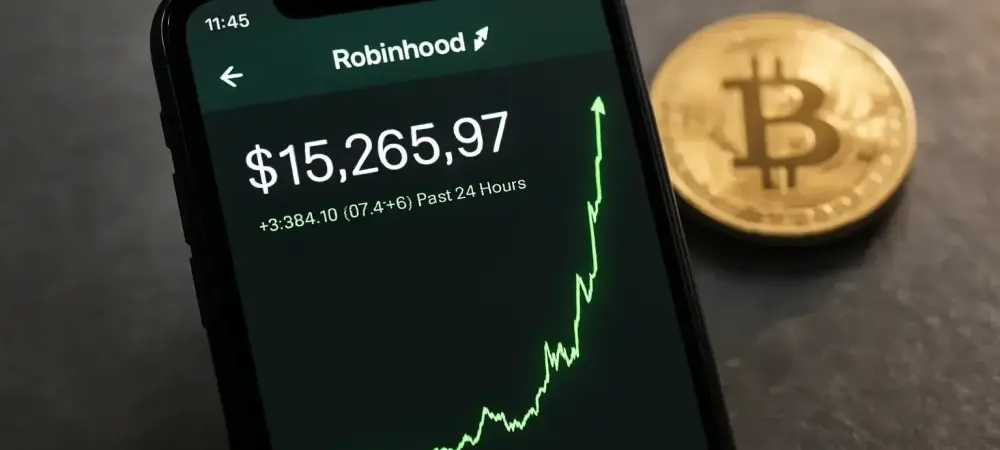
Imagine a trading platform with over 25 million users suddenly opening the door to two emerging cryptocurrencies, sparking an instant 8% price surge for both. This scenario unfolded recently when Robinhood listed ONDO and FLOKI, sending ripples through the crypto market and highlighting the immense power of mainstream platforms in shaping digital asset trajectories. This roundup dives into diverse opinions and analyses from industry voices to unpack how this listing influences the price dynamics of ONDO, a DeFi innovator, and FLOKI, a meme coin powerhouse. The aim is to provide a comprehensive view of the market impact, growth potential, and risks tied to this pivotal moment.
Exploring the Robinhood Effect on Crypto Prices
Industry perspectives converge on Robinhood’s role as a game-changer for cryptocurrency visibility. With a user base exceeding 25 million, the platform acts as a gateway for retail investors, often driving immediate trading volume spikes for newly listed assets. Analysts from various market reports note that this accessibility can catapult lesser-known tokens into the spotlight, as seen with the rapid price jumps for both ONDO and FLOKI following the announcement.
Differing views emerge on the sustainability of such gains. Some market watchers argue that the influx of retail traders boosts liquidity in the short term, creating a fertile ground for price appreciation. Others caution that this same enthusiasm can lead to sharp corrections if hype outpaces fundamentals, pointing to past examples like sudden dips after initial surges on similar platforms. This duality frames the discussion around Robinhood’s influence as both a catalyst and a potential risk.
A third angle focuses on the broader implications for crypto adoption. Commentators from financial blogs suggest that listings on mainstream platforms signal a maturing market, where digital assets gain credibility among traditional investors. This perspective sees the event as a stepping stone toward wider acceptance, though some express concern over whether retail-driven momentum might overshadow deeper project value in the long run.
Breaking Down ONDO and FLOKI Price Surges: Diverse Opinions
Immediate Gains Fueled by Robinhood’s Reach
Market analysts widely agree that Robinhood’s vast retail audience directly contributed to the 8% price increase for both ONDO and FLOKI shortly after their listing. Insights gathered from trading forums emphasize how this exposure translates into heightened demand, as new investors flock to accessible platforms to buy in. The sheer scale of the user base amplifies trading activity almost overnight.
However, opinions split on the longevity of these initial gains. Some industry voices, as seen in recent market breakdowns, highlight parallels with previous listings like Hedera (HBAR), where early spikes gave way to volatility. They warn that inexperienced traders entering the market en masse could trigger price swings, creating uncertainty in the days following such announcements.
Another viewpoint stresses the importance of liquidity as a stabilizing factor. Contributors to crypto analysis platforms argue that while short-term fluctuations are inevitable, the increased trading volume from Robinhood’s users often provides a buffer against drastic drops. This perspective sees the listing as a net positive, provided projects can capitalize on the momentum with strong fundamentals or community support.
ONDO’s Rise: DeFi Strength Meets Retail Access
Turning to ONDO, a DeFi protocol focused on tokenizing real-world assets, opinions from the sector underscore its promising position. Analysts across financial newsletters highlight the token’s proximity to breaking the $1.0 mark, with projections suggesting a climb toward $2.30 in the medium term. The Robinhood listing is seen as a key driver in attracting retail interest to bolster this trajectory.
Further insights point to institutional developments as a backbone for ONDO’s growth. Discussions on investment platforms note significant whale accumulation and a spot ETF filing by a major asset manager with the SEC this year as critical catalysts. Many believe these factors, combined with a projected 25% monthly gain, position ONDO for sustained upward movement, though regulatory challenges remain a concern.
Contrasting views caution against over-optimism. Some DeFi commentators argue that while retail exposure via Robinhood is beneficial, the complexities of real-world asset tokenization could face scrutiny from authorities. This camp advises tempering expectations, suggesting that long-term success hinges on navigating compliance hurdles alongside capitalizing on newfound market visibility.
FLOKI’s Momentum: Meme Coin Hype Under Scrutiny
For FLOKI, which recently surpassed a $1 billion market cap, industry feedback centers on its explosive retail-driven growth. Observations from meme coin communities and market trackers point to a 30% monthly gain, fueled by initiatives like the Valhalla metaverse game and FlokiFi Locker. The Robinhood listing is credited with amplifying global enthusiasm, pushing the token into a wider spotlight.
Yet, skepticism persists about the durability of meme coin rallies. Some analysts, as reflected in crypto discussion boards, view FLOKI’s surge as emblematic of speculative fervor rather than intrinsic value. They argue that while platform listings boost short-term interest, the inherent volatility of meme coins poses risks for investors unprepared for rapid downturns.
A more balanced take emerges from ecosystem-focused reviews, which highlight FLOKI’s efforts to build legitimacy through projects like crypto debit cards and educational platforms. These voices suggest that while hype drives current gains, the token’s expanding utility could carve a more stable path forward. The consensus remains split, with retail appeal clashing against concerns over market unpredictability.
Mainstream Platforms Bridging Finance Gaps
The integration of crypto into traditional finance via platforms like Robinhood garners significant attention from industry thought leaders. Many, as seen in fintech analyses, view this convergence as a pivotal trend, with ONDO’s ETF filing cited as evidence of institutional interest blending with digital innovation. Such moves are seen as enhancing crypto’s credibility on a broader scale.
Comparative insights reveal a contrast between ONDO’s institutional pull and FLOKI’s retail momentum. Market observers note that while ONDO attracts serious investors eyeing DeFi trends, FLOKI thrives on grassroots support amplified by accessible trading environments. This dichotomy prompts speculation on how future listings might shape adoption, with some predicting a tilt toward hybrid models combining both drivers.
A critical perspective questions the risks of overexposure. Commentators from economic forums warn that merging volatile assets with mainstream platforms could amplify losses for uninformed traders. Despite this, the prevailing sentiment sees these listings as a net positive for market evolution, provided education and transparency keep pace with accessibility.
Key Takeaways from the Robinhood Listing Impact
Synthesizing expert views, the Robinhood listing stands out as a transformative event for both ONDO and FLOKI, with each benefiting uniquely. Insights across platforms agree that ONDO’s DeFi fundamentals offer a compelling case for long-term investment, while FLOKI’s meme coin allure captures short-term speculative interest. The 8% price surge for both tokens underscores the platform’s immediate market influence.
Strategic advice varies by asset. For ONDO, market analyses recommend a patient approach, focusing on trends in real-world asset tokenization and regulatory updates to gauge entry or holding periods. For FLOKI, the consensus leans toward vigilance, with suggestions to track community developments and brace for price fluctuations as retail fervor ebbs and flows.
A recurring theme is the need for balance. Voices from investment communities stress that while listings unlock opportunities, they also heighten risks if decisions are driven purely by hype. Monitoring project-specific catalysts—whether ONDO’s institutional moves or FLOKI’s ecosystem growth—remains essential for navigating the post-listing landscape effectively.
Reflecting on Crypto’s Mainstream Journey
Looking back, the discussions surrounding Robinhood’s listing of ONDO and FLOKI revealed a dynamic interplay of retail enthusiasm and institutional trends that shaped their market performance. The roundup of perspectives illustrated how a single event could ripple across diverse crypto segments, from DeFi innovations to meme coin surges. It became clear that platform integrations played a crucial role in amplifying visibility and driving price action.
Moving forward, investors and enthusiasts can take actionable steps by diving deeper into project fundamentals before jumping on listing-driven momentum. Exploring resources on DeFi protocols for ONDO or engaging with community updates for FLOKI can provide clarity amid market noise. Additionally, keeping an eye on regulatory shifts and broader adoption patterns will help anticipate the next wave of opportunities in this evolving space.