

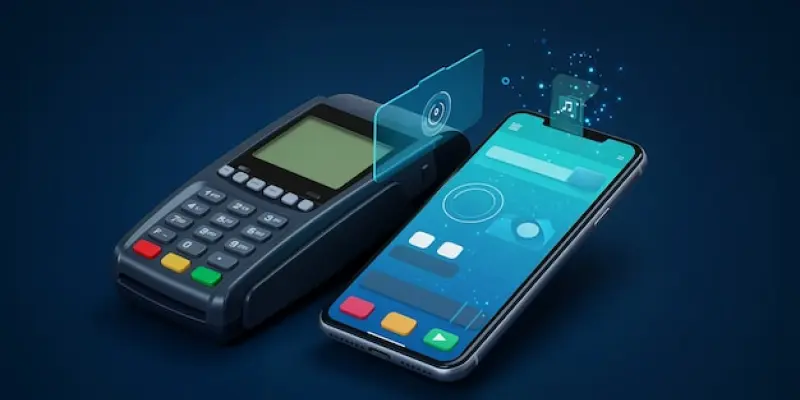
PXP, a renowned name in global payment platforms, is pioneering advancements in payment technology designed for today’s merchants who seek innovative solutions tailored for omnichannel transactions. Their latest development offers businesses—big or small—a comprehensive means of accepting payments through both traditional physical cards and modern digital tools such as wearables and digital wallets, presenting a truly out-of-the-box solution. This innovation primarily focuses on simplifying the payment acceptance process, enabling businesses to start accepting transactions almost instantly without additional technical integration or hardware requirements. Such ease of use streamlines operations, freeing up merchants to focus on their core activities rather than being encumbered by tech obstacles. With payment technology increasingly recognized not only as a necessary operational tool but also as a significant strategic growth driver by 64% of merchants, as found in a recent PXP study, PXP’s solution addresses these expectations directly. It’s creating new pathways for expanding payment method offerings, underscoring the critical need for secure, efficient, and adaptable payment systems in today’s competitive landscape.
Meeting Market Demand
The introduction of PXP’s POS payment solution arrives at a time when merchants are actively seeking to diversify their payment method acceptance to meet evolving consumer preferences and remain competitive. A study reveals a striking statistic: 34% of merchants are moving to expand their payment offerings, underscoring the pressing demand for adaptable solutions. PXP’s innovative approach through PXP Unity—its orchestration platform—enables merchants to deliver an unparalleled variety of payment options that include major card schemes, contactless payments, and mobile wallets, ensuring seamless transactions regardless of the channel or method. Additionally, in a world where uptime reliability is paramount, PXP stands out with its enterprise-grade infrastructure boasting 99.996% uptime. Such reliability ensures uninterrupted operational flow, thus allowing merchants to conduct business confidently without apprehension of technical disruptions. The solution’s adherence to stringent compliance standards like PCI DSS and EMV certifications further solidifies its position as a leading secure choice, significantly reducing merchant concerns regarding compliance matters. This focus on reliability and security not only bolsters operational confidence but also aligns with current trends that prioritize efficiency alongside robust protection.
Technological Framework
PXP has crafted its POS solution as a fully managed, integrated application suitable for diverse business environments, providing merchants with the ability to securely accept in-person card payments without requiring additional hardware or third-party services. This streamlined interface particularly benefits fixed retail locations and mobile commerce settings, emphasizing flexibility for varied operational needs. It currently supports Android-based POS terminals such as the Castles S1F2, with future expansions on the horizon to accommodate broader device compatibility. The installation is notably simple, involving only a one-step activation process, thus minimizing setup complexities that merchants typically face. One of the prime aspects driving the acceptance of this solution in a competitive market is its strong focus on personalization, customization, and configuration. While initial customization offerings are somewhat limited, PXP is committed to enhancing these features in response to market feedback. Planned updates aim to increase user management capabilities, broaden payment method compatibility, and introduce advanced customization options that promote a tailored payment experience. Such developments highlight PXP’s dedication to evolving and expanding its solution to better support merchant growth and operational demands.
Strategic Vision and Evolution
Under the leadership of Kamran Hedjri, Group CEO at PXP, the company is relentlessly pursuing strategies that streamline merchant operations by eliminating technical challenges. This autonomous POS payment application provides effortless implementation, complemented by superior market speed and simplified hardware requirements, guaranteeing immediate access to a reliable and secure payment acceptance system. The standout feature of PXP’s solution lies in its true omnichannel readiness, crafted to offer a fluid payment experience across varied transaction touchpoints—from in-store scenarios to online platforms. This seamless integration is harmonized within PXP’s broader payment ecosystem, ensuring consistency and reliability irrespective of where customer interactions take place, ultimately empowering businesses to focus less on tech complexities and more on business growth. PXP’s unified method directed through the PXP Unity platform extends the advantage of frictionless interactions at every point, reflecting its promise to merchants in fostering streamlined commerce. Moreover, the launch is accompanied by PXP’s latest brand identity and the unveiling of the PXP Unity platform, which aims to facilitate real-time insights and offer merchants precise control over their payment ecosystems, proving PXP’s unwavering commitment to simplifying and unifying commerce across the globe.
Conclusion: PXP’s Impact and Future Direction
PXP stands at the forefront of the payment technology revolution, catering to the modern merchant’s need for seamless omnichannel transaction solutions. Their latest innovation empowers businesses of all sizes to effortlessly accept payments, utilizing both conventional physical cards and cutting-edge digital instruments like wearables and digital wallets. This out-of-the-box solution is crafted to simplify the payment acceptance process, allowing businesses to start handling transactions near-instantly without demanding extra technical integration or hardware. Such user-friendly technology boosts operational efficiency, enabling merchants to concentrate on their primary business activities rather than grappling with tech hurdles. Regarding strategy, a recent PXP study revealed that 64% of merchants view payment tech as a crucial growth driver, and PXP’s fresh offerings directly cater to these expectations, forging new avenues for diversifying payment strategies. This underscores the urgent need for secure, adaptable, and efficient systems in today’s intensely competitive market landscape.