

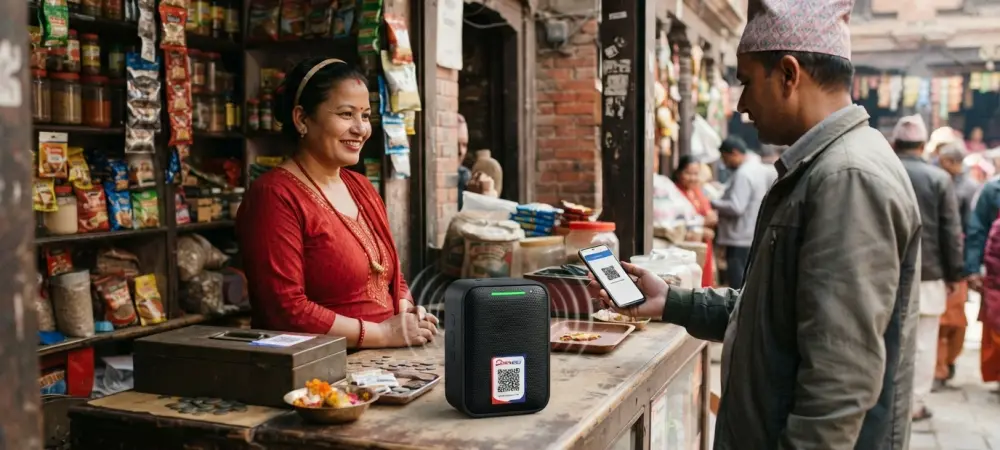
In the bustling retail hubs of Nepal, shopkeepers often find themselves forced to pause their workflow to manually verify digital transactions on their mobile devices. As the adoption of QR-based payments continues to skyrocket through 2026 and beyond, this constant interruption has become a significant bottleneck for efficiency in high-traffic environments like local tea shops and pharmacies. The traditional process requires a vendor to set down their tools, wipe their hands, and squint at a small screen to confirm that a payment from eSewa or Khalti has indeed arrived. To address this, developers have looked toward auditory solutions that allow for hands-free verification, ensuring that the merchant remains engaged with the customer while receiving verbal confirmation of the funds transferred to their bank accounts.
Bridging the Digital Verification Gap
The innovative application known as Payment Speaker Nepal functions by requesting specialized permissions to access system-level notifications on Android smartphones. Once granted, the software operates in the background, scanning incoming alerts from various banking institutions and digital wallets such as Khalti and eSewa. Unlike more complex financial systems that require deep API integration, this tool leverages the existing notification infrastructure of the phone to extract the specific transaction amount and the sender’s information. This method provides a lightweight and agile solution that does not require the developer to partner directly with every bank in the country. By focusing on the visual and textual data already being delivered to the user’s screen, the app creates a bridge between the bank’s secure communication and the merchant’s immediate environment. This approach is particularly effective because it allows for universal compatibility across almost any app that sends transaction alerts. Building on this technical foundation, the transition from a silent text alert to an audible announcement in the native Nepali language represents a significant cultural and operational shift for local commerce. In a busy marketplace, the sound of a voice confirming a payment of five hundred rupees received provides an immediate sense of psychological security to the shopkeeper. This auditory feedback loop eliminates the need for the merchant to physically touch their device, which is especially beneficial for those working in food service or manual labor where hands may be preoccupied. Moreover, the use of local language ensures that the technology is accessible to a wider demographic of users, including those who may find it difficult to navigate complex English-language interfaces. The simplicity of hearing a transaction value read aloud fosters a level of trust in digital systems that was previously missing, encouraging even the most traditional vendors to embrace the cashless revolution.
Economic Accessibility and Future Implementation
While dedicated hardware devices that provide similar audio confirmations are available, they often come with significant upfront costs or recurring subscription fees that small-scale vendors find difficult to justify. In contrast, the software-based approach utilized by developers like Rohit Kumar Gupta democratizes this functionality by utilizing the hardware that merchants already own. By turning a standard smartphone into a payment verification hub, the app removes the financial barrier to entry for street vendors, small grocery shops, and independent service providers. This cost-effective strategy has been instrumental in the app’s rapid market penetration, allowing it to compete with official bank-issued hardware by offering a flexible and free alternative that supports multiple payment sources simultaneously within one interface.
The introduction of voice-activated payment verification fundamentally altered the landscape of mobile banking for small businesses in Nepal. Merchants who integrated this software-based solution into their daily operations reported a noticeable decrease in transaction friction and an increase in customer throughput during peak periods. As the digital economy matured through the first half of 2026, the focus shifted from basic payment collection to the optimization of merchant workflows through specialized utility apps. It became clear that the successful integration of fintech required more than just digital wallets; it required a sensory interface that matched the fast-paced nature of physical commerce. Strategic recommendations for the coming months included ensuring that devices are configured for persistent background monitoring and that shopkeepers remain vigilant with manual audits for high-value transfers. This approach provided a practical roadmap for how software solved physical operational gaps.