

Setting the Stage for Payment Innovation
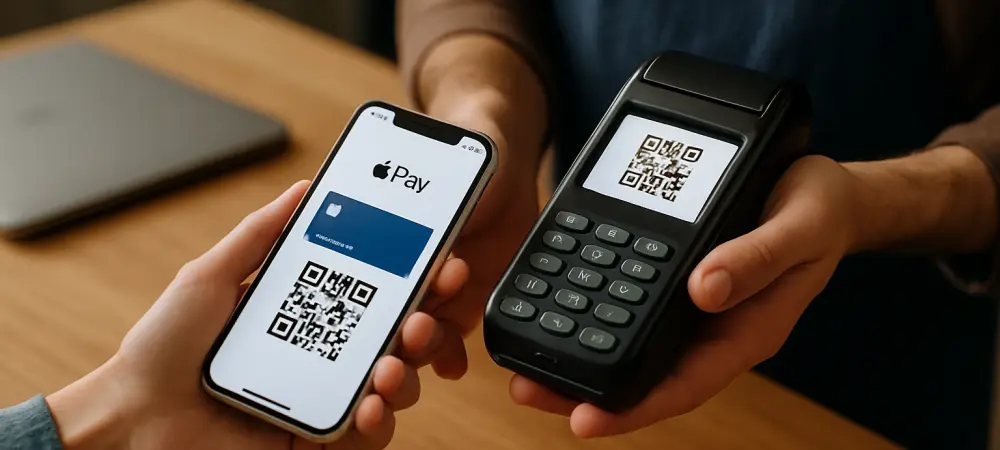
Imagine a world where a single scan bridges the gap between any device and a seamless payment experience, capturing sales that once slipped through the cracks. In today’s digital marketplace, where cart abandonment looms large, Ecommpay has emerged as a frontrunner by integrating Apple Pay QR, a transformative solution that extends Apple Pay’s reach beyond its traditional ecosystem. This market analysis dives into the significance of this move, exploring how it reshapes online transactions for merchants and consumers alike. With accessibility and conversion rates at the forefront, this development signals a pivotal shift in payment strategies. The following sections unpack current trends, data-driven insights, and projections that highlight why this innovation matters in a hyper-competitive e-commerce landscape.
Analyzing the Digital Payments Landscape
The Rise of Cross-Platform Payment Needs
The digital payments sector has witnessed a surge in demand for solutions that transcend device limitations. Historically, Apple Pay’s confinement to Apple devices and Safari browsers excluded a substantial user base, particularly the estimated 70% of global internet users browsing on Windows systems. This restriction often translated into lost sales as customers abandoned checkouts due to incompatible payment options. Ecommpay’s adoption of Apple Pay QR addresses this gap head-on by enabling transactions via a simple scan, regardless of the platform. This aligns with a broader market trend toward inclusivity, where providers are racing to cater to diverse consumer behaviors. The implications are clear: breaking down these barriers can unlock untapped revenue streams for merchants across industries like retail and travel.
Conversion Metrics and Market Opportunities
Delving deeper into market data, the potential for Apple Pay QR to boost conversions is striking. Research reveals that iOS users often contribute up to two and a half times more revenue per transaction than Android users in key sectors, driven by higher average order values. By extending Apple Pay’s secure, frictionless experience to non-Apple environments, Ecommpay taps into this high-value demographic without requiring merchants to overhaul their systems. However, challenges persist, such as educating consumers about this new payment method. Merchants who actively promote this option at checkout could see faster adoption, positioning themselves ahead of competitors still grappling with device-specific limitations. This creates a ripe opportunity for early movers to capture market share.
Security as a Market Differentiator
Security remains a cornerstone of consumer trust in digital payments, and Ecommpay leverages Apple Pay QR to reinforce this critical aspect. With features like biometric authentication and tokenization, transactions remain protected even across varied devices, addressing concerns in markets with stringent data regulations. This isn’t just a technical win; it’s a competitive edge in regions where fraud fears deter online spending. As payment providers vie for merchant loyalty, offering robust security across platforms becomes a key differentiator. Misconceptions about cross-platform solutions weakening safeguards are dispelled here, as the technology upholds Apple Pay’s high standards. This positions Ecommpay as a trusted partner in an era where data breaches can devastate brand reputation.
Future Projections in Payment Technologies
Looking ahead, the integration of Apple Pay QR signals a broader industry pivot toward flexible, user-focused payment systems. Market forecasts suggest that cross-platform compatibility will become a baseline expectation by 2027, driven by consumer demand for seamless experiences across devices. Emerging technologies, such as advanced QR-based solutions, are likely to proliferate, especially in developing markets with high mobile penetration. Regulatory landscapes around data privacy could shape adoption curves, pushing providers to balance innovation with compliance. Industry insights point to increased competition among payment platforms, with players who prioritize accessibility and trust likely to dominate. Ecommpay’s early adoption sets a benchmark, potentially spurring rivals to accelerate their own innovations in this space.
Reflecting on Market Impacts and Strategic Moves
Looking back, Ecommpay’s integration of Apple Pay QR stood as a defining moment in the digital payments arena, addressing long-standing accessibility issues and fortifying merchant-consumer relationships through enhanced security. The market analysis revealed how this move capitalized on existing trends toward inclusivity while opening doors to high-value demographics. For merchants, the next steps involved leveraging this technology by integrating targeted campaigns to boost customer awareness, ensuring they maximized conversion potential. For payment providers, the challenge was to stay agile, adapting to evolving consumer habits and regulatory shifts. As the industry moved forward, the emphasis remained on building ecosystems where convenience and trust were non-negotiable, paving the way for a more connected and secure digital transaction future.