

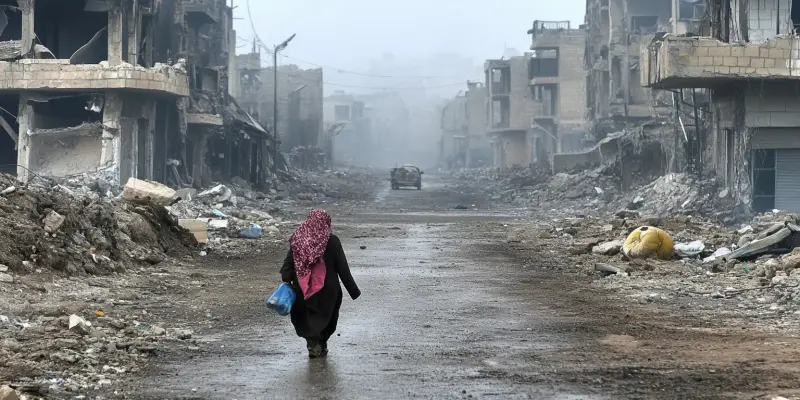
In a significant stride towards mitigating the climate-associated challenges faced by vulnerable communities, the Insurance Development Forum (IDF) has unveiled a $9.25 million climate risk insurance policy for Syria. This initiative, specifically designed to protect against severe drought impacts, seeks to offer financial relief and ensure the timely deployment of aid by bolstering the World Food Programme’s (WFP) efforts to combat food insecurity resulting from extreme climate events. Given the ongoing political and economic turmoil in Syria, this policy aims to mitigate escalating climate risks that could precipitate humanitarian crises.
IDF’s Commitment to Global Resilience-Building
Leveraging Financial Mechanisms for Social Good
The IDF, an entity comprising insurers, reinsurers, brokers, and other stakeholders within the insurance sector, focuses on leveraging financial mechanisms to counter climate-induced risks, especially in socio-economically disadvantaged regions. The creation of this policy underscores the IDF’s unwavering commitment to fostering global resilience. The innovative financial tool has been tailored to provide automatic payouts when drought conditions are detected in essential food-producing areas within Syria, aiming to prevent families from resorting to desperate measures. By intervening financially in a timely manner, this policy ensures that families do not have to skip meals or sell crucial livestock, which would further endanger their stability and livelihood.
Developed in collaboration with Humanity Insured, this groundbreaking policy has received funding from multiple esteemed entities, including the World Bank’s Global Shield Financing Facility, the UK Foreign, Commonwealth & Development Office (FCDO), and the German Federal Ministry for Economic Cooperation and Development (BMZ). This coalition underscores the collaborative spirit driving the initiative, bringing together various stakeholders with a shared goal of mitigating the impact of climate-induced crises on vulnerable communities. The policy’s structure and approach set a new precedent for future endeavors in combating climate risk through financial innovation and cooperative efforts.
A Multifaceted Approach to Stability
The introduction of this climate risk insurance policy during the IDF Summit 2023 marked a pivotal moment in integrating climate risk insurance with other resilience-building measures such as nature-based solutions, communal savings schemes, and social safety nets. This comprehensive strategy offers robust support to at-risk populations, promoting long-term stability and enhancing food security. The policy’s holistic perspective does not merely address immediate economic impacts but also strives to build a foundation for sustainable community resilience against climate shocks.
By embedding this insurance within a broader framework of resilience-planning, the policy ensures that communities are not merely protected in the short term but are also empowered to withstand future climatic adversities. The inclusion of nature-based solutions—such as reforestation and sustainable farming practices—ensures that environmental conservation goes hand in hand with economic stability. Moreover, communal savings and social safety net programs further strengthen the social fabric of these communities, providing an additional layer of security against potential climate-related disruptions.
Enhancing Community Resilience
Financial Innovation for Humanitarian Aid
The launch of the climate risk insurance policy is a milestone in global endeavors to address climate-driven humanitarian challenges. It exemplifies the advancements in developing financial tools tailored to support at-risk communities in withstanding climatic shocks. The collaboration between Swiss Re’s managing director of public sector business and chair of the IDF Operating Committee, Ivo Menzinger, highlights the collective efforts of the insurance industry and development partners in bolstering resilience within fragile regions. Menzinger stressed that effective climate risk insurance provisions empower vulnerable populations by furnishing necessary resources to manage after-effects of climate shocks.
Such insurance instruments play a crucial role in aiding smallholder farmers in the aftermath of harvest failures, ensuring that governments and humanitarian agencies can coordinate timely and effective responses. The policy’s design allows for swift financial intervention, reducing the lag between crises and the implementation of aid measures. Consequently, communities receive immediate support, enabling them to recover swiftly and reduce prolonged periods of hardship.
Integrating Risk Management Measures
Menzinger emphasized that integrating climate risk insurance with broader measures—such as social safety nets, community-led initiatives, and nature-based solutions—is imperative for maintaining livelihood and ensuring long-term stability. This integrated approach acknowledges that while financial support is vital, a multifaceted strategy addressing various vulnerabilities is necessary for comprehensive resilience-building. The synergy between financial intervention and community-driven initiatives creates a more robust safety net, ensuring that no single disruption can wholly upend community stability.
This policy sets a new benchmark for innovative financial solutions designed to support communities in the face of climate shocks, ensuring sustained stability and food security amid increasingly erratic global climatic challenges. The lessons drawn from this initiative could serve as a blueprint for similar efforts globally, demonstrating that a collaborative, well-rounded approach to climate risk mitigation is not only feasible but also profoundly impactful. As the world grapples with the growing threat of climate change, such pioneering efforts in climate risk insurance offer a glimmer of hope for the world’s most vulnerable populations.
Looking Ahead: A Framework for Future Resilience
Empowering Vulnerable Populations
In conclusion, the IDF’s climate risk insurance policy sets a precedent for innovative financial solutions targeting climate-induced vulnerabilities. It ensures rapid, automatic financial payouts in response to drought conditions, significantly reducing the delay between crisis onset and aid delivery. This aspect of the policy is crucial in preventing families from taking drastic measures that can have long-term detriments to their economic stability and overall well-being.
Swiss Re, along with other key partners, has demonstrated that effective collaboration between the insurance industry and development organizations can greatly enhance the resilience of at-risk communities. By empowering vulnerable populations with timely financial resources, the policy fortifies smallholder farmers and other essential community members against the adverse impacts of climate-induced challenges.
Sustained Efforts for Global Stability
The Insurance Development Forum (IDF) has introduced a critical $9.25 million climate risk insurance policy for Syria, marking a significant step towards addressing climate-related difficulties faced by vulnerable communities. This innovative policy is specifically designed to shield against the harsh impacts of severe droughts, providing financial support and ensuring the swift dispatch of aid. It aims to enhance the World Food Programme’s (WFP) mission to tackle food insecurity exacerbated by extreme climatic events. With Syria continuing to grapple with intense political and economic instability, the introduction of this insurance policy is pivotal. It seeks to alleviate the mounting climate risks that have the potential to trigger humanitarian crises. By mitigating these risks, this policy not only offers a safety net for those most affected by climate anomalies but also supports broader efforts to maintain stability and assist the Syrian population during times of severe drought and food shortages.