

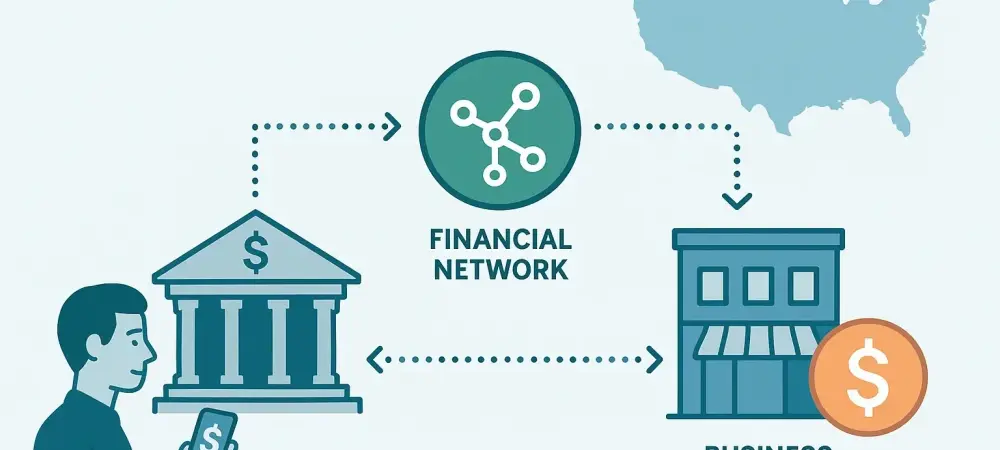
Every real-time payment involves a rapid, choreographed exchange where the receiving bank validates the account and confirms acceptance in a fraction of a second to ensure immediate finality. This movement represents a significant departure from the legacy systems that once defined the American banking landscape, where settlement could take several business days. The transition to instant liquidity has fundamentally altered the financial expectations of both consumers and corporations, creating an environment where money moves at the same pace as digital communication. This modernization is anchored by robust networks like FedNow and the RTP system, which provide the underlying rails for continuous, 24/7 financial activity. By removing the traditional constraints of “banking hours” and clearing cycles, these platforms have unlocked significant economic potential, allowing for more precise cash flow management and faster response times during financial emergencies. Consequently, the current market is defined by a standard of immediacy that supports the complexities of a modern, data-driven economy.
1. Processing: The Sequential Workflow of Digital Transfers
The journey of an instant payment begins when a sender initiates a payment through a secure digital portal, triggering a specific instruction that is immediately formatted into a standardized message. This electronic packet is then dispatched through the payment network, arriving at the beneficiary’s financial institution in a matter of milliseconds. Upon receipt, the destination bank conducts an automated review of the account details to confirm that the recipient is eligible to receive the funds. This verification includes checking for account activity, potential sanctions, and technical compatibility with the real-time rail. Unlike older methods that validated accounts only after a transaction was initiated, this pre-settlement review ensures that the instruction is accurate and executable before any value is moved. This proactive screening significantly reduces the likelihood of failed transfers and administrative delays, providing a level of certainty that is essential for high-velocity financial environments.
Once the receiving bank successfully validates the account, it sends an immediate acknowledgment back through the network to indicate its willingness to accept the credit. This confirmation triggers the final settlement phase, where the transfer of funds is recorded as permanent and irrevocable on the books of the central clearing authority. This gross settlement mechanism ensures that the money is legally moved in real-time, eliminating the credit and liquidity risks that characterize deferred settlement systems. Because the transaction is final upon execution, there is no risk of the payment being clawed back or reversed due to insufficient funds later in the day. This immediate finality provides a significant advantage for businesses that require guaranteed payment before releasing goods or services. The entire cycle, from the initial dispatch to the final settlement on the ledger, occurs in less than five seconds, representing a synchronized movement of data and value that is consistent across the entire domestic financial network.
2. Foundation: Structural Features of Modern Payment Rails
The culmination of the transaction sequence involves the automated distribution of completion alerts to both the originating and receiving parties. These notifications provide immediate clarity, confirming that the funds are available for use and that the underlying obligation has been satisfied. This level of transparency is supported by a robust architecture designed for continuous operation, functioning twenty-four hours a day, seven days a week, including all holidays. By eliminating the concept of “banking hours,” the system accommodates the needs of a modern workforce and a global supply chain that does not pause for traditional weekends. This round-the-clock availability ensures that emergency funds, time-sensitive payrolls, and urgent business payments can be settled at the exact moment they are needed. Furthermore, the constant uptime of these rails reduces the pressure on liquidity management for corporations, as they no longer need to time their activities around the rigid windows of the older Federal Reserve cycles. A core element of this modern architecture is the use of the ISO 20022 messaging standard, which enables a much higher volume of data to be transmitted alongside each payment. This capability allows for the inclusion of structured information such as detailed invoice references, which automates the reconciliation process and reduces the need for manual data entry. To protect this high-speed environment, the system incorporates pre-emptive risk management protocols that analyze transactions for potential fraud before they are finalized. Because real-time payments are irreversible, the security measures must be exceptionally robust, utilizing sophisticated algorithms to detect anomalies in real-time. This proactive approach to security is integrated directly into the payment flow, ensuring that every transaction is screened without adding noticeable latency to the user experience. By combining rich data with advanced fraud prevention, the network provides a secure and informative pathway for the movement of value, supporting the complex needs of modern business operations.
3. Progression: Evolving Standards and Strategic Implementation
The scalability of the real-time infrastructure was a primary focus during its development, as the network needed to support thousands of diverse financial institutions across the country. Developers engineered the system to handle a massive volume of concurrent transactions, ensuring that small community banks could access the same high-speed capabilities as the largest national entities. As this connectivity reached a state of maturity, the financial industry observed a profound shift in how liquidity was managed at every level of the economy. Businesses and individuals alike moved away from traditional, slower methods, preferring the certainty and speed of the new instant rails. This transition was marked by a collaborative effort to ensure that the infrastructure remained resilient against technical disruptions and cyber threats. The historical move toward real-time settlement represented more than just a technical update; it was a fundamental reimagining of the speed of commerce that established a new baseline for financial efficiency and reliability.
To leverage these advancements, organizations prioritized the integration of direct API connections to bridge their internal accounting systems with the instant payment network. This strategic alignment allowed for the full automation of receivables and payables, drastically reducing the time spent on manual administrative tasks. Financial officers also updated their liquidity management strategies to account for the continuous flow of capital, moving away from static daily forecasts to dynamic, real-time monitoring of cash positions. It was found that utilizing the full range of data fields within the ISO 20022 messages was the most effective way to eliminate reconciliation errors and improve vendor relationships. Furthermore, security teams implemented advanced authentication measures to ensure that the speed of the transaction was matched by the rigor of the underlying authorization protocols. By adopting these measures, market participants ensured they were fully prepared to operate within a financial system where the immediate availability of funds became the universal standard for success.